

Roof coverings
Can photovoltaics be installed safely on a metal roof?
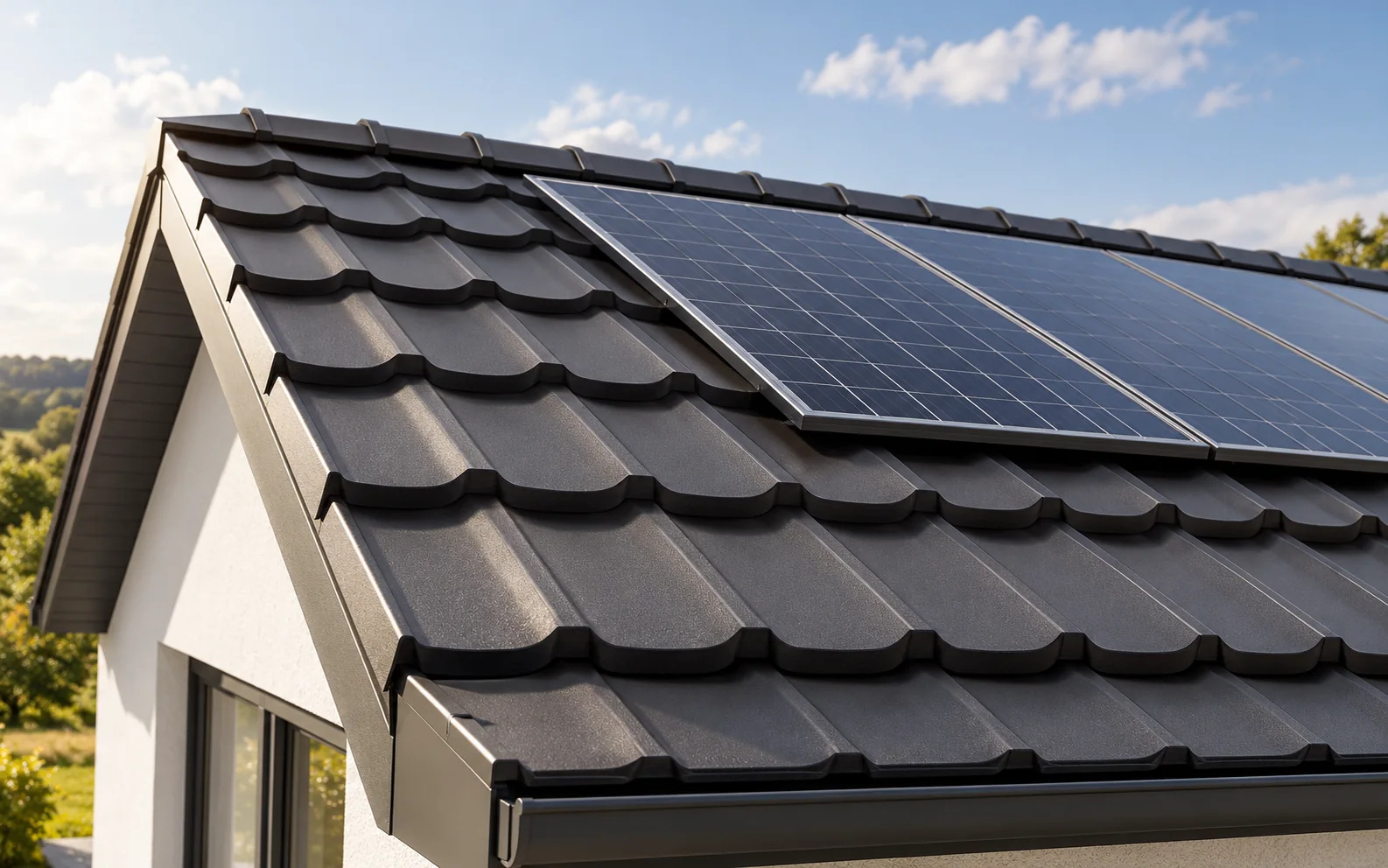
Photovoltaic panels on an existing metal roof require fixings that have been verified for exactly the sheet or sandwich panel installed on the building. Prepare a cross-section drawing of the profile, the thickness of the cladding and the arrangement of the supports. The designer needs this data to trace how the load from the module and the wind suction are transferred through the brackets to the structure. The roofer should also assess the condition of the roof and the places where the fixings or cables will penetrate the water-shedding layer. Agreeing this before installation makes it easier to maintain watertightness and to leave access for later inspections.
In this article
What needs to be checked before laying out the panels?
Begin with the condition of the roof and the structure. A new installation means additional weight and wind-induced forces. Some of the loads pass through the brackets into small areas of the covering. An assessment of the entire load path is needed, from the photovoltaic module to the building’s load-bearing elements.
If the covering needs repair, carry it out before installation. Replacing a sheet under the modules later requires dismantling part of the array. Check the condition of the coating, the fasteners and the flashings. The roof documentation should also specify the steel thickness. The appearance of the trapezoid alone does not allow it to be reliably assessed.
How is the system fixed on T18 and T35?
The system may use brackets connected to the sheet or solutions that transfer forces to the substructure. The approval of a specific variant depends, among other things, on the thickness and shape of the sheet. The spacing of the ribs matters for matching the base of the support and for the correct arrangement of the fasteners.
The fixing should not be chosen solely on the basis of the label T18 or T35. The same profile height can occur with a different width of the upper flange. A base that is too wide, or holes falling at the bend of the sheet, worsen the conditions of the connection. Selection requires a profile drawing and the data of the PV system.
How does fixing on tile-effect metal roofing differ?
Transverse embossments make it difficult to use a bracket intended for a plain trapezoid. The support must work with the corrugation and the correct point of support. It must not rest accidentally on a thin part of the sheet. Excessive pressure can deform the covering and disturb water drainage.
Depending on the solution, the connection goes into a suitably prepared substructure or uses a dedicated kit. The holes, seals and tightening torque must correspond to the documentation. It is not worth replacing the specified components with seemingly similar screws that happen to be available on site.
Does a sandwich panel require different rules?
A roof panel is a composite element with facings and a core. Fixing to its upper sheet must be assessed within the framework of an approved solution. The thickness of the panel as a whole does not say what force the fastener will transfer. What matters are the parameters of the facing, the arrangement of the ribs and the type of support.
The requirements also cover watertightness and corrosion protection. A poorly considered hole can introduce water into the joint or the core. Before installation, the bracket instructions must be consistent with the panel manufacturer’s recommendations. Thick insulation does not entitle arbitrary placement of the supports.

How can the installation be reconciled with water drainage?
Bracket bases must leave drainage paths clear. Keep roof valleys and areas that need cleaning accessible. Debris beneath the panels can trap moisture for long periods. When laying out the modules, leave enough room to inspect the fixings and joints.
Cables must be routed and protected in accordance with the installation design. They must not rub freely against sharp edges of the sheet or lie in water. A penetration through the roof slope requires a watertight component intended for that purpose. Accidental sealant around the cable does not replace the proper detail.
Why is wind so important?
Wind forces depend on the building’s location, height and roof zone. Areas near the edges may require a different arrangement of fixings than the middle of the roof slope. It is not enough to check only the average weight of the installation per square metre. Suction may try to lift the array off its base.
The number and arrangement of the brackets are determined on the basis of calculations for the selected system. A layout from a house with a different shape should not be copied. The fixing of the covering itself to the supports must also be taken into account. A very strong bracket will not help if the sheet is insufficiently fixed.
What should be obtained from the contractor?
After the work is completed, ask for documentation of the bracket layout, the components used and photographs of the connections before they are covered by the panels. These will be useful for inspection and any repair. Agree who is responsible for the watertightness of the penetrations and for repairing damaged coating during installation.
The contractor should remove swarf, cuttings and fasteners left on the roof. Agree a schedule for inspecting the installation and the covering. Pay particular attention to places that are difficult to access. Also record the full designation of the system used, so that later expansion is not based on guesswork.
A tip before ordering
Before the PV quote, prepare a covering data sheet with the steel thickness and a profile drawing. Attach photographs of the substructure and its spacing. This information is needed to select the fixing, even when the roof is new.
What is worth remembering?
A metal roof can work well with photovoltaics. The condition is that the brackets are matched to the actual covering and the loads on the entire structure are checked. Most problems arise when the installation is treated as an addition independent of the roof.
In a building-integrated photovoltaic (BIPV) system, the solar modules also serve as the roof covering. Solar roof suppliers and brands include SolRoof, Electrotile, MDM NT (MyRoof), ML System, SunRoof, Wienerberger Wevolt, Solarstone, 3S Swiss Solar Solutions, Megasol Energie and Autarq.
7 branches. Materials closer to your project.

Free quote
Materials for your project

You may also find useful…
The first heavy rain, a spell of frost or a thorough washdown can reveal faults that were invisible when a sandwich panel…
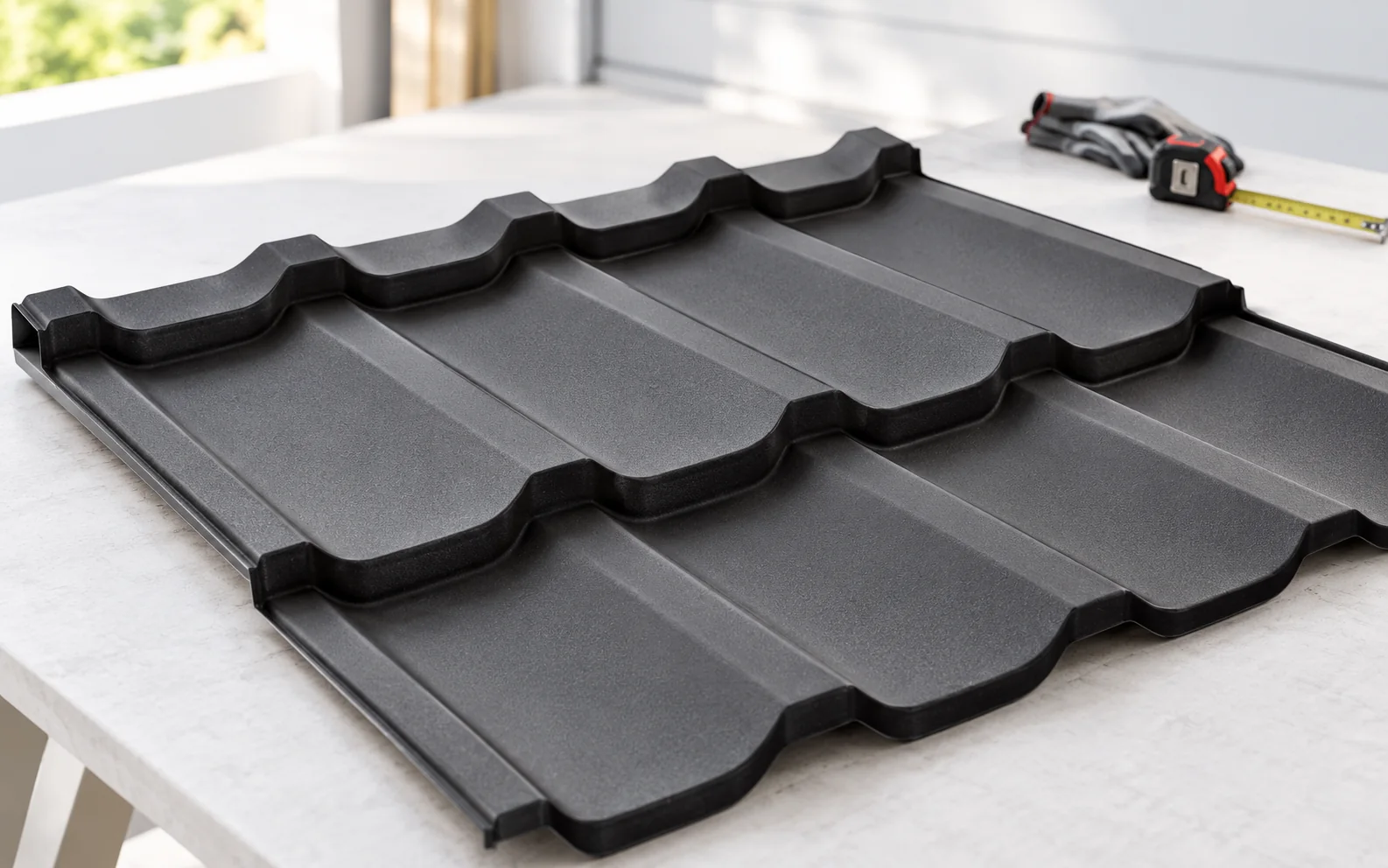
Modular tile-effect metal roofing combines a tile profile with a smaller, repeatable panel format. It can make transport and the organisation of…
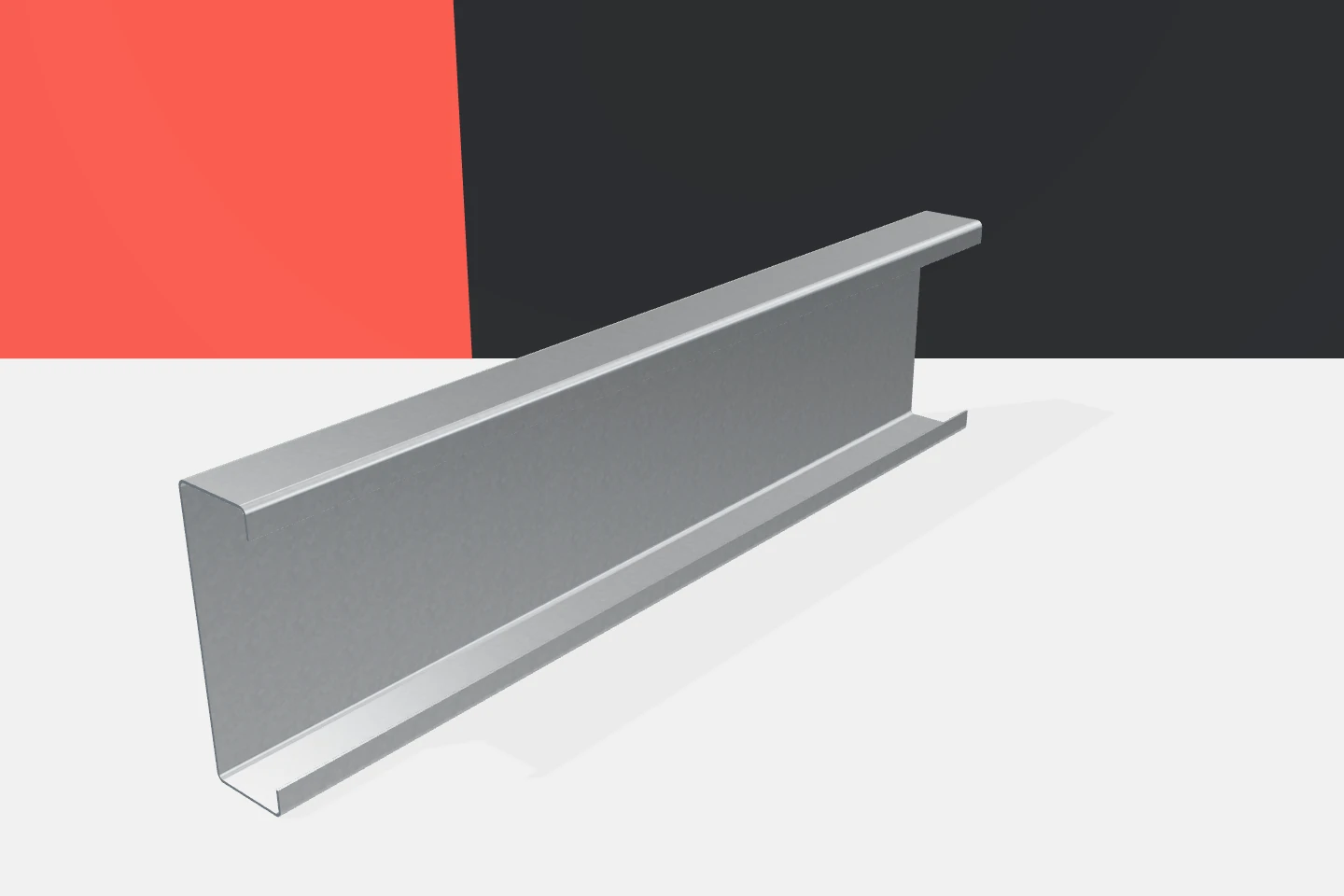
In a hall wall, most unplanned work tends to arise at the details. A rail misses the fixing of the panel, a…
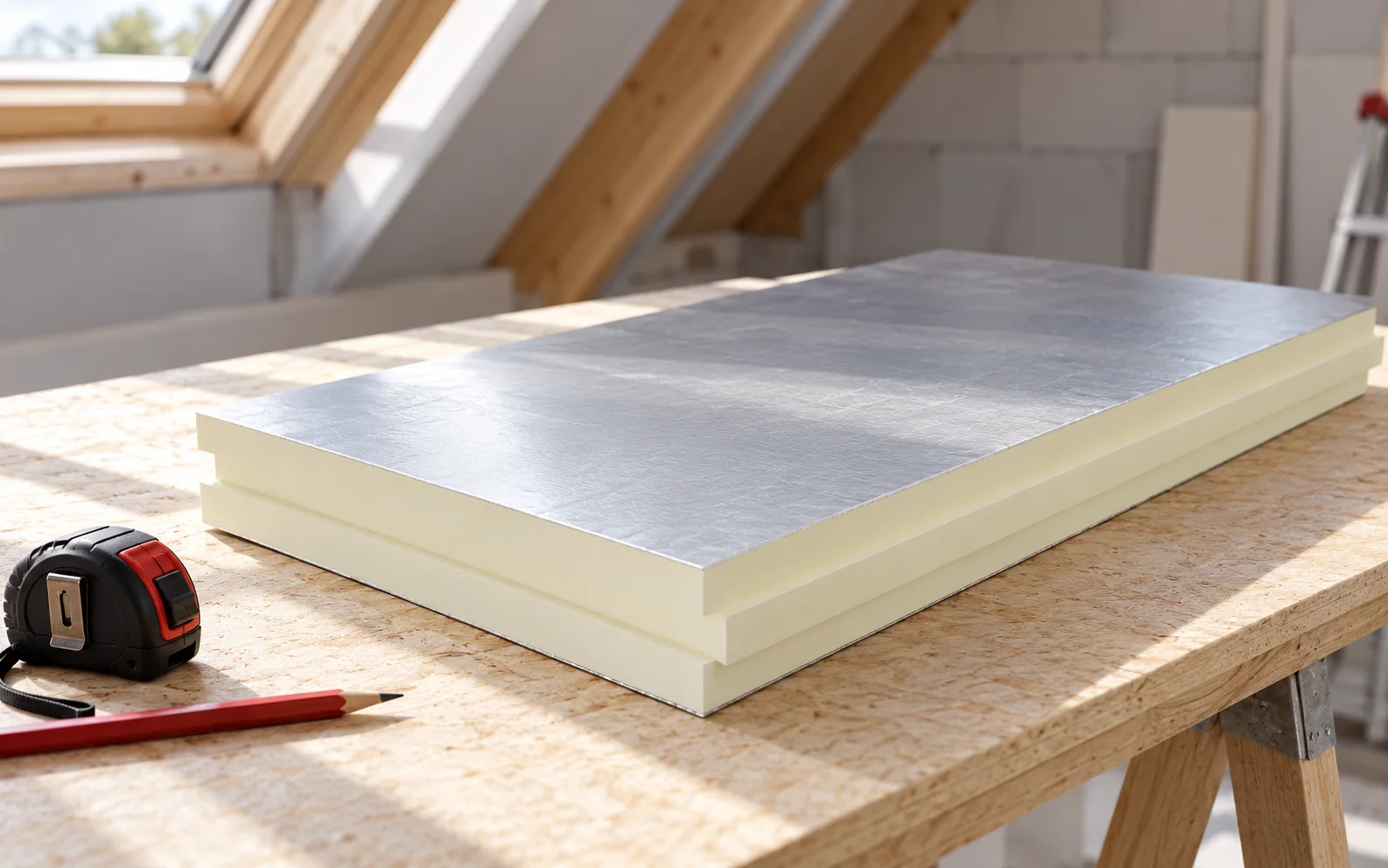
The answer to the question of insulating a loft before installing the lining comes down to the correct sequence of work and…
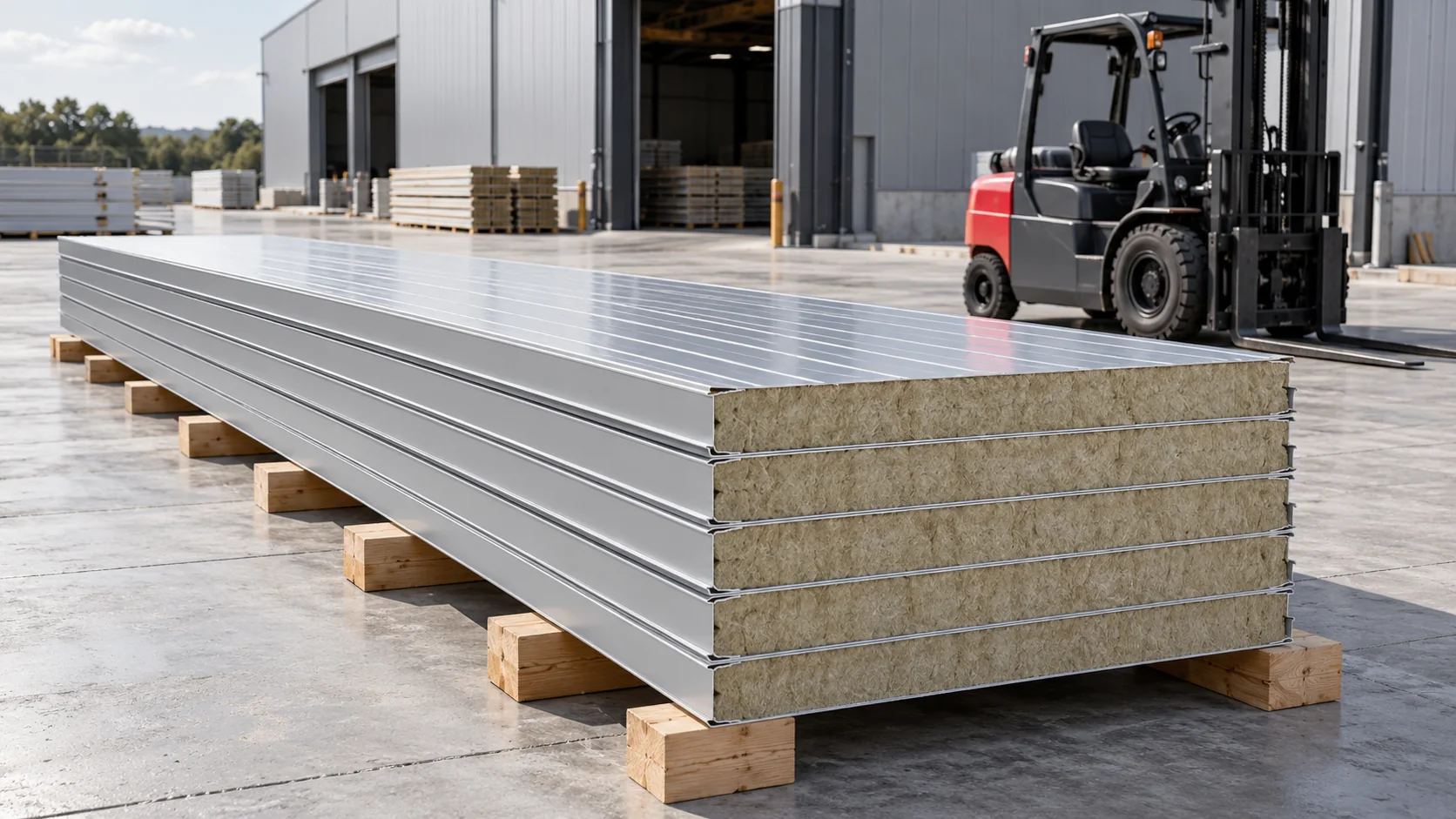
Weight per square metre helps compare panels, but the site team needs the weight of the whole unit. This depends on length,…
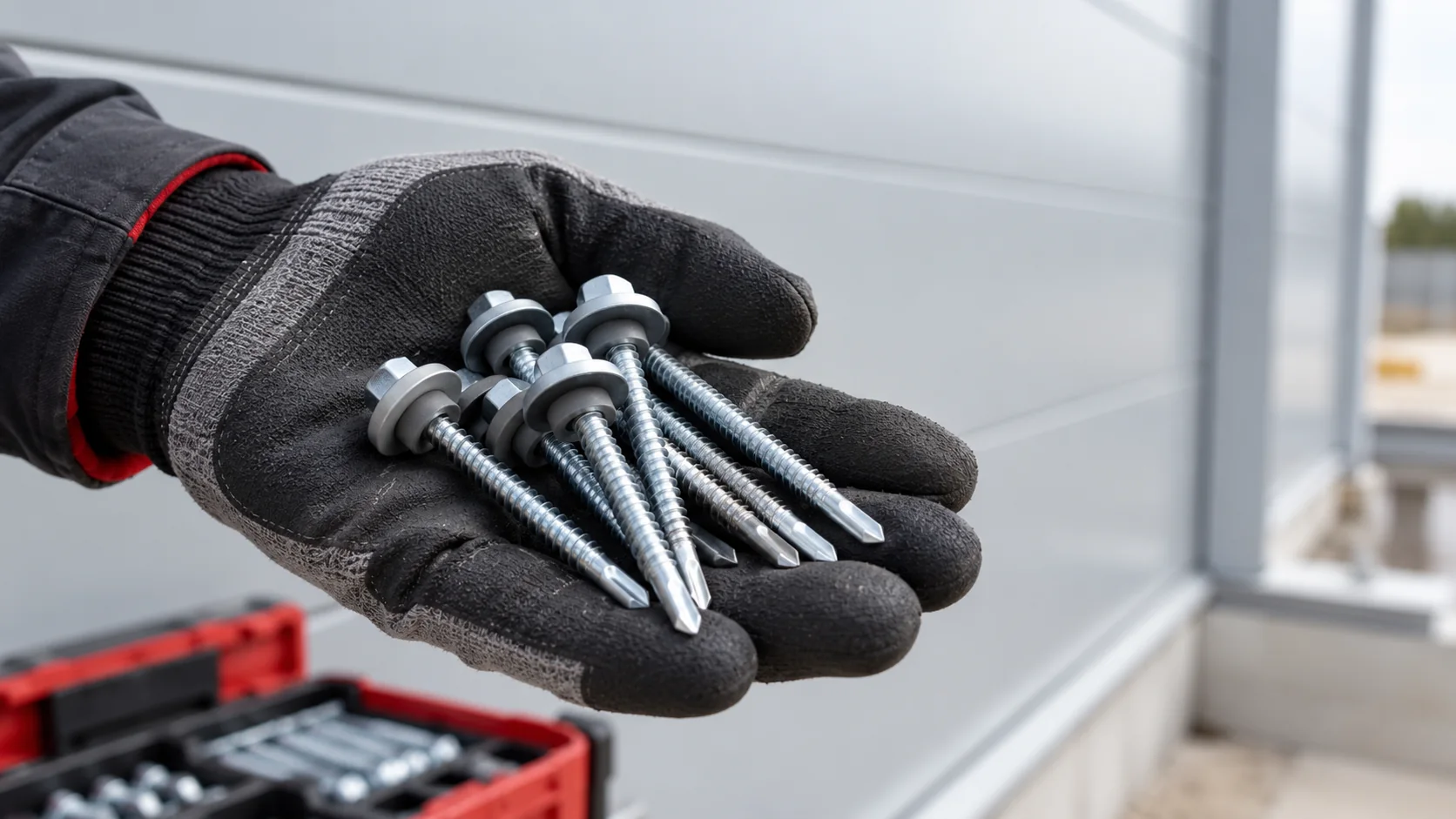
Start with the fixing layout for the building. It shows how many primary fasteners each panel needs at each support. The layout…
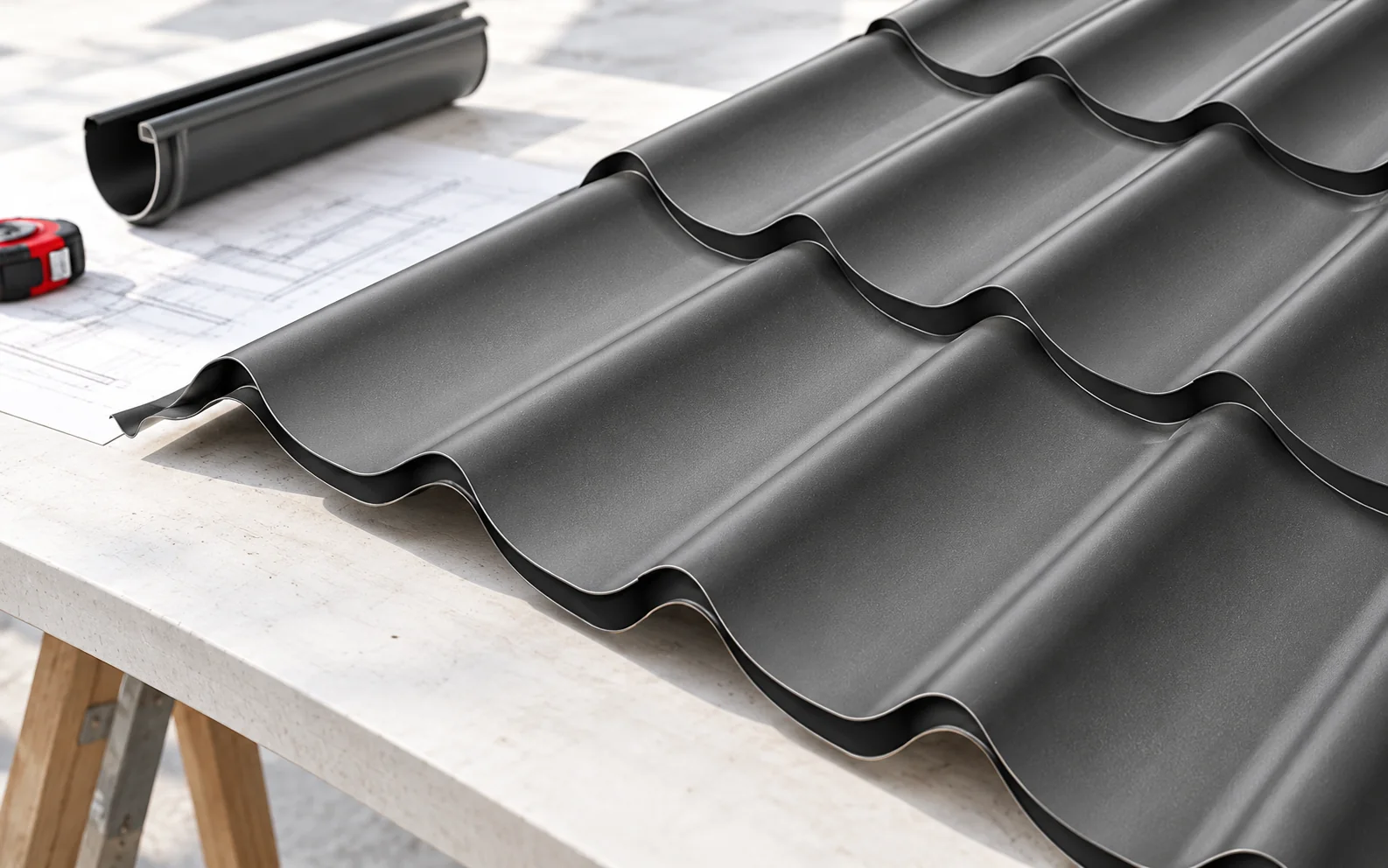
Effective roof drainage starts with identifying which roof slopes, valleys and dormers will deliver water to each gutter run, not with the…
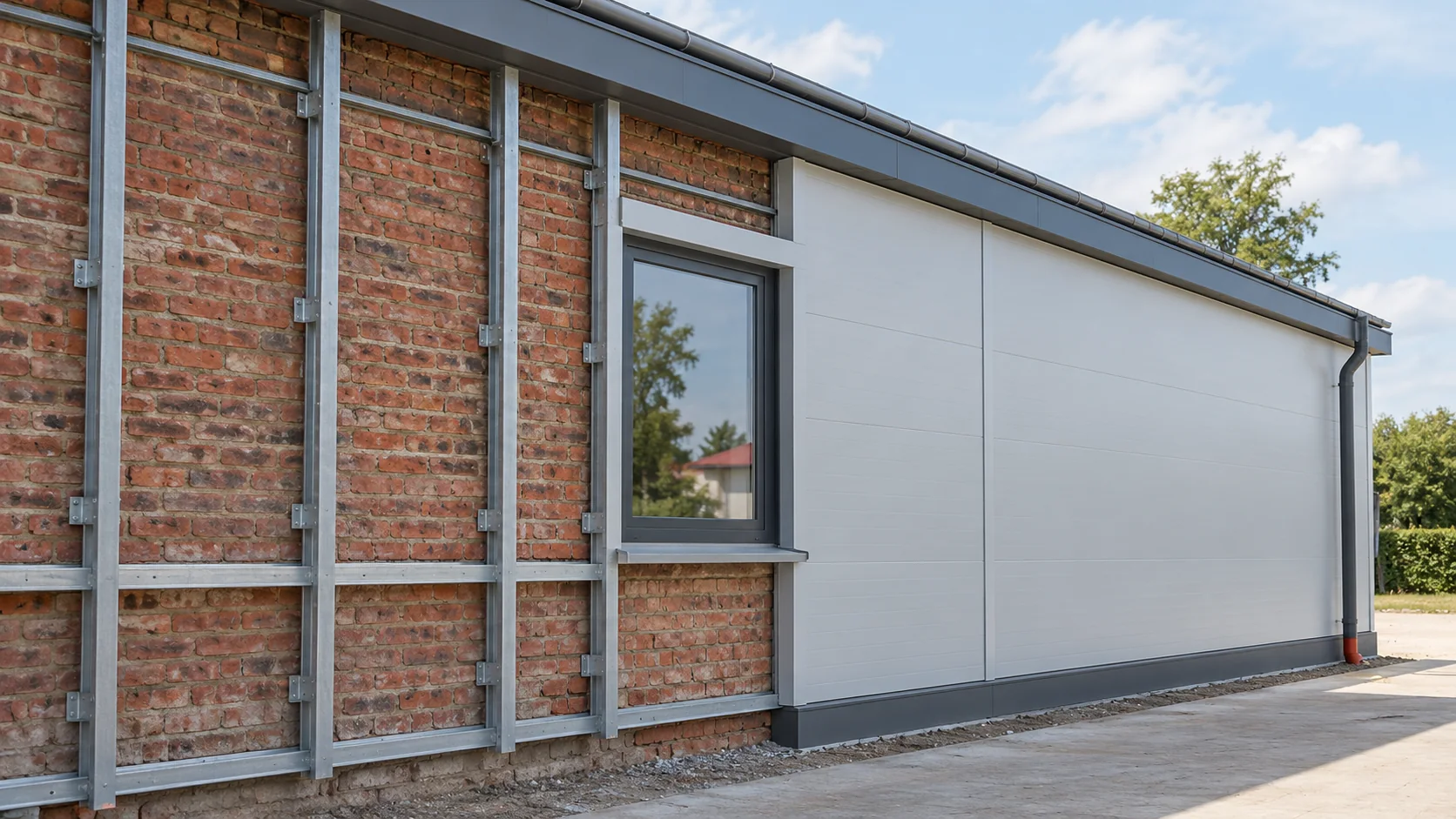
Before cladding an existing masonry wall with sandwich panels, establish what the wall is made of and how the panel loads will…