

Roof and energy
How to assess the environmental impact of a solar roof
Solar power generation is only one part of a roof’s environmental assessment. Material production, transport, installation, repairs and end of life also matter. An integrated system may reduce the duplication of covering and PV installation, but the scale of the benefit requires comparison. It is worth asking for data for the whole system and its expected service life. Neither the green colour of a brochure nor a claim of full ecology settles the choice. Compare solutions that provide similar protection for the building and a similar energy purpose. A roof without photovoltaics does not perform the same function as a BIPV roof. If the alternative is a conventional covering with separate modules, include both sets of materials.
In this article
How to establish a fair reference point?
Only then can it be assessed what their combination in a single system delivers.
The condition of the building also matters. In a new project, you choose between variants for the required roof. When replacing a functioning covering, the loss of its remaining useful life is added. These situations have a different balance. One should not attribute the same benefit to every modernisation simply because the new material generates energy.
Which material data are useful?
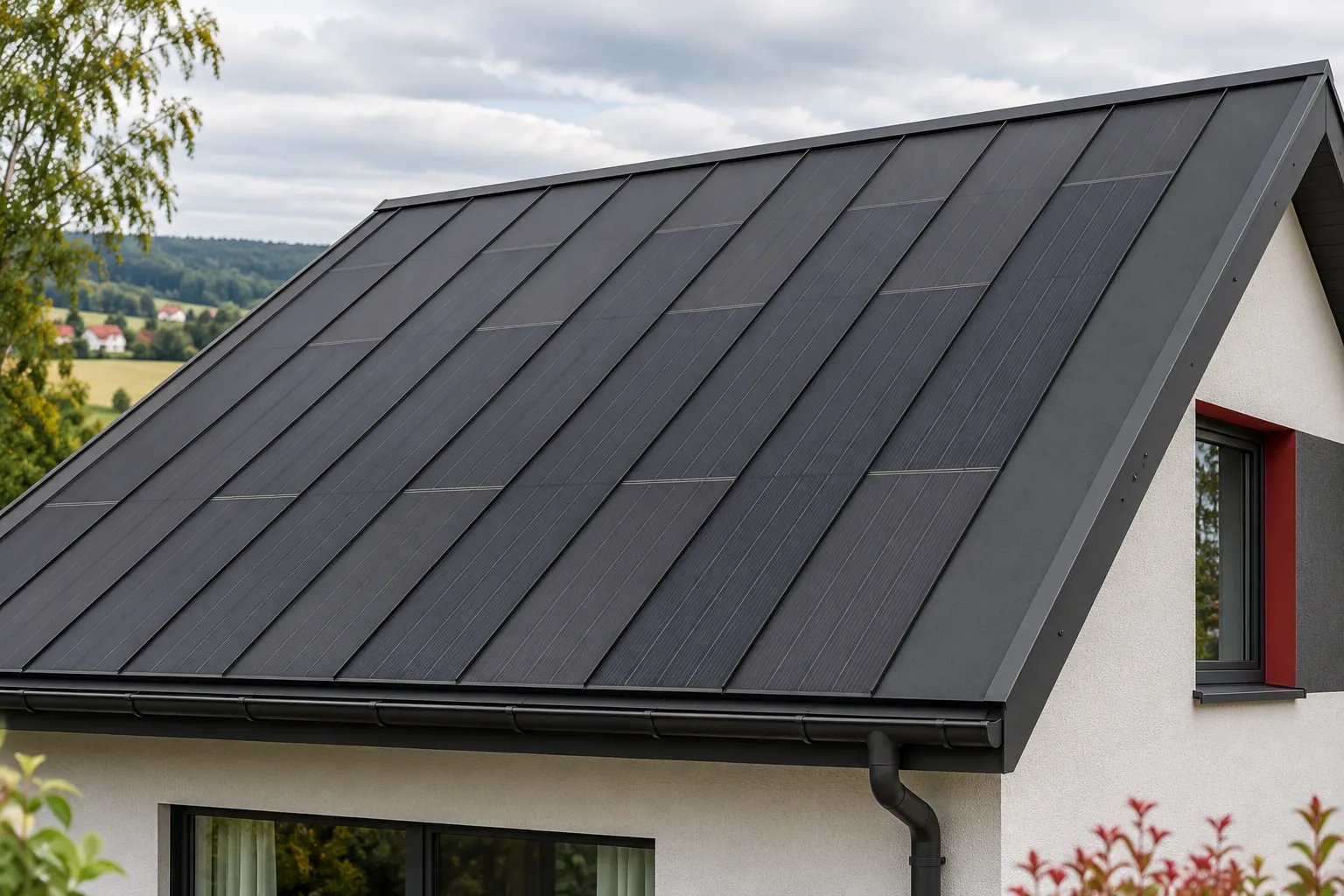
The comparison should cover the covering, the substructure, the layers required by the system and the electrical equipment. The mass and the expected durability of the individual parts are needed. In an integrated steel panel, the roof and PV functions are combined in a single element. This may reduce some duplicated materials, but it does not remove the other components of the building envelope.
Environmental declarations can be helpful if they are available for the selected products. Check their scope and reference unit. Data for a square metre of sheet metal do not automatically describe a square metre of finished roof with cells. Equally important is which life-cycle stages are included. Different document scopes can create an apparent advantage for one variant.
Why does energy yield matter for the balance?
The impact associated with manufacturing the installation must be related to the energy it will generate during operation. A well-sunlit roof can use materials more effectively than a similar system in deep shade. This does not mean that every less favourable roof slope is excluded. However, a realistic forecast is needed instead of a maximum catalogue result.
Generation is affected by orientation, temperature, soiling and the efficiency of the entire system. Keeping the equipment in operation also matters. If a fault remains undetected for a long time, the potential of the materials is not used. Well-designed monitoring and access to service can therefore support not only convenience but also the long useful life of the installation.
How do durability and repairs change the assessment?
A long operating period is beneficial only if the system retains the required functions. The roof must drain water, and the electrical part must generate energy safely. A module’s linear power warranty does not describe all these tasks. The conditions for the covering, the installation work and the equipment must be established separately.
Check whether a damaged element can be replaced and how the connections are restored. The availability of compatible parts and documentation of the installation are important. A system that is easy to repair can serve longer without replacing large sections. This is a stronger argument than a general declaration that a product is durable if it is not known how to keep it in service.
What happens to the roof after the end of its service life?
Steel, glass, plastics and electronics require appropriate management. The recyclability of one material does not mean that the entire composite element can be easily recovered. What matters is the method of dismantling, the separation of layers and the available waste handover route. The supplier should explain what solutions are envisaged for the specific product.
One should not assume that every element can be dismantled by hand into clean raw materials. Transport and the recovery process also have their cost and impact. It is worth asking about specific rules, even if dismantling will take place many years from now. A well-informed choice covers the entire service life and does not end on the day the new roof slope is installed.
How to formulate a reasonable conclusion?
If full comparable data are lacking, confirmed characteristics can be stated honestly. For example, the combination of covering and PV functions, the possibility of repair, or the avoidance of some duplicated materials. A percentage emission reduction does not have to be added without calculations. A precise description is more useful than a strong but unverifiable assurance.
A good choice combines a durable roof, a sensible yield and a maintenance plan. The owner should know which advantages derive from documentation and which remain an assumption of the analysis. This way of assessing does not diminish modern technology. It allows it to be chosen for the right reasons and compared with other solutions without omitting inconvenient parts of the balance.
Among manufacturers and brands of photovoltaic roofs are SunRoof, SolRoof, Wienerberger Wevolt, Solarstone, 3S Swiss Solar Solutions, Solartag, GAF Energy, ML System, MDM NT (MyRoof) and Electrotile.
7 branches. Materials closer to your project.

- SEROCK — Dzierżenin 34 E
- BŁONIE — ul. Sochaczewska 138A
- RADOM — ul. Grobickiego 8
- ŁÓDŹ — Natolin 8
- OLSZTYN — Barczewo, ul. Prosta 9
- WROCŁAW — ul. Jerzmanowska 10C
- GORZÓW WLKP. — ul. Zielona 33/34
Free quote
Materials for your project
You may also find useful…
Shade on a roof is not a fixed patch. It moves with the sun and changes in length over the course of…
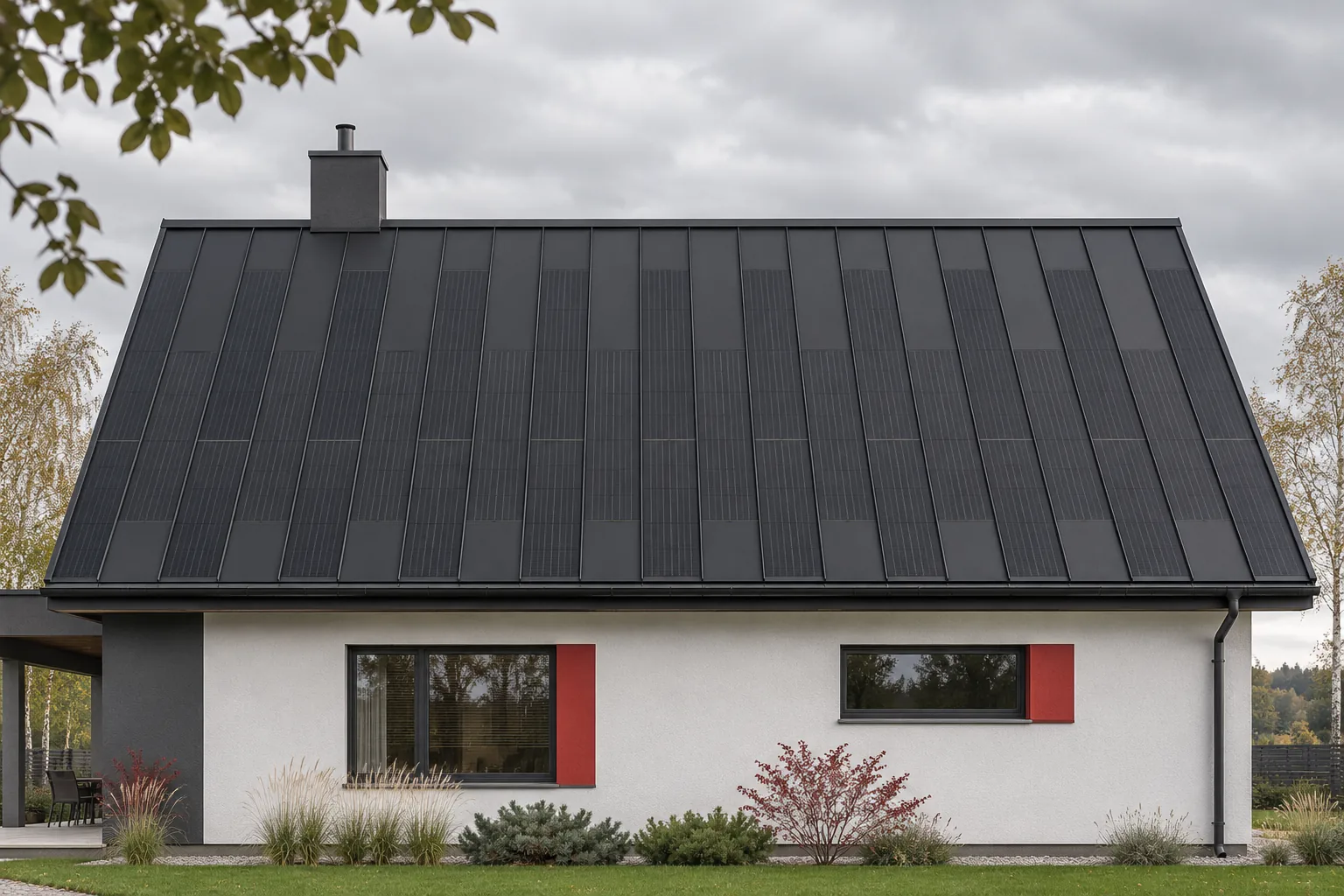
A steel roof with integrated photovoltaics can be an interesting alternative to heavier coverings combined with a separate installation. Its mass must…
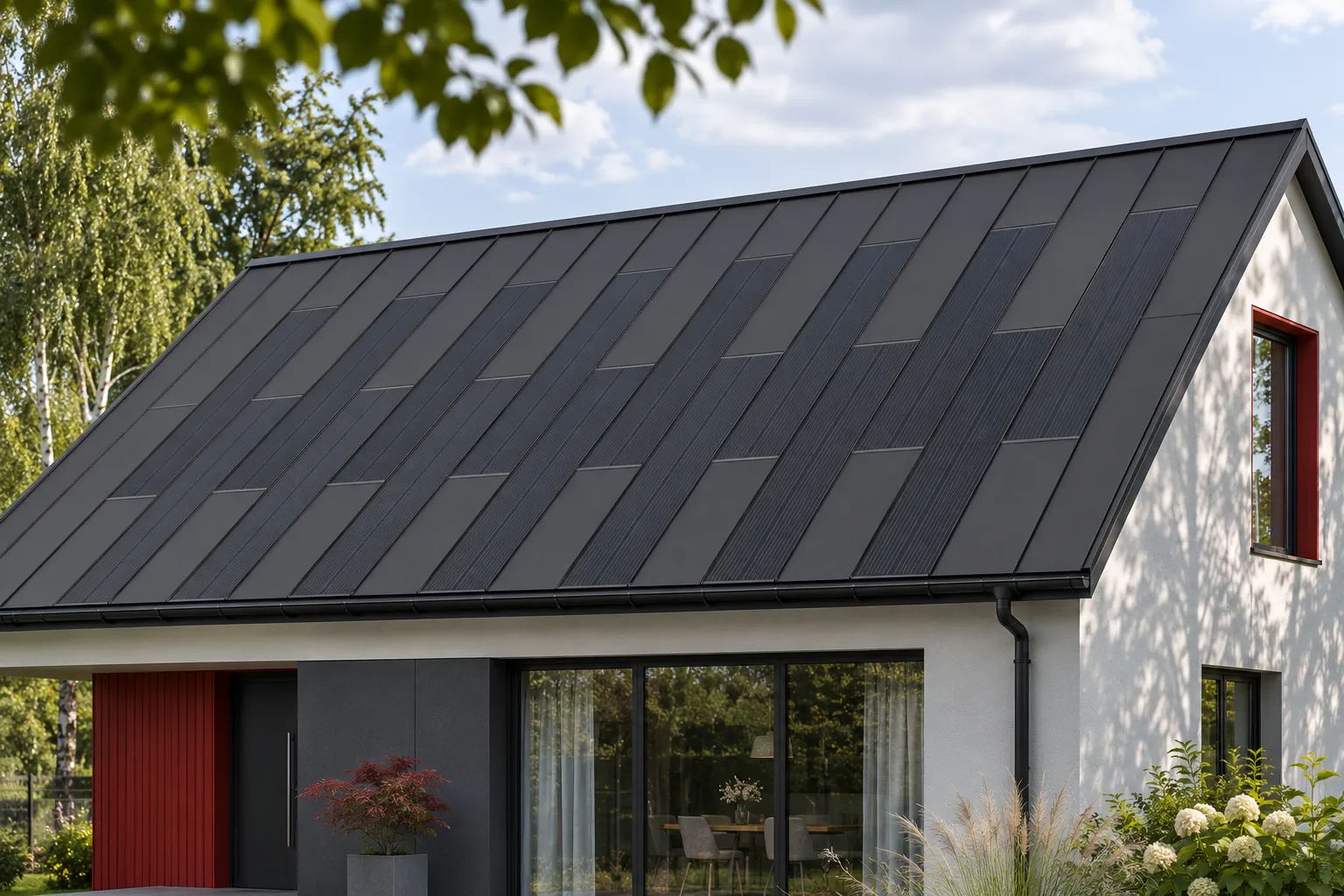
Not every section of an integrated roof has to contain cells. The active part produces energy, while passive elements complete the covering.…
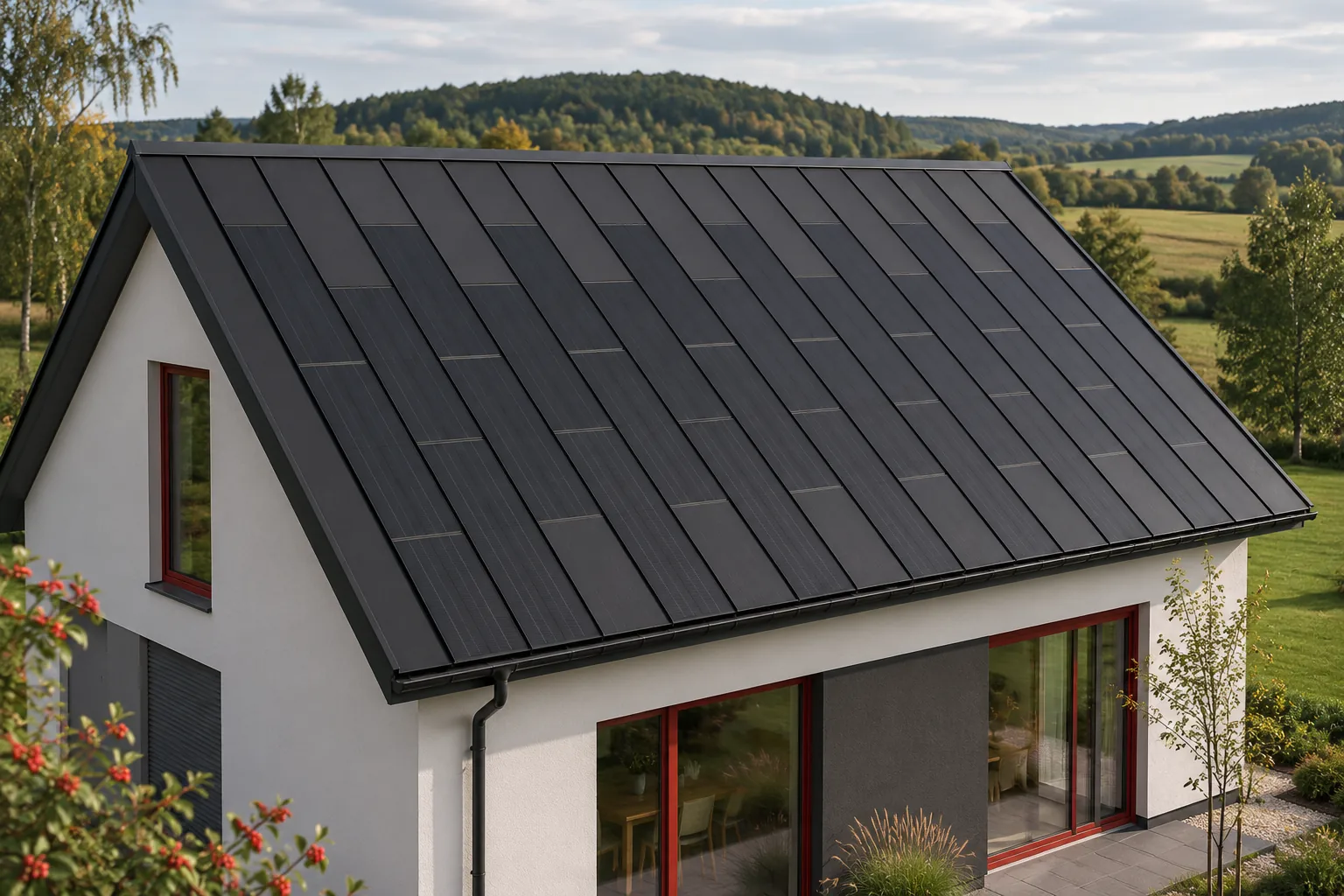
In a small house, roof area and energy consumption do not always change in the same proportion. A small building may have…
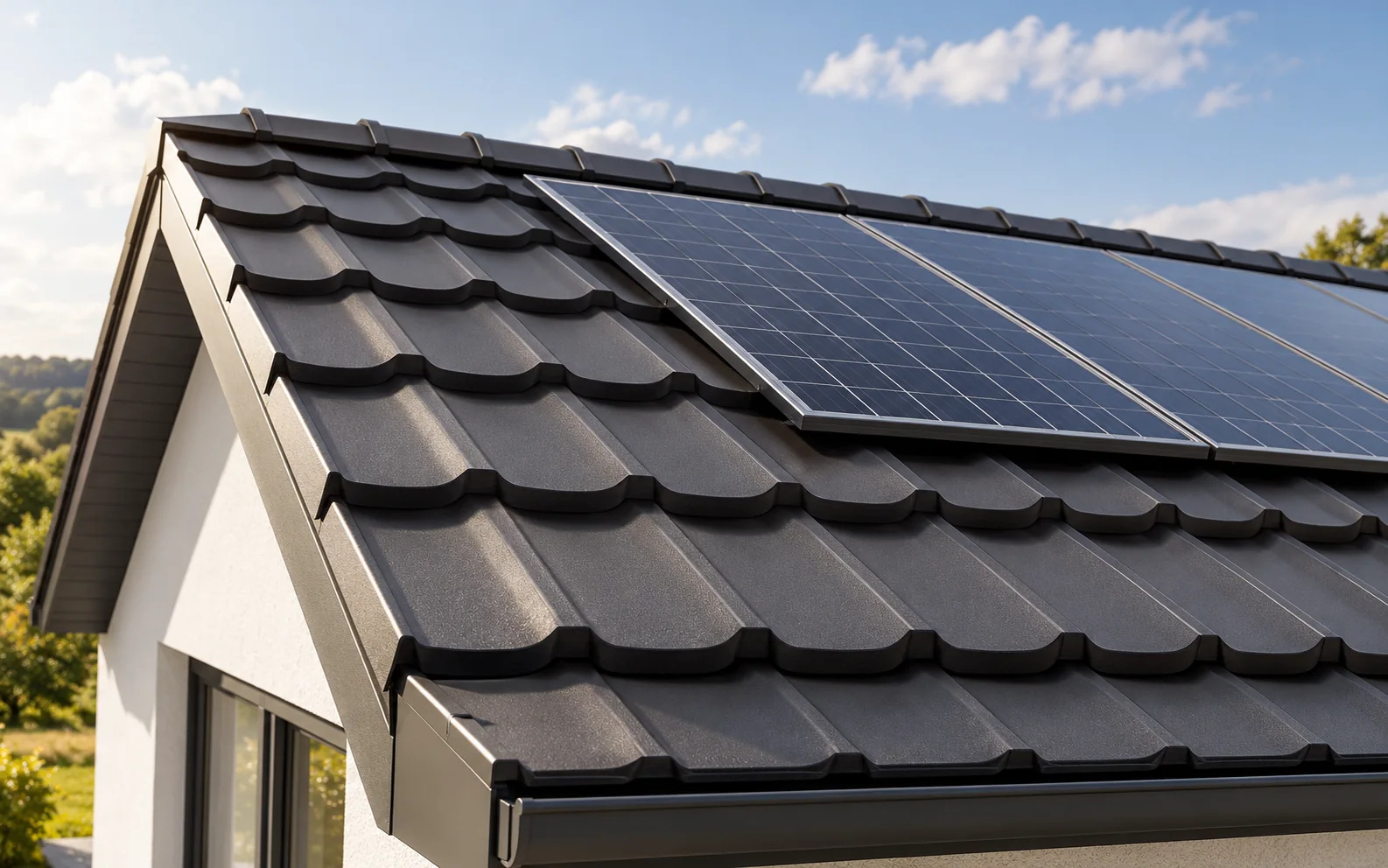
Photovoltaic panels on an existing metal roof require fixings that have been verified for exactly the sheet or sandwich panel installed on…
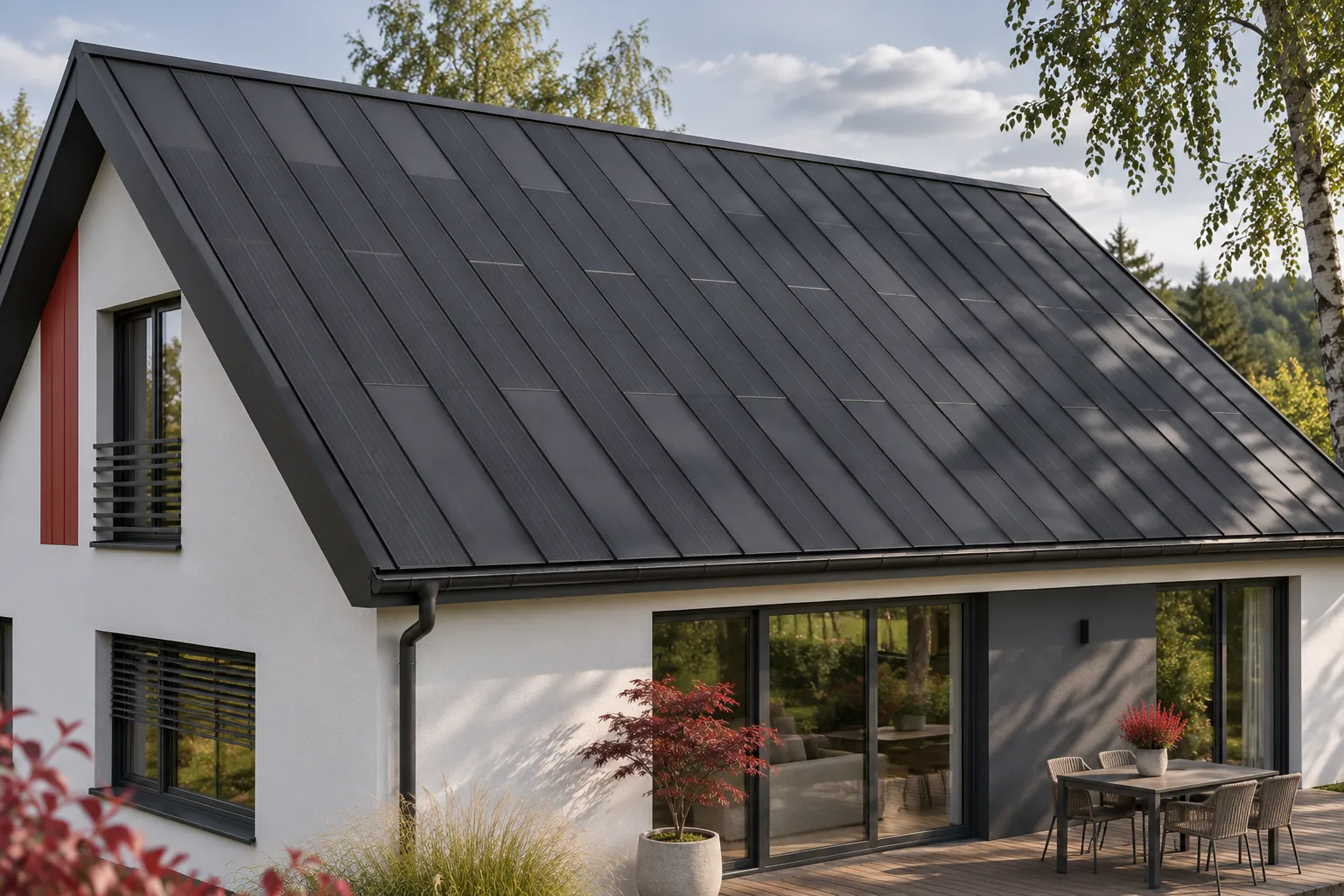
The price of one square metre of a solar roof does not answer the question of profitability. That figure may include both…
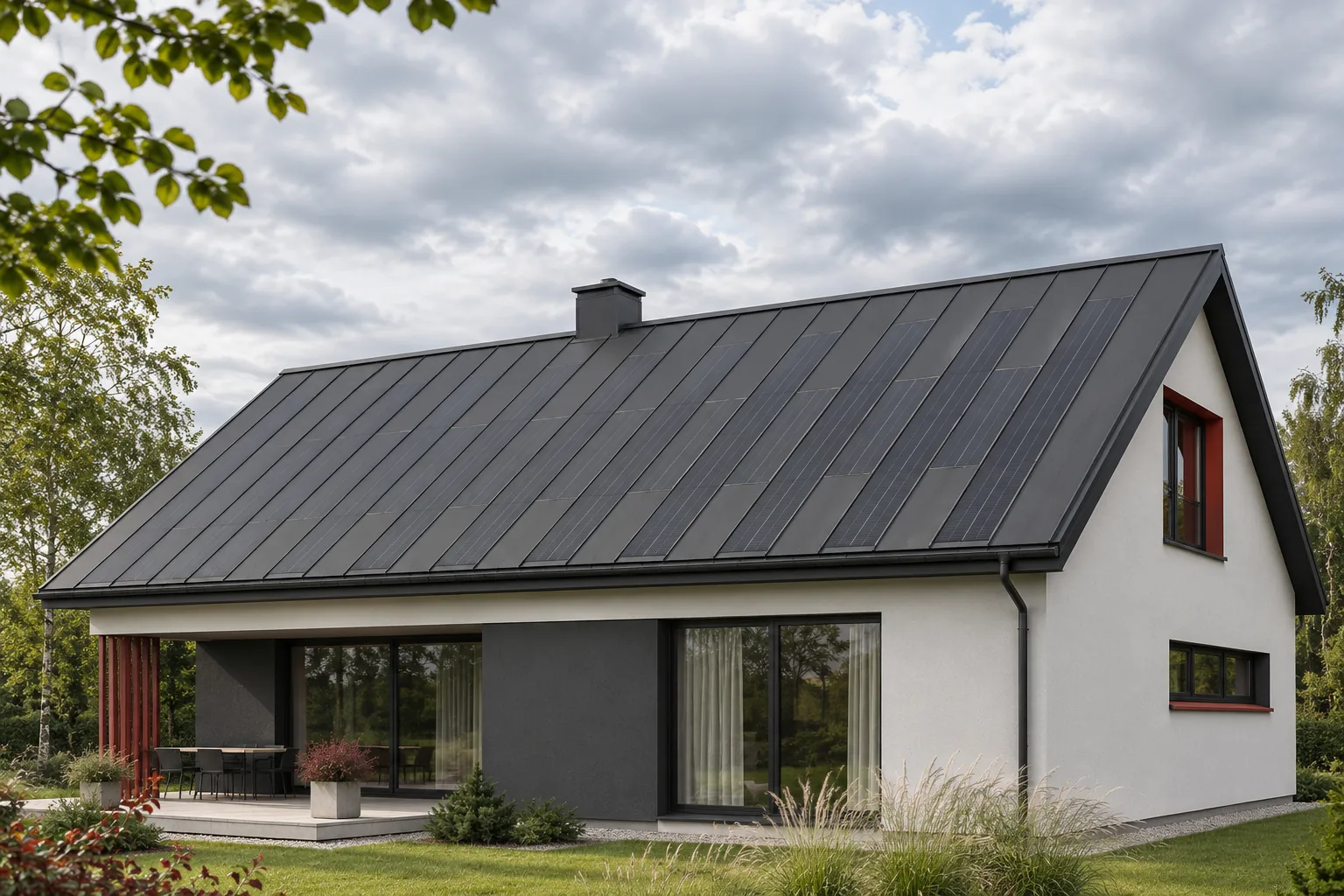
Photovoltaics can generate energy even under a cloudy sky, because it also uses diffuse light. Production will, however, depend on the amount…
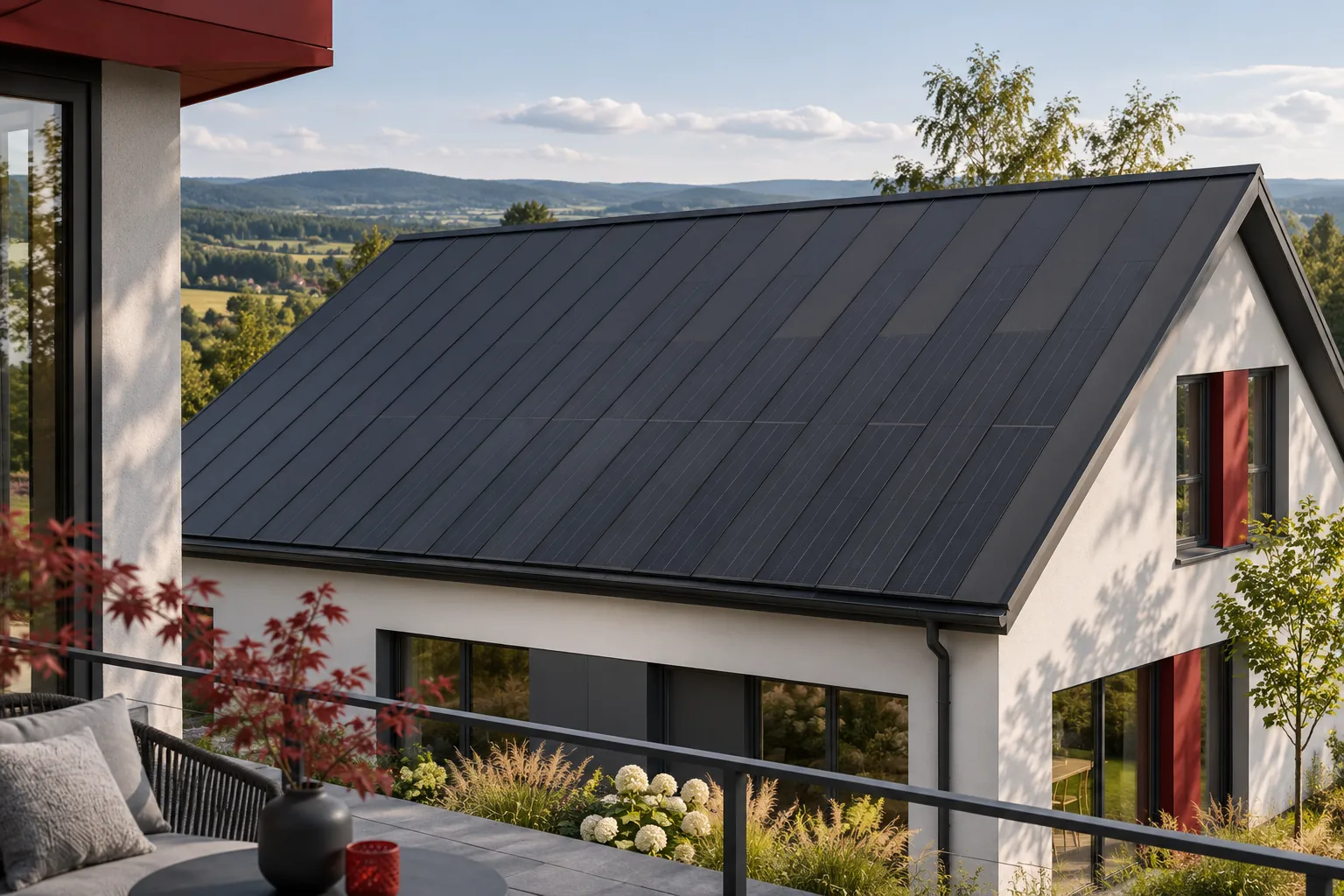
An integrated photovoltaic roof can be a strong selling point for a house, but it does not guarantee a predetermined increase in…