

Roof and energy
Can a solar roof improve the energy balance of a small home?
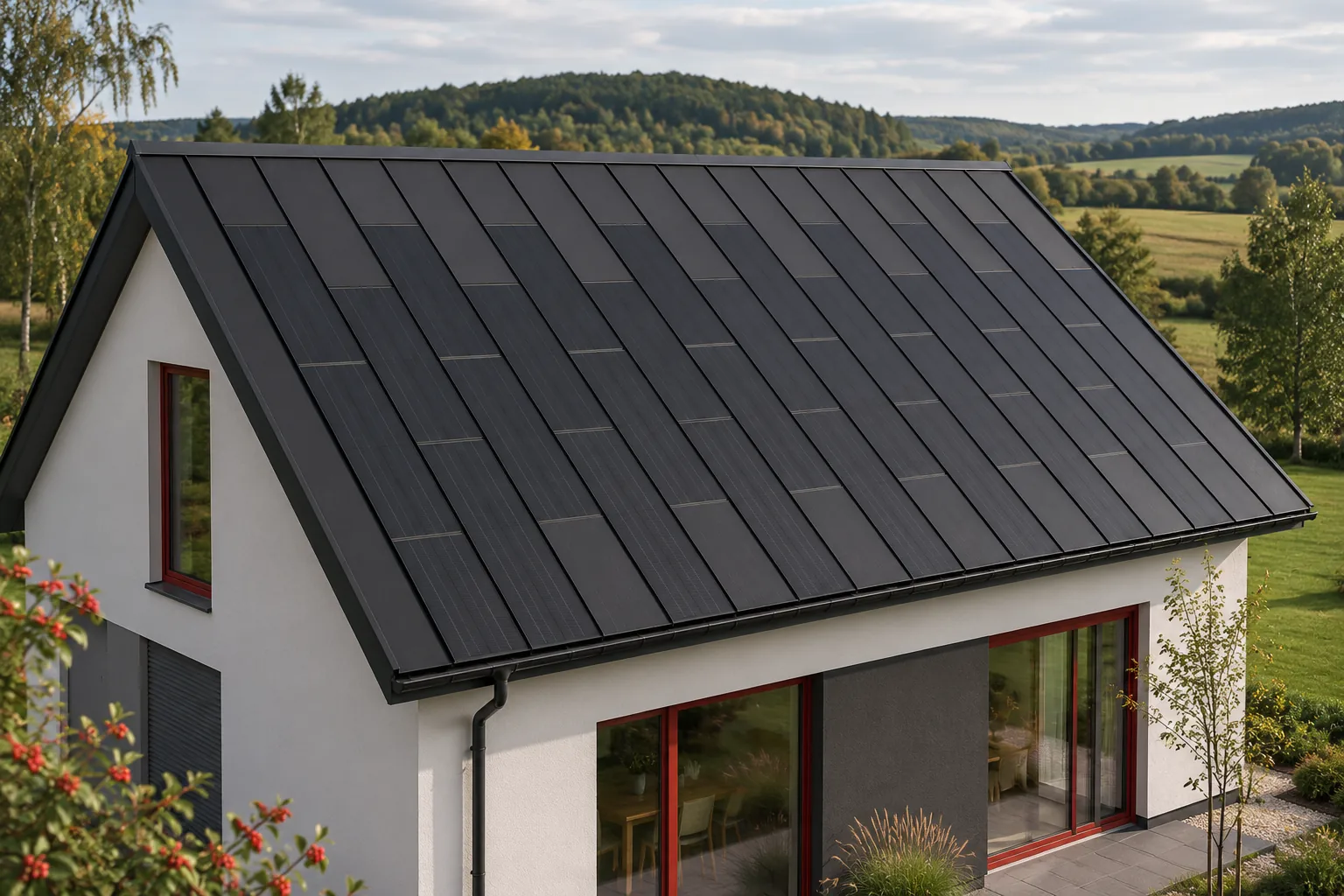
In a small house, roof area and energy consumption do not always change in the same proportion. A small building may have several large consumers, while a simple roof may offer good conditions for photovoltaics. An integrated covering allows these needs to be combined with the appearance of the house. However, the active area and the actual demand must be calculated. Floor area alone is not enough to determine the required installed capacity. Some household appliances operate independently of the building’s floor area. A refrigerator, meal preparation or charging a car may consume a similar amount of energy in a small and a large house. Heating, by contrast, depends on the standard of the building envelope and on usage conditions.
In this article
Why does a small floor area not tell the whole story about consumption?
Photovoltaics should therefore not be sized according to a single capacity figure per square metre of living space.
For an existing house, measurements and bills are the best starting point. For a new build, a realistic list of consumers must be prepared. It is worth separating base load from seasonal consumption and daytime from evening consumption. This breakdown makes it possible to assess how much of the energy from the roof can be used immediately and how much will be surplus.
How can the space available on the roof be assessed?
The roof slope area is not the same as the area available for cells. Zones near windows, chimneys and flashings must be deducted, as must the space required for maintenance. The division into complete system elements matters. On a small roof, each such detail can change the layout of the active field more than on a large, simple roof slope.
For this reason, it is advisable to plan the arrangement of openings before the design is finalised. Sometimes a small change in the position of a window allows the covering to be organised and avoids poorly used fragments. However, interior needs should not be sacrificed solely for the maximum number of modules. The roof is there to serve the whole building, not only energy generation.
What does a simple building form provide?
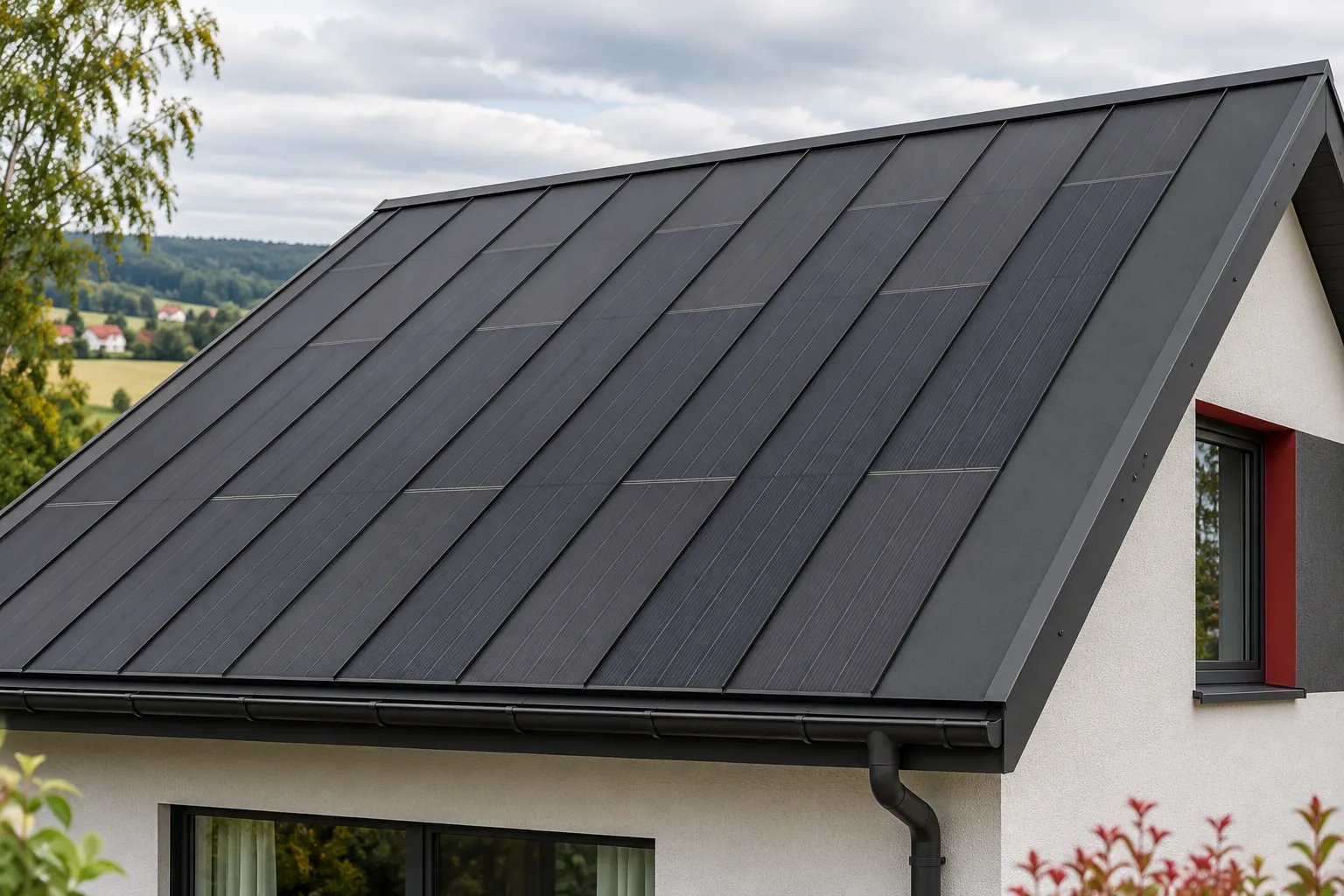
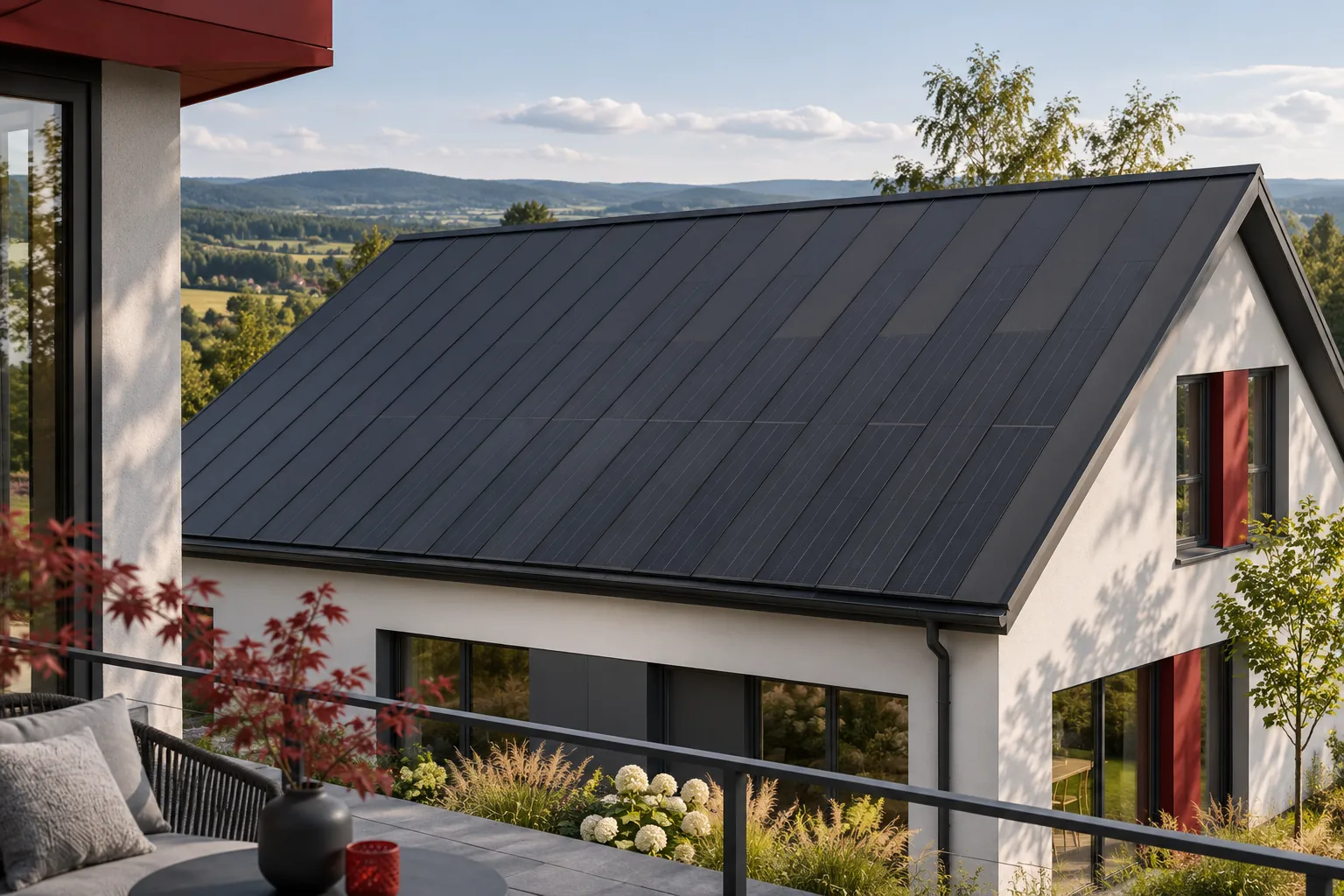
A roof with a clear arrangement of slopes usually makes it easier to arrange system elements. Fewer valleys, dormers and changes of level mean fewer places requiring individual details. In an integrated steel covering, a regular rhythm of panels can be maintained. This supports calm architecture for a small house in which the roof is a clearly visible part of the building form.
Simplicity does not remove the need for design. The pitch, supports, airtightness and ventilation must still be checked. Nor can it be assumed that every simple roof slope has good solar exposure. A small house standing close to tall trees may have more difficult conditions than a larger building on an open plot. Geometry and surroundings require joint assessment.
Is it worth covering the entire area with cells?
The answer follows from the energy balance and the cost of additional elements. Inactive sections of the covering are a normal part of many BIPV systems. They allow a weathertight, coherent roof to be maintained where cells would be unnecessary or ineffective. The installation does not have to be enlarged simply because an unused section of the roof slope remains on the drawing.
On the other hand, an active field that is too small may not match the planned consumers. It is worth comparing several sensible options. One may cover current needs, another later car charging or a change of heating. The decision should also take into account the capabilities of the electrical equipment and the building’s connection conditions.
How can generation be combined with an energy-efficient house?
First, unnecessary losses are reduced, and then the energy source is matched to the remaining needs. Good insulation, airtightness and efficient ventilation affect comfort and consumption. A photovoltaic roof does not replace any of these functions. The active covering element is part of the roof, but it does not by itself create a complete thermal envelope.
In a small house it is also easier to notice the importance of a single large consumer. It is worth providing for hot water or charger control if this will genuinely help use surpluses. Not every additional automation feature is necessary. First the problem to be solved should be identified, and only then should the device be chosen.
What should a good option for a small house include?
The design should show the active field, the passive elements and all maintenance access points. A production forecast is needed for the actual roof orientation, together with shading assumptions. This is supplemented by the consumption balance and the complete cost. In this way the client knows what energy effect is achieved and for what part of the aesthetics an additional cost is paid.
Ease of use should also be assessed. A small house does not always have a large technical space, so the location of the inverter and any storage must be chosen sensibly. A well-integrated design does not end with a handsome roof slope. It covers the entire system, which must work conveniently for years and suit the scale of the building.
Examples of companies and brands in roof-integrated photovoltaics are BIPVco, SunRoof, Electrotile, SolRoof, Autarq, Nelskamp, Megasol Energie, ML System, MDM NT (MyRoof) and Wienerberger Wevolt.
7 branches. Materials closer to your project.

- SEROCK — Dzierżenin 34 E
- BŁONIE — ul. Sochaczewska 138A
- RADOM — ul. Grobickiego 8
- ŁÓDŹ — Natolin 8
- OLSZTYN — Barczewo, ul. Prosta 9
- WROCŁAW — ul. Jerzmanowska 10C
- GORZÓW WLKP. — ul. Zielona 33/34
Free quote
Materials for your project

You may also find useful…
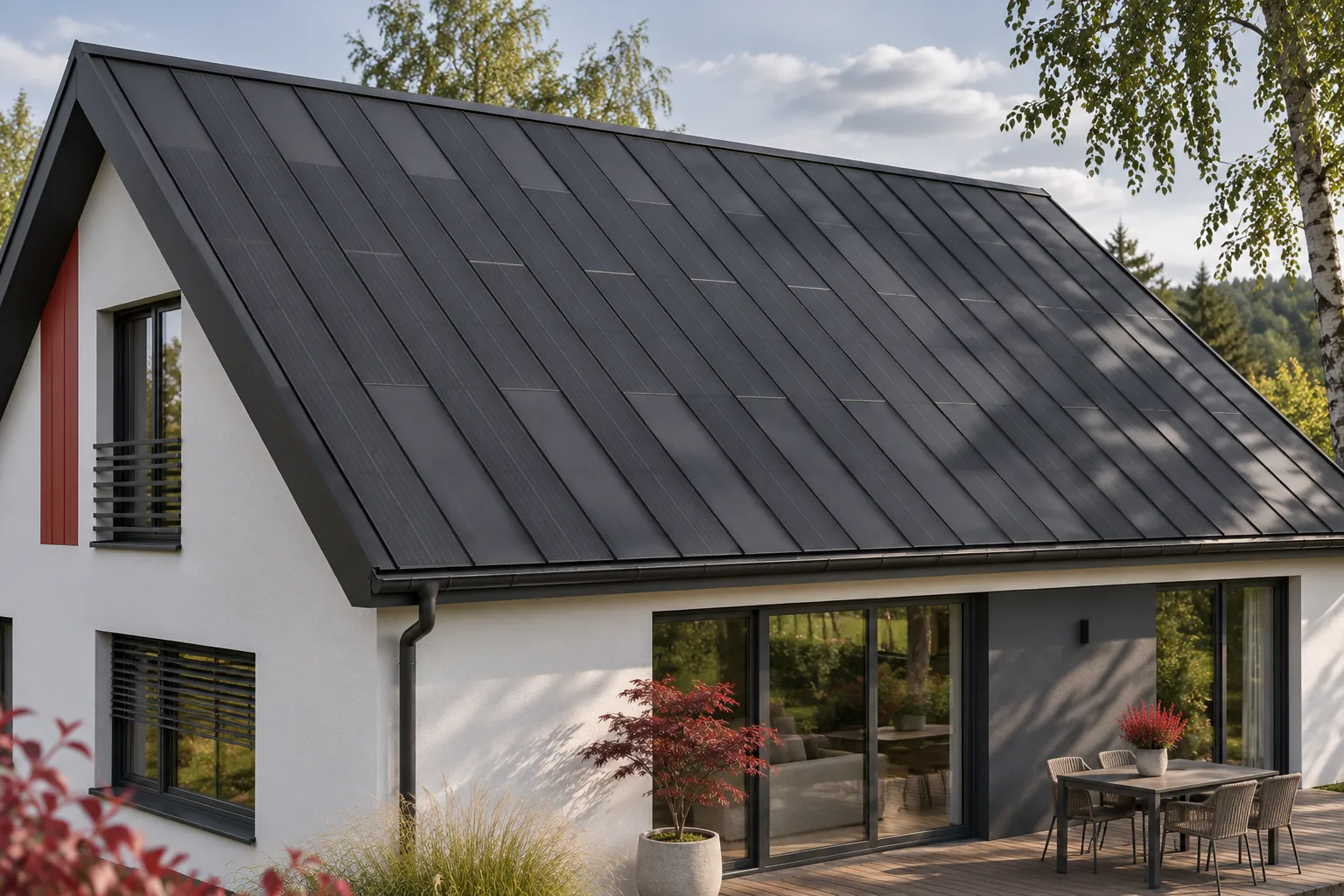
The price of one square metre of a solar roof does not answer the question of profitability. That figure may include both…
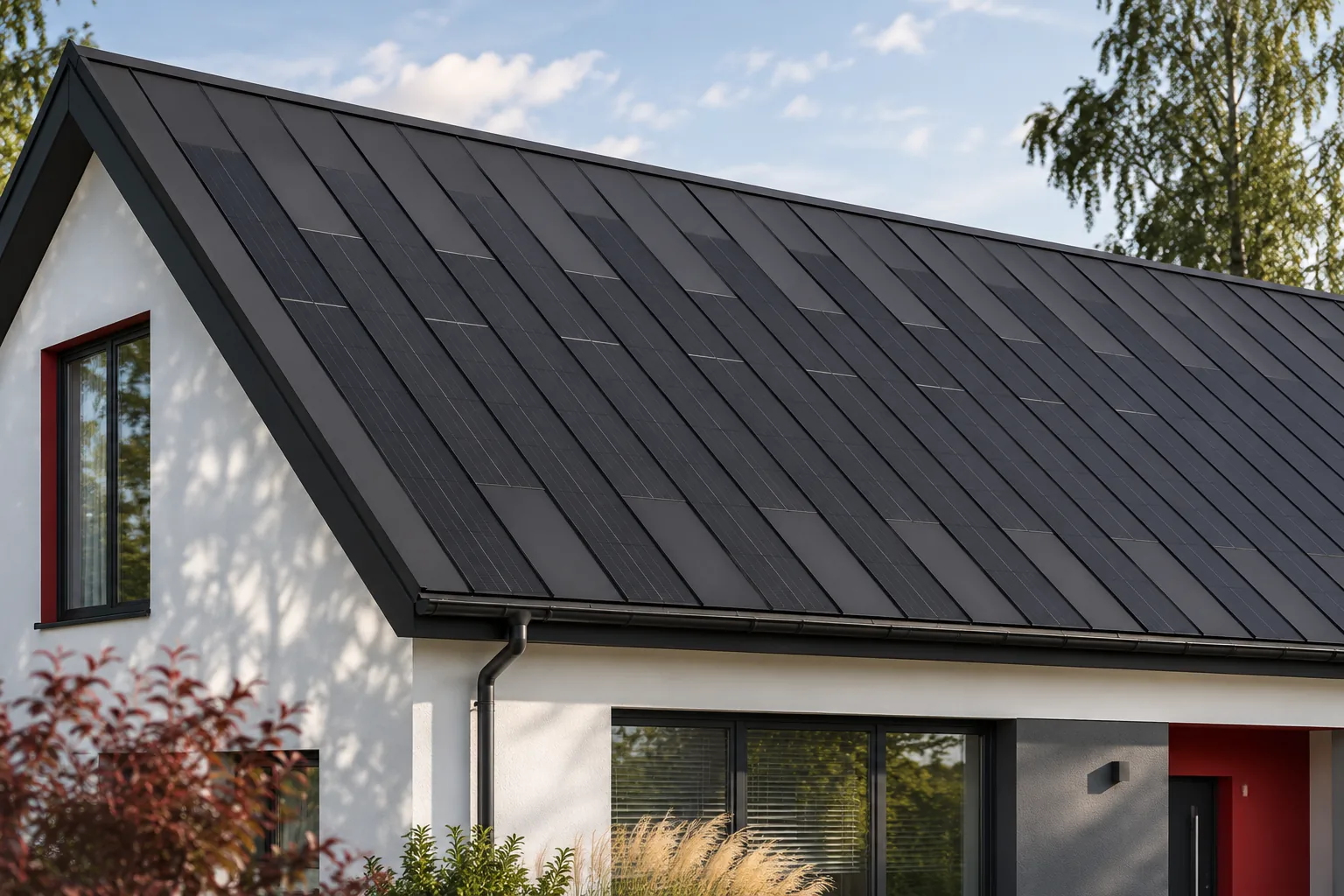
In an integrated photovoltaic roof, a single system performs both the covering and the energy-generation function. This can avoid some of the…
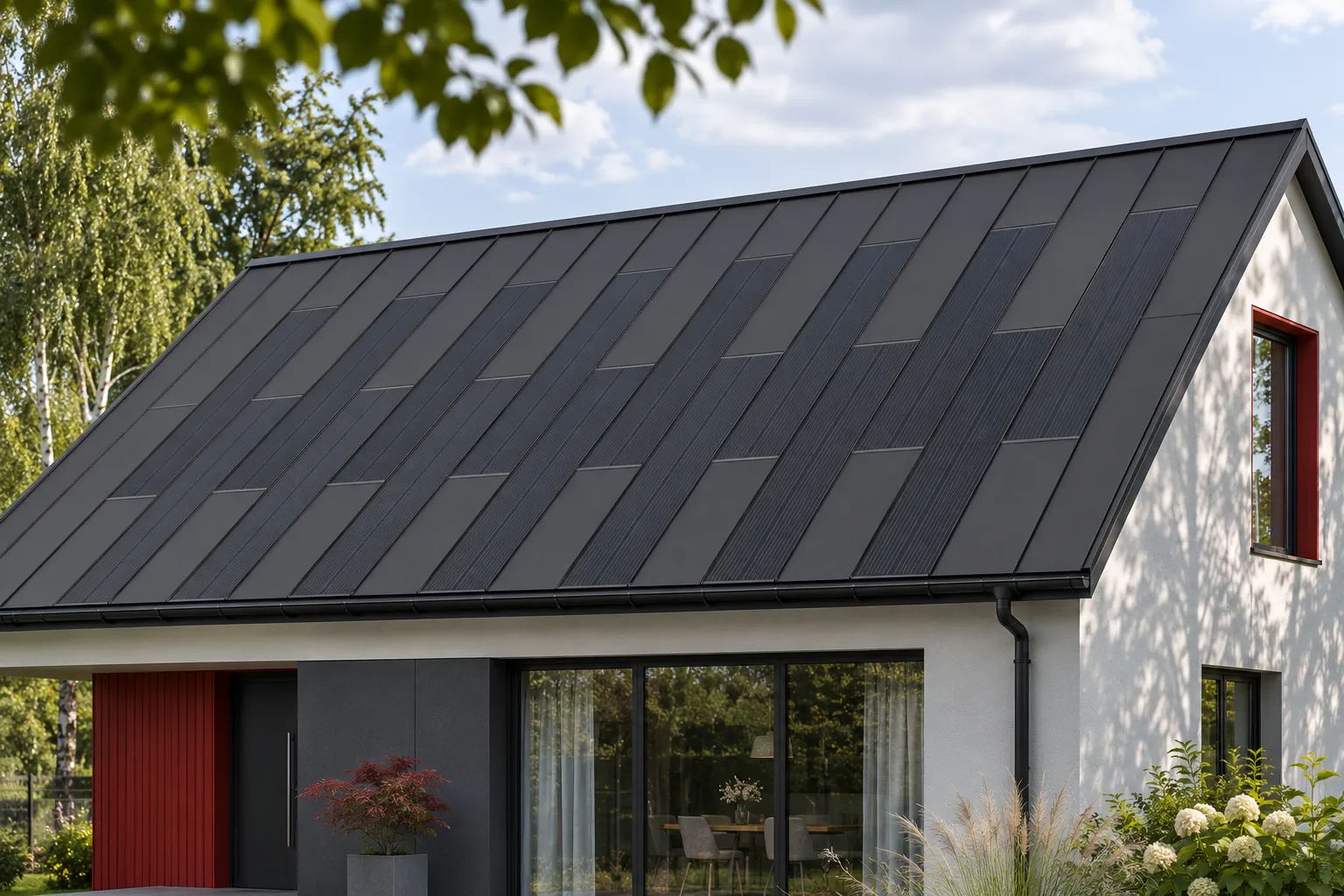
Not every section of an integrated roof has to contain cells. The active part produces energy, while passive elements complete the covering.…
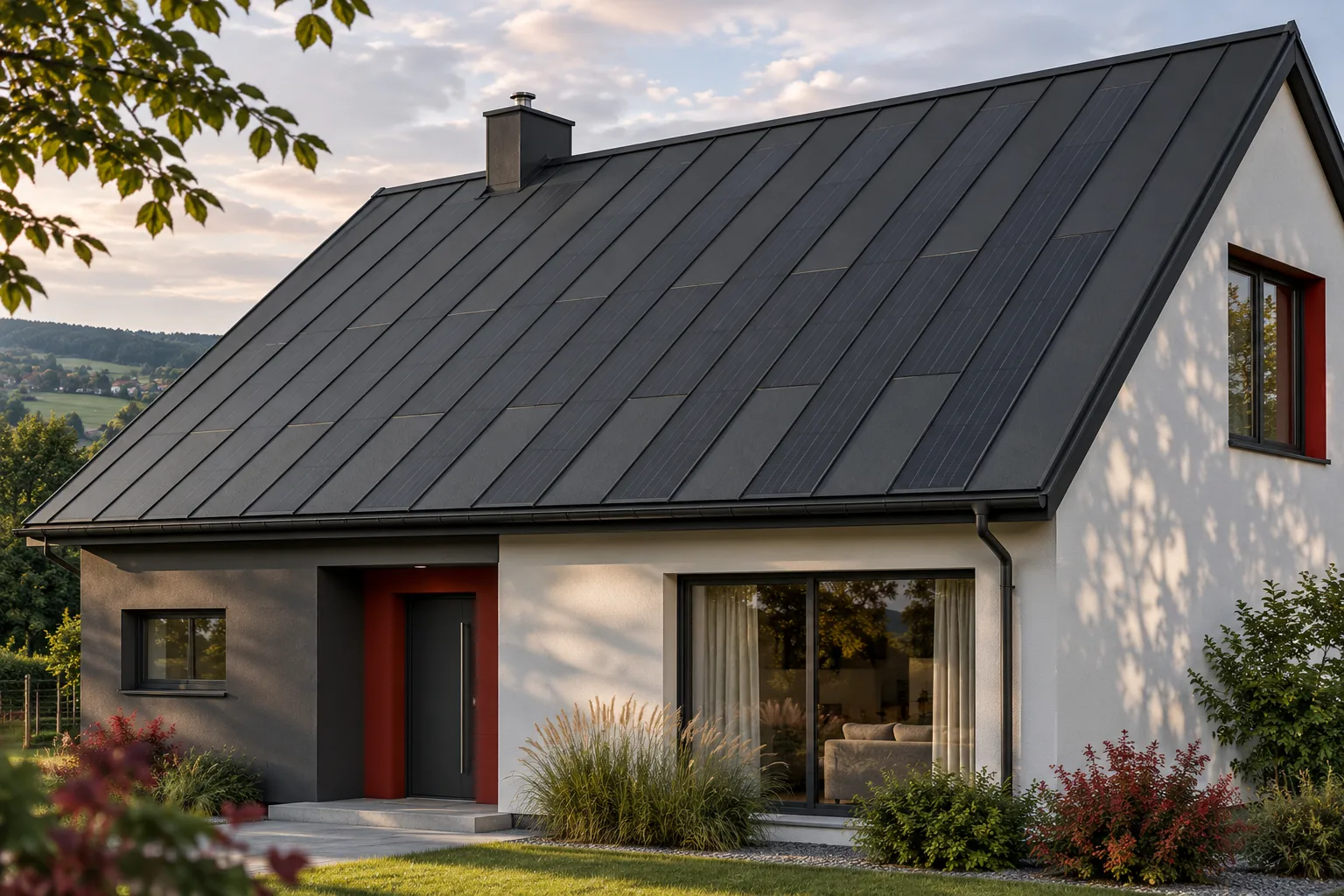
An energy storage system is not a prerequisite for a grid-connected photovoltaic roof. It can, however, help to use part of the…
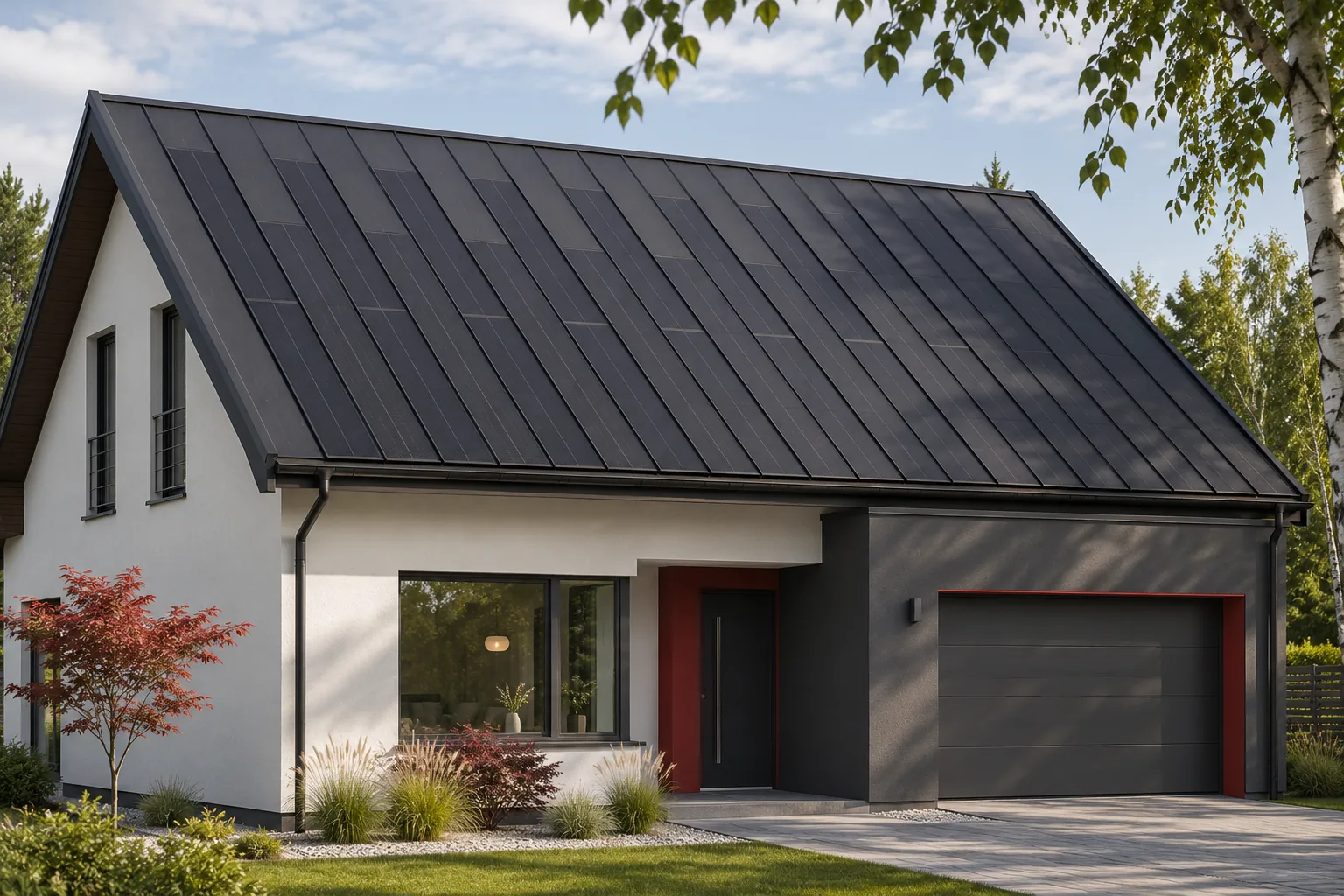
An electric car can use the energy generated by an integrated photovoltaic roof. Much, however, depends on when it is parked at…
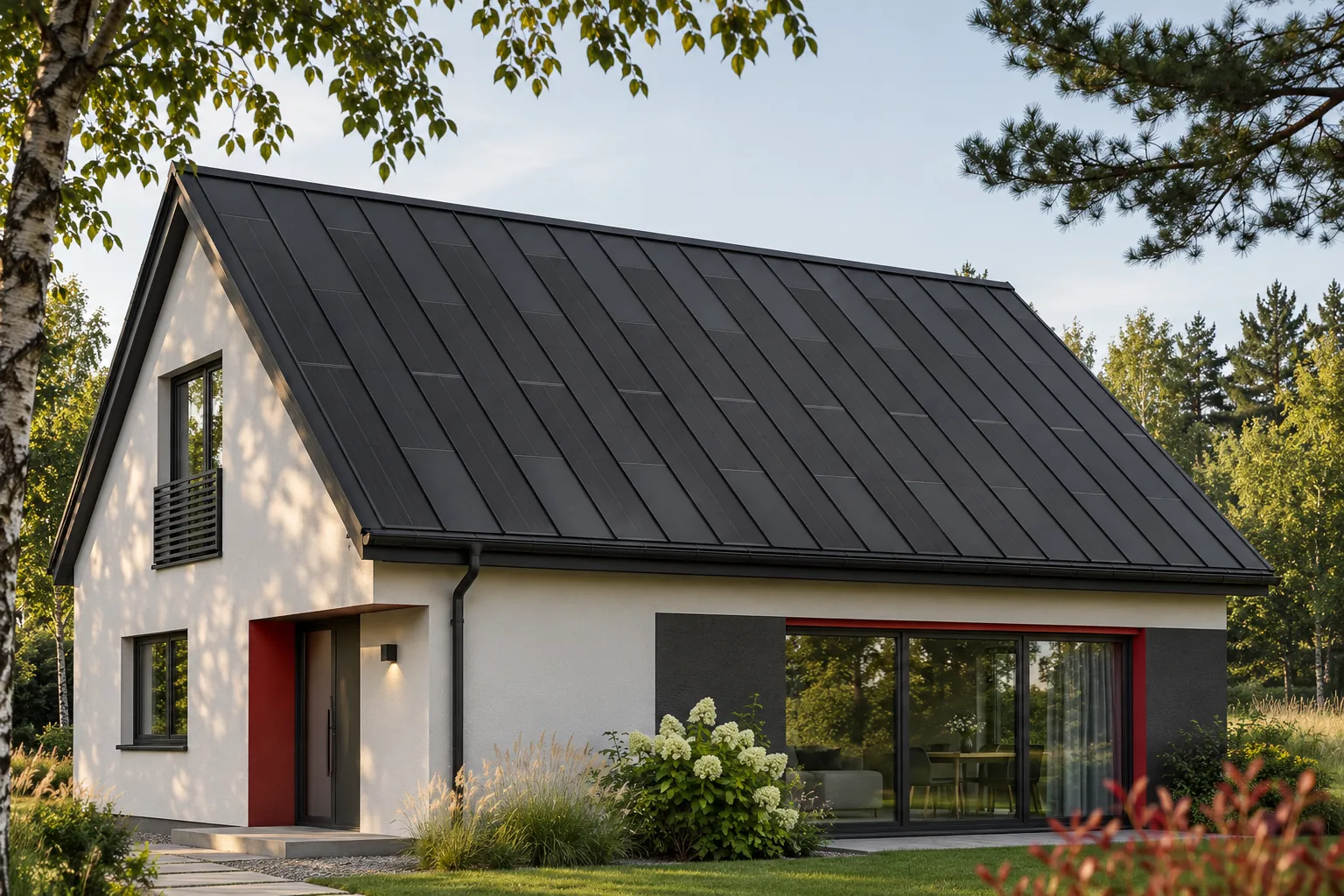
A roof is chosen for the long term, while a home's energy needs can change faster. A car may be added, a…
Solar power generation is only one part of a roof's environmental assessment. Material production, transport, installation, repairs and end of life also…
An integrated photovoltaic roof can be a strong selling point for a house, but it does not guarantee a predetermined increase in…