

Mineral wool sandwich panels
What helps mineral wool sandwich panel walls last longer?
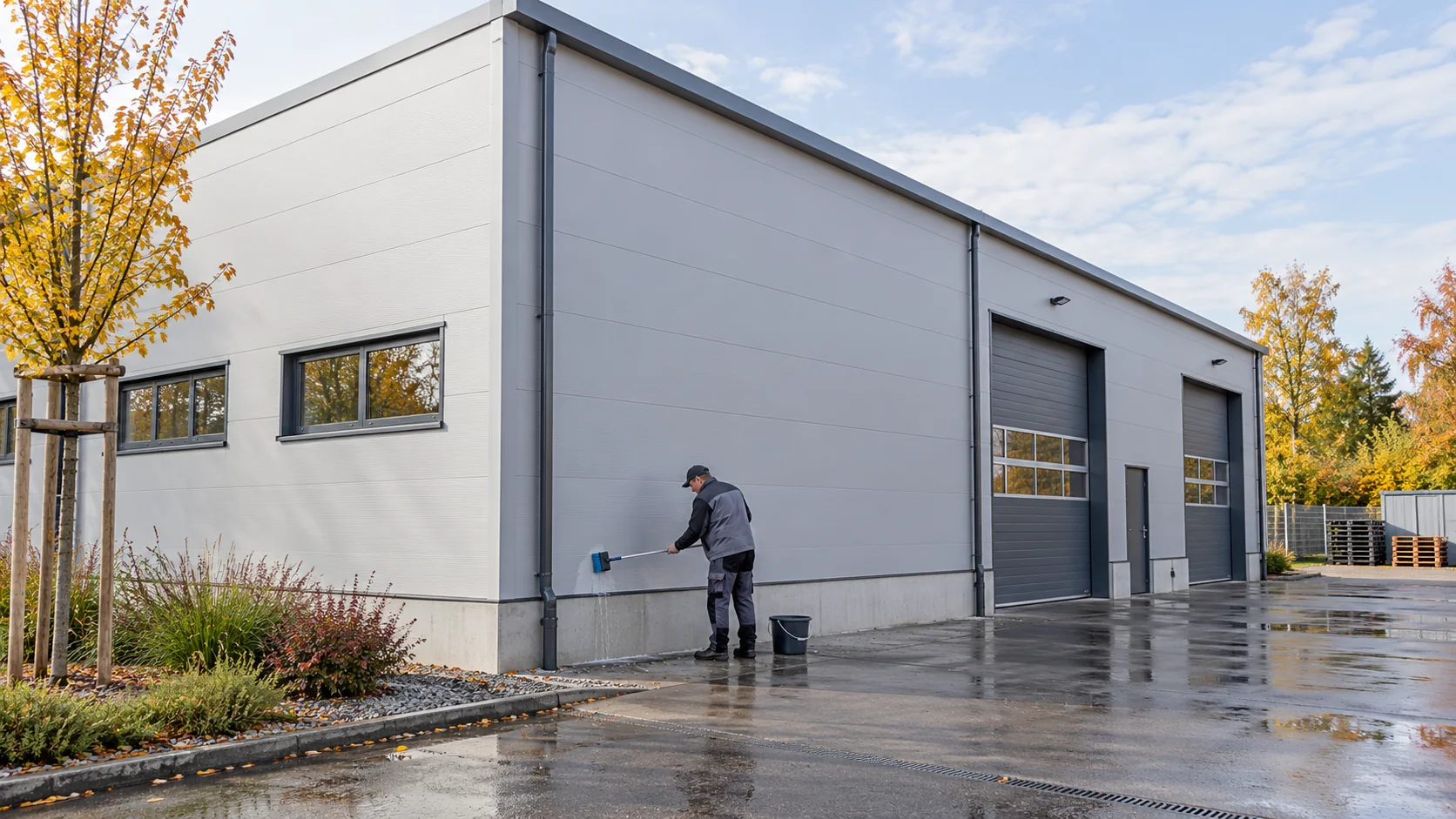
There is no single service life for every mineral wool sandwich panel. Conditions on both sides of the wall, the quality of the joints and how quickly damage is addressed all matter. A planned inspection can distinguish a scratch that needs touching up from damage that calls for a replacement panel. A faded façade may still keep the rain out; a wall that looks sound from a distance may be corroding behind a flashing. Assess the finish, corrosion protection, joints, core and fixings separately. This helps you budget for repairs and keep sound panels in service.
In this article
What counts when assessing service life?
The warranty period is a contract term, not the date when the building stops being usable. Likewise, a service life assumed in an environmental assessment does not predict how long a particular wall will last. Base refurbishment decisions on an inspection and the building’s maintenance and operating history.
Choose a finish that suits the work indoors
Steel facings in a dry warehouse face different conditions from those in a wash bay, processing plant or chemical store. Choose a coating for the humidity, temperature, contaminants and cleaning method. The core material tells you nothing about the steel finish’s resistance to these conditions.
Revisit that choice when the building changes use. A new wet process or an aggressive detergent can expose the wall to conditions it was never specified for. Check cleaning product compatibility and splash protection before the coating starts to peel.
Water usually gets in at a junction
Inspect the base of the wall, edges of openings, corners, panel ends and service penetrations. Failed sealant or loose flashing gives water a way in. Because a damp patch indoors can appear some distance from the leak, trace the water’s path before starting repairs.
Do not cover a wet core with another sheet of metal and assume the problem is solved. Stop the water entering, then assess how far it has spread and whether the core is still bonded to the facings. It may be enough to rebuild the junction, or the panel may need replacing. The absence of a visible stain is no basis for that decision.
Look for changes around the wall
Check what has changed since construction. Soil piled against the base, materials stored against the wall or a drain discharging onto it can all shorten service life. A new process exhaust can leave deposits on one part of the façade. Inspect the strip of ground beside the building as well as the panels. Redirecting discharge or moving stored materials may be more effective than repeatedly repairing the same spot.

Plan inspections around building use
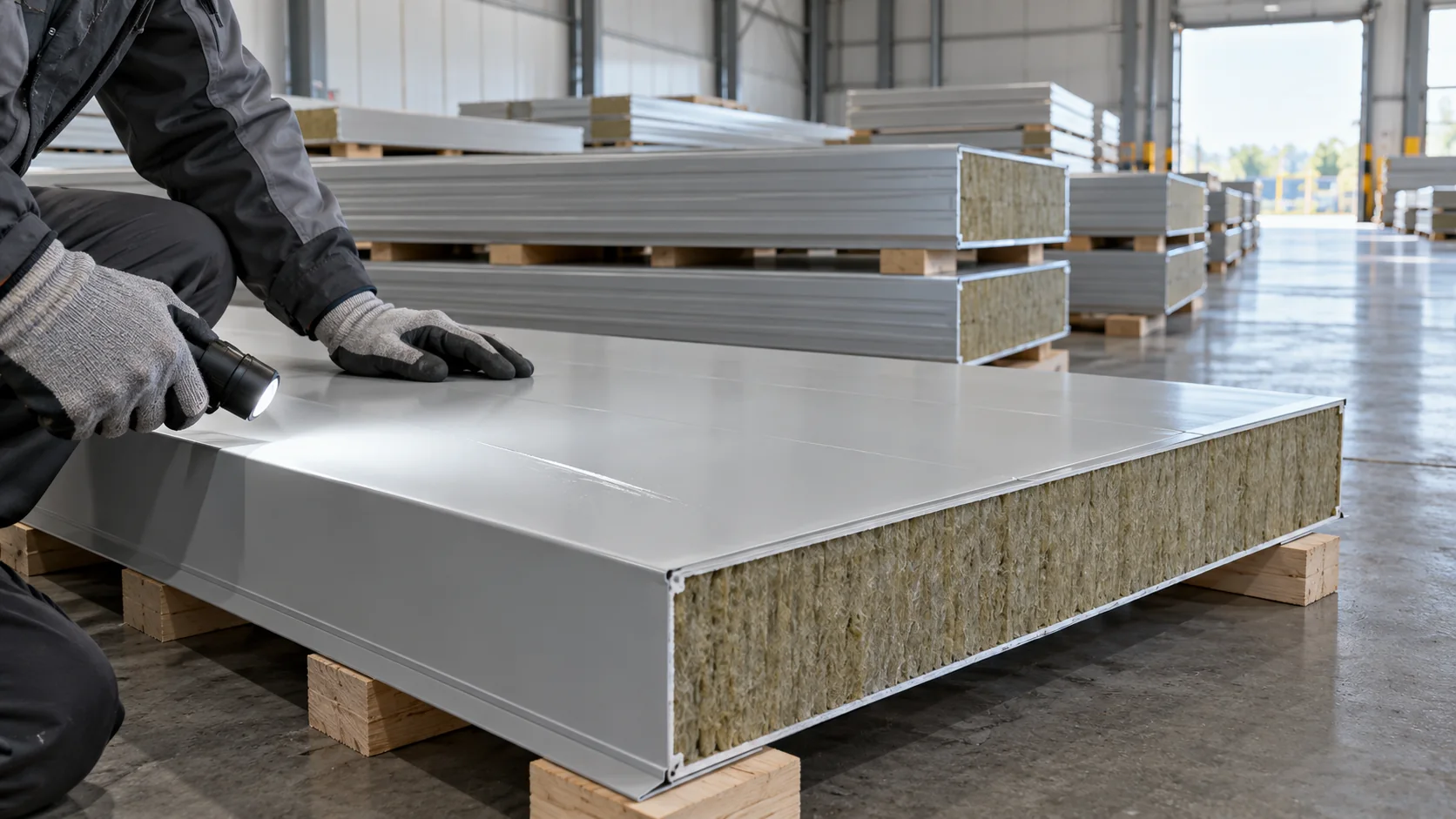
Photograph the same locations at each inspection. Check fasteners and washers, continuity of seals and the finish near ground level. Follow the maintenance instructions and adjust the interval to the operating environment. Inspect again after a forklift impact, a severe storm or work alongside the façade.
Remove drilling swarf immediately. Metal fragments left on the coating can rust and leave stubborn marks. An inspection does not mean tightening every screw: excessive pressure can damage the washer and distort the sheet.
Repair early and choose the right method
Touch up a small scratch with a repair system suited to the coating and recommended for the product. A large touched-up area may have a different sheen and weather differently from the factory finish. Before repainting a whole wall, check adhesion, the necessary surface preparation and what the new finish will mean for future maintenance.
A dent that leaves the wall weathertight may be mainly cosmetic. Delamination, serious corrosion or a damaged joint can have wider consequences. Along forklift routes, consider an independently mounted impact barrier. Without protection, a replacement panel may suffer the same damage.
Keep the records you will need in ten years
Record the panel type, facing thicknesses, cover width, colour, coating and joint arrangement. For future repairs, photographs taken before junctions were covered can be more useful than a general invoice. They help the repair team plan without opening further sections of cladding.
Allow for cleaning, access to high areas, seal maintenance and minor repairs. When comparing two wall systems, consider how easily a single panel can be replaced. The ability to fix small faults during normal operations without a costly shutdown also matters to the building’s long-term use.
Questions and answers
Do panels need replacing when the warranty expires?
No. The end of a warranty does not end a panel’s service life. The wall’s condition and the performance it must deliver determine the scope of repairs, rather than its age on paper.
Will a new coat of paint restore a damp panel?
Paint treats the surface. It will not fix a wet core or leaking joint. First eliminate the moisture source and check whether the panel still meets its performance requirements.
7 branches. Materials closer to your project.

Free quote
Materials for your project
You may also find useful…
Mineral wool wall panels are used in production halls, warehouses, workshops and public buildings. Their suitability depends on what each wall must…
Product range names give little indication of how one panel compares with another. Standard, lightweight and higher-specification versions may differ in their…
A mineral wool panel should meet the building’s requirements and allow people to operate and maintain it easily. Thickness alone is a…

Start with the panel price per square metre, then work out the cost of the finished wall. Thickness, facings, coating, panel lengths…
Discounted mineral wool sandwich panels can make sense for a small extension if you know why the batch was downgraded. Start with…
Weight per square metre helps compare panels, but the site team needs the weight of the whole unit. This depends on length,…
Some wall panel ranges include a 60 mm mineral wool option. Its suitability depends on the job the wall has to do.…
Choose the thickness of a mineral wool panel by checking thermal performance, fire resistance, load capacity and construction details together. The 60–200…