

Sheet metal and roofing
Which flashings keep water out of a roof, and when should they be replaced?
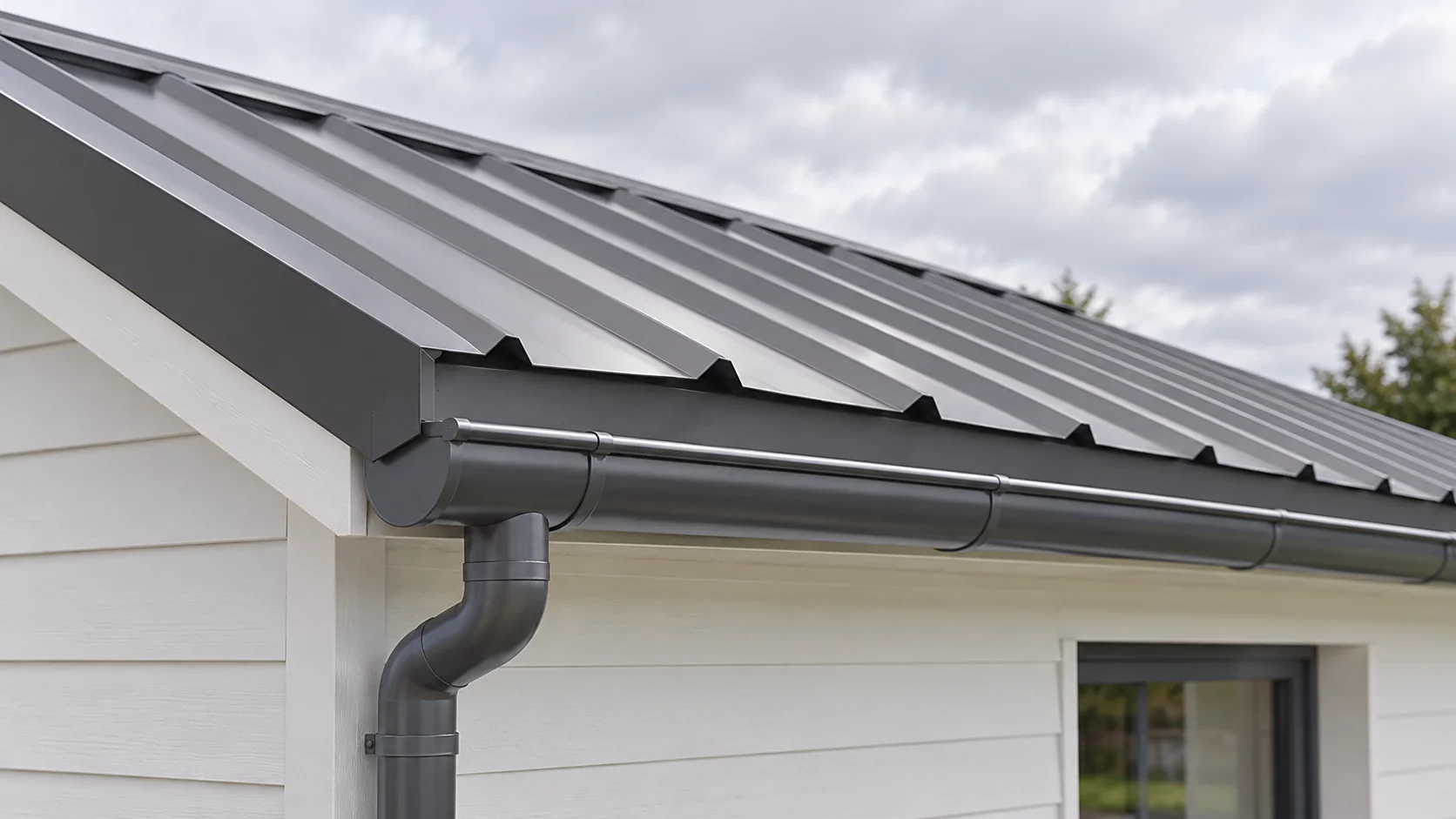
Flashings guide water where a roof sheet meets an edge, a wall or another slope. At the eaves, one flashing directs runoff from the covering into the gutter; another can protect the fascia and eaves finish. The underlay may need its own drainage edge. At the verge, ridge, valley and chimney, different shapes serve different purposes. When renovating, check how each junction sheds water and whether its shape still suits the new covering. Colour and visible rust tell only part of the story. A section drawing is more useful for ordering eaves flashings than a name that different trades may use differently.
In this article
What belongs at the eaves?
When replacing a gutter, inspect the eaves flashings too. Moving the gutter up, down or away from the edge can change where water lands. Even a rust-free eaves detail needs checking: water must drain from both layers and any ventilation inlet must remain open.
How are the verges and ridge protected?
Verge flashings cover the side edges. Their fixings must resist wind, especially near corners. A loose flashing may rattle and bend; a rigid improvised joint can restrain movement. Select the shape and fixing positions to suit the covering and its supporting structure.
A ridge cap protects the joint between the two slopes. On a ventilated roof the air still needs an outlet. The metal cap alone does not make the junction complete: seals, protection from wind-driven rain and connections to the sheets all matter. Closing every gap can defeat the ventilation design.
Which junctions need flashings shaped for the roof?
A valley collects water from two slopes. An abutment flashing channels it along a higher wall. A chimney needs an upslope back gutter or flashing, side flashings and a downslope apron. These junctions differ in shape and water load. A colour-matched angle is no substitute for a properly detailed junction.
A hatch, roof window, ventilation duct or new wall changes the path of runoff. Check that it does not send water into an existing lap. Long pockets and narrow outlets trap leaves and slow drainage. The junction should remain accessible for inspection and cleaning.
How do you work out the lengths and number of pieces?
Draw the roof and label each edge by function. For example, a simple gable roof with two 9.40 m eaves, a 9.40 m ridge and four 5.10 m verge edges has 18.80 m of eaves and 20.40 m of verges. These are measured lengths before laps or cutting allowances.
Count pieces using their supplied length and the overlap at each joint. In a worked example, five 2 m lengths with four overlaps of 0.10 m cover 9.60 m. The 0.10 m is an assumption for this calculation only. Use the lap and joint detail specified for the actual system.

When does an existing flashing need replacing?
Look for corrosion holes, cracked folds, permanent bends and enlarged fixing holes. Check areas patched repeatedly with sealant. Even with little rust, a flashing that traps water may need replacing. Minor damage to a finish does not necessarily justify replacing a whole run.
A higher profile, thicker roof build-up or repositioned gutter may make the old flashing unusable. Do not force it into place. Measure the completed substrate and allow for the selected system. For an unusual junction, trial-fit a piece before making the full run.
How do you maintain flashings?
After fitting, remove swarf and offcuts, especially in valleys and behind chimneys where they can be hard to spot. During use, check the fixings, finish and drainage. Thin flashings are not general-purpose brackets for cables or equipment; these need their own suitable fixings.
An inspection after high winds can catch a loose part before it causes a major leak. Photograph the condition from a safe position. When cleaning, avoid directing a strong jet under laps. Before touching up a coating, remove the cause of damage, prepare the surface and choose a compatible product.
Questions and answers
Can I order flashings from the roof area alone?
No. You need the lengths and shapes of edges and penetrations. Two roofs with the same area can need completely different sets of flashings.
Does a matching colour mean a flashing fits?
Not necessarily. Compare its cross-section, fixings and drainage path, then check the coating and the compatibility of the materials in contact.
7 branches. Materials closer to your project.

Free quote
Materials for your project

You may also find useful…
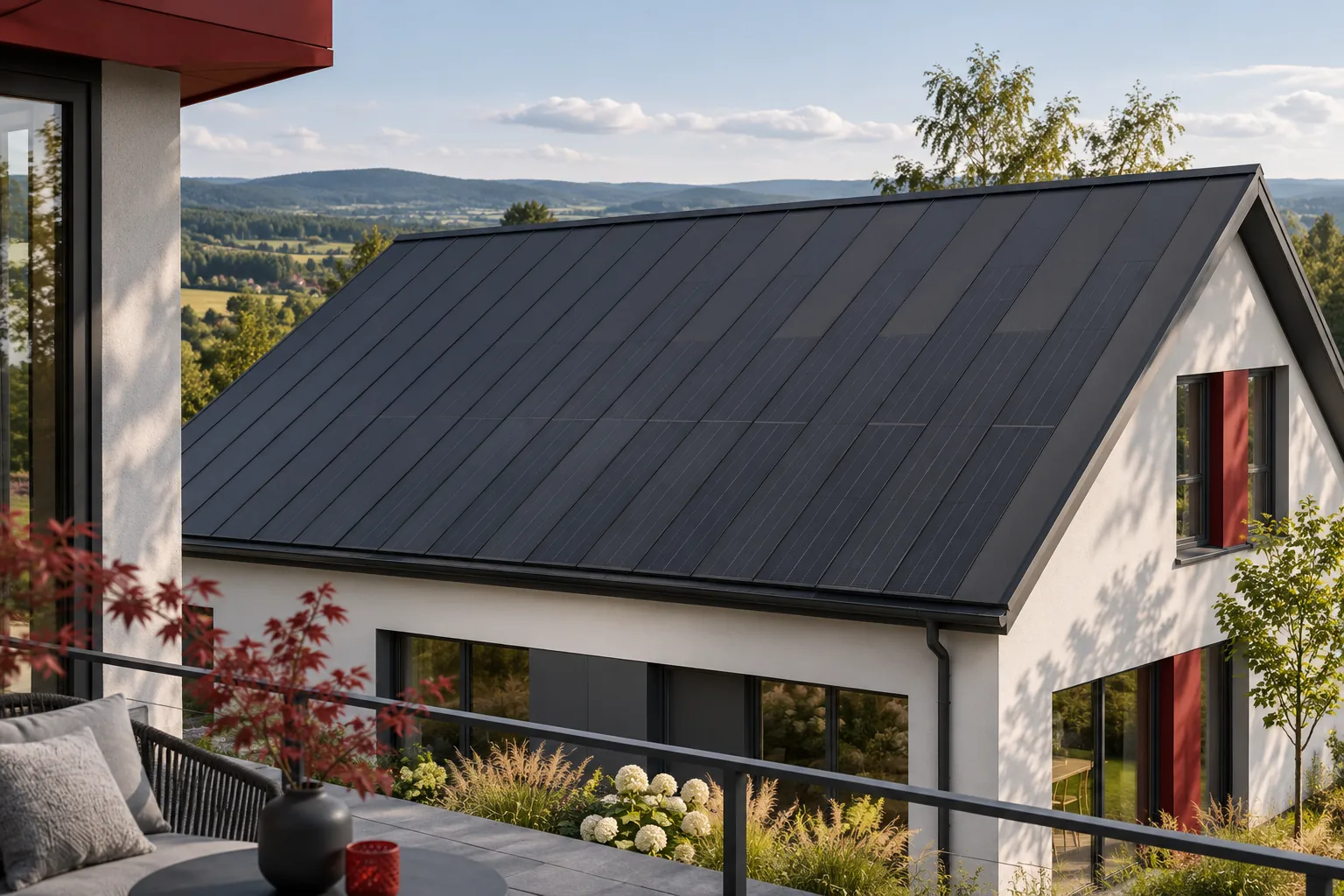
An integrated photovoltaic roof can be a strong selling point for a house, but it does not guarantee a predetermined increase in…
The price of one square metre of a solar roof does not answer the question of profitability. That figure may include both…
A roof is chosen for the long term, while a home's energy needs can change faster. A car may be added, a…
T14 profiled steel sheet can be an option for a small replacement roof or lightweight cladding. Before choosing a sheet thickness or…
A durable material can help to limit expenditure, but it does not guarantee a cheap roof. Fibre-cement sheets have to be bought,…
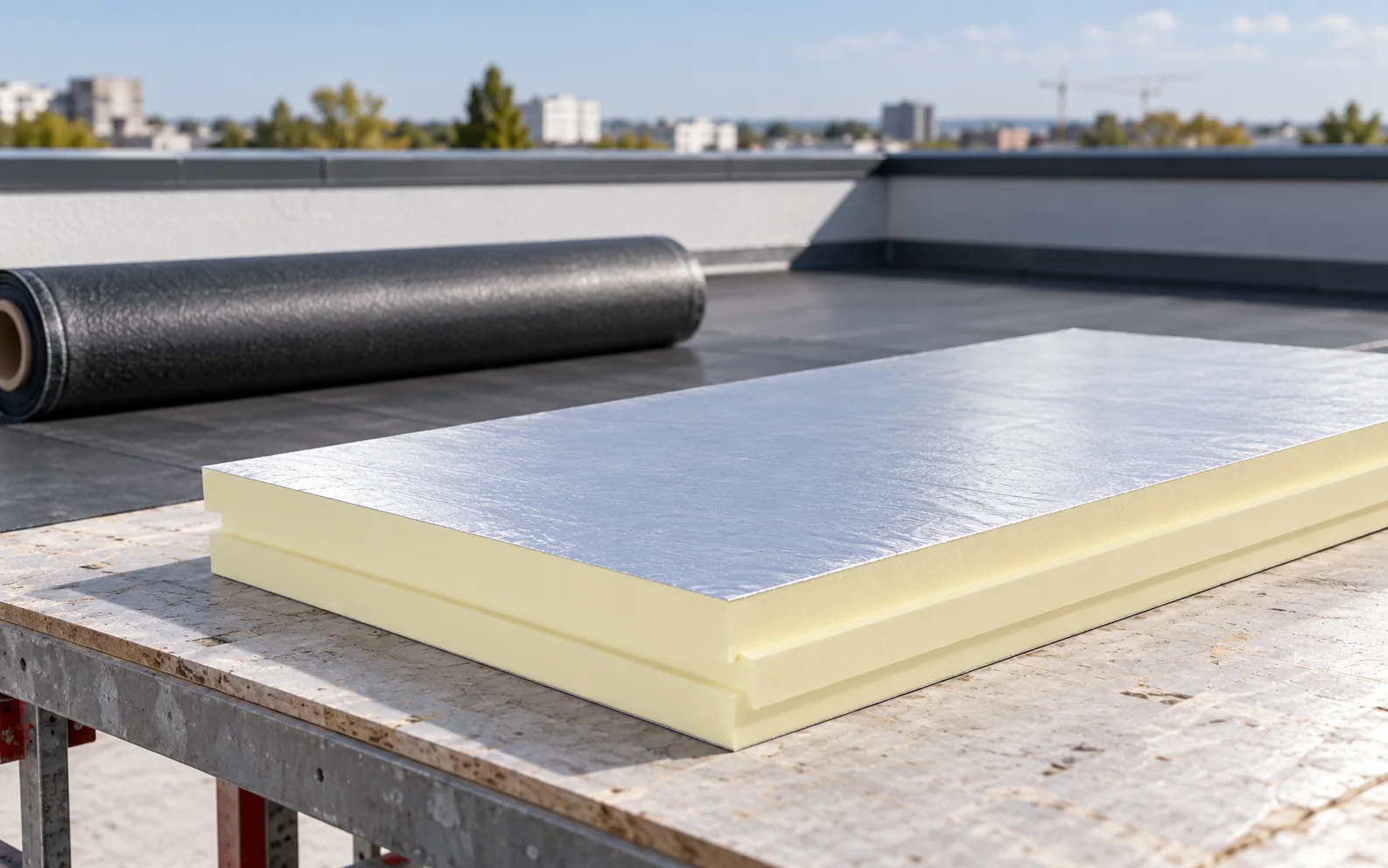
For a flat roof, a continuous waterproofing system is usually selected, such as roofing felt or a membrane. Beneath it, a suitable…
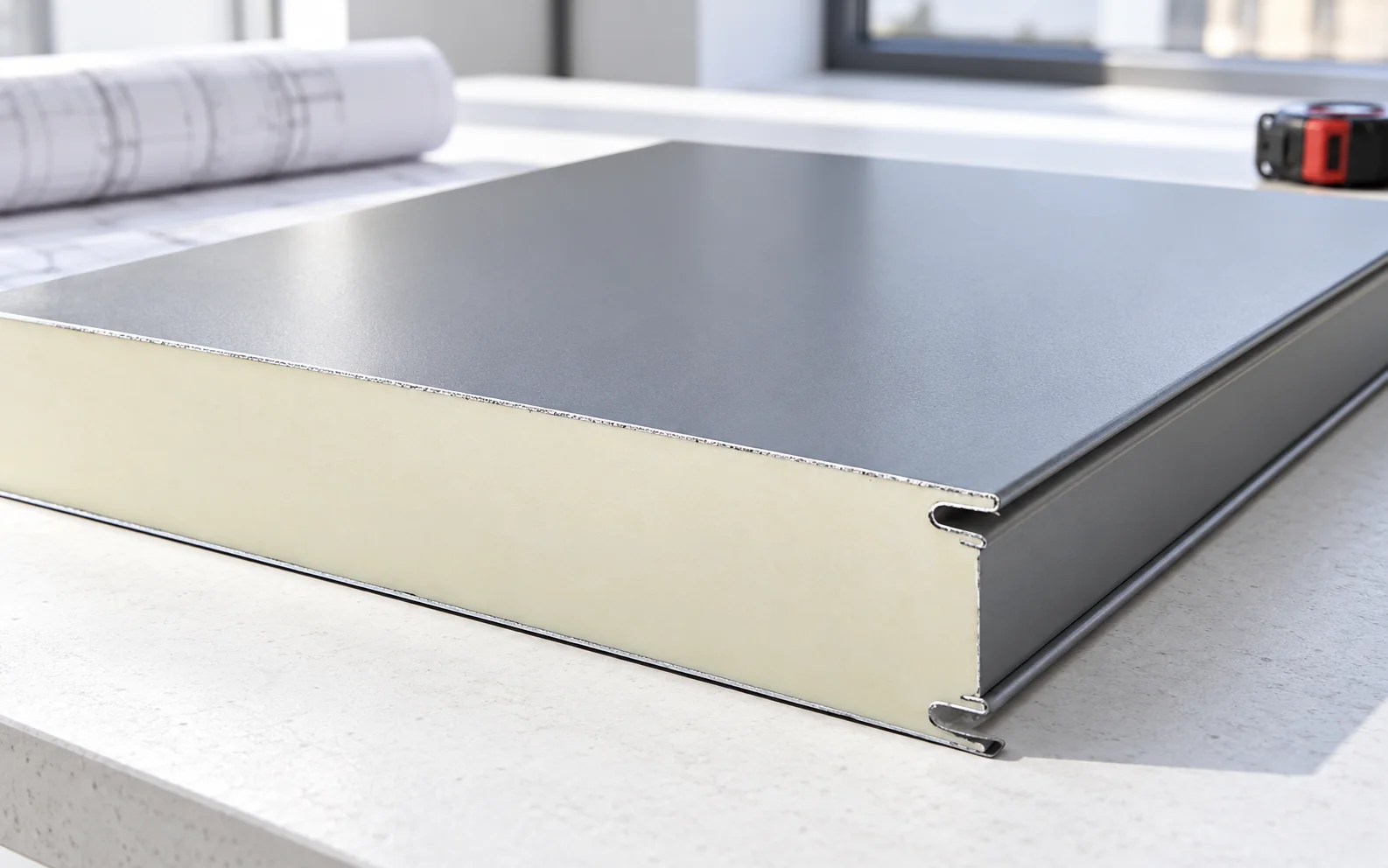
Sheet metal makes it possible to create calm, repetitive divisions on the roof and walls. A lightweight cladding, however, serves a different…
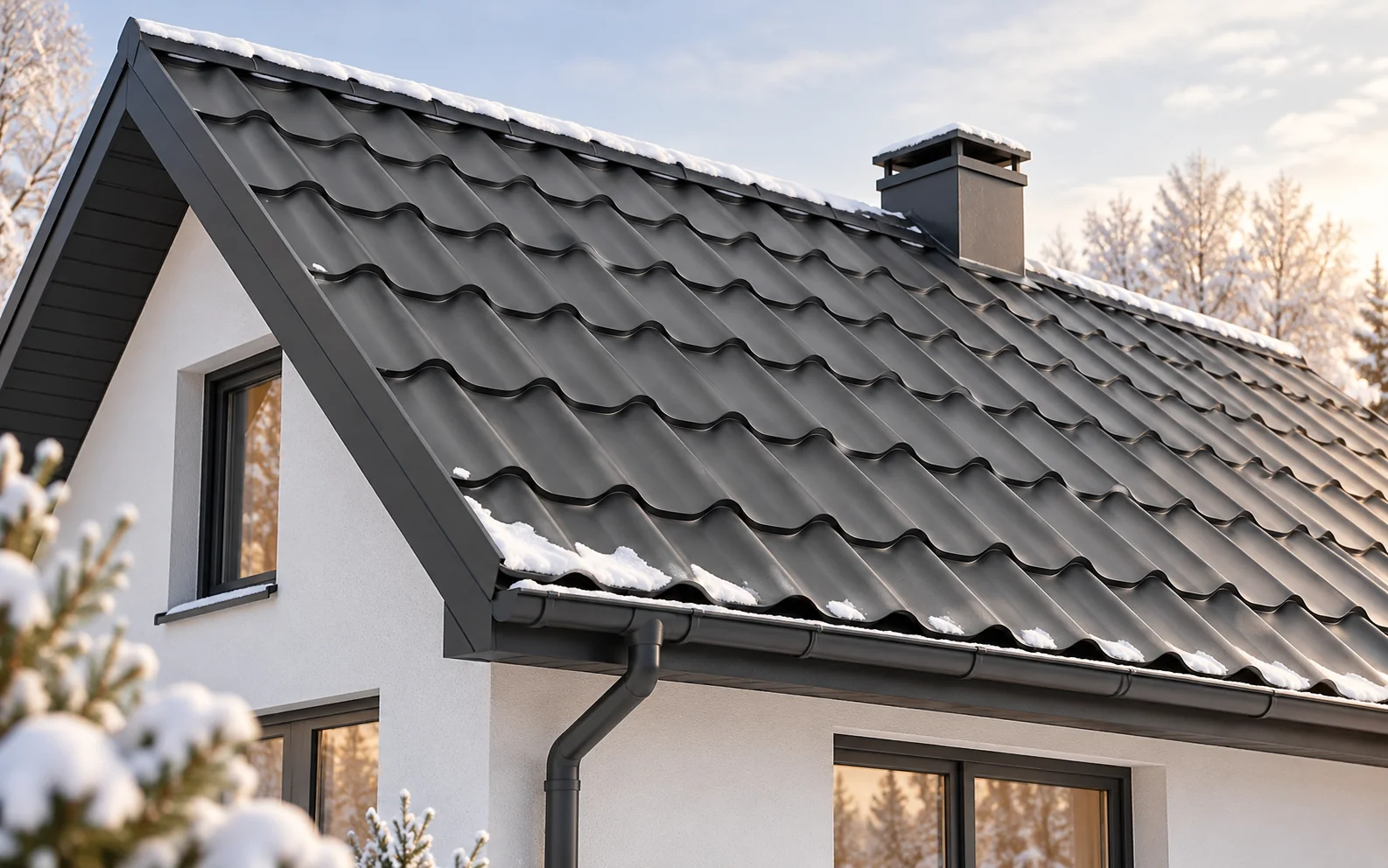
Preparing a roof for winter covers three areas: drainage, the safety of components and moisture control beneath the covering. The response to…