

Roof and energy
Buying a BIPV roof: how to plan for your household’s future electricity needs
A roof is chosen for the long term, while a home’s energy needs can change faster. A car may be added, a different heating system, or new working hours for the occupants. This does not mean you have to buy the largest possible installation straight away. It is worth preparing several scenarios and allowing for sensible expansion options. An integrated roof offers the chance to plan the covering and the energy together, provided that future changes are described concretely. First, describe current consumption and the changes that are already planned. Separate these from ideas with no implementation date. Buying a car in the coming year is a different assumption from an unspecified future extension of the house.
In this article
What is a need and what is only a possibility?
The less certain a scenario, the more cautiously it should be included in the expenditure incurred today.
This is not about doing without the reserve. It is about its deliberate scope. It is possible to prepare space for a device, a cable route, or the option of changing part of the active array. Each of these steps has a different cost and different constraints. It is good if the design shows what a specific reserve provides, instead of using the general slogan of readiness for the future.
How to build several consumption variants?
The base scenario should correspond to the current home. The next may take into account a heat pump, a car, or more frequent presence during the day. In each, it is necessary to describe not only annual energy but also the hours of consumption. This makes it possible to check whether additional production will be consumed on site or mainly exported to the grid.
Add less favourable conditions to the variants. These may be lower yield, changed energy prices, or a delayed purchase of a new consumer. This shows whether a larger installation is still justified. The analysis does not have to pretend to predict all changes. It should show which assumptions the decision depends on most.
What can be anticipated within the roof slope itself?
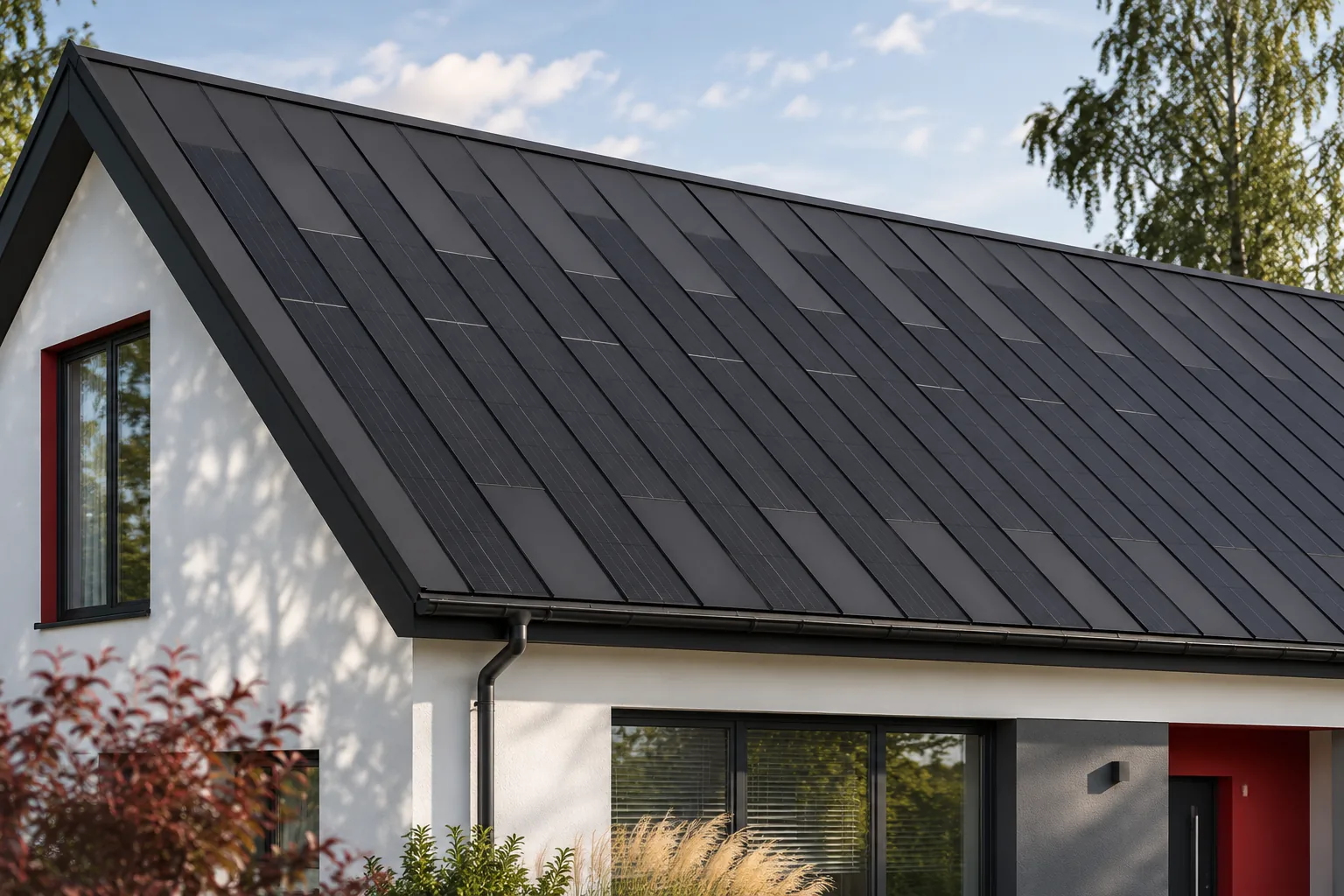
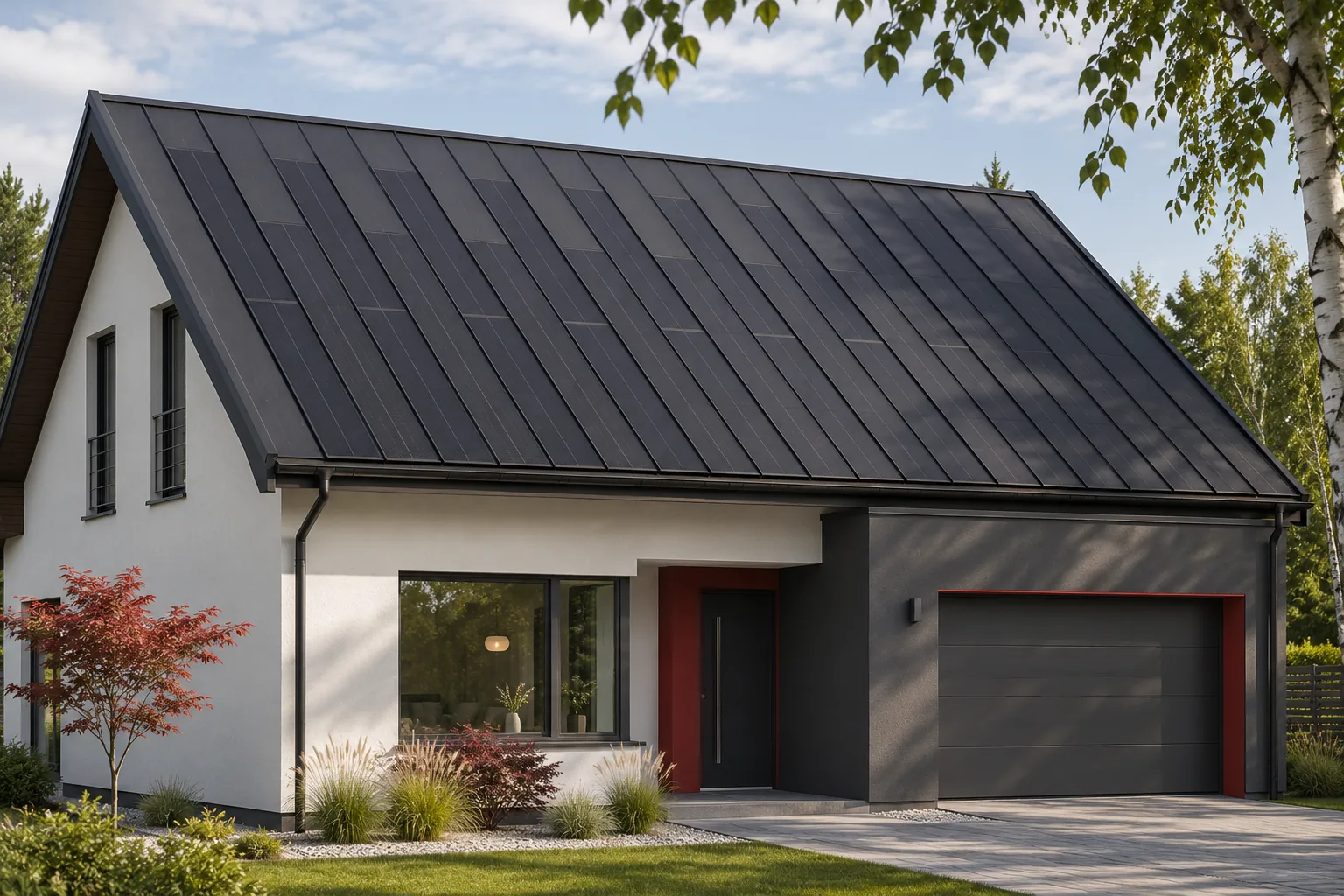
A system of active and passive panels makes it possible to adapt the covering to the current output. If expansion is planned, the possibility of replacing specific elements must be checked. A similar appearance does not mean automatic interchangeability. Dimensions, connections, installation access and compatibility with the future range of parts all matter.
It is worth keeping documentation of the layout and information about the products used. You can also ask about the recommended stock of elements for later repairs. One should not promise that many years from now any new panel will fit without changes. Durable roof architecture requires a maintenance plan, even when its energy part is to be developed gradually.
How to prepare the electrical part?
The designer should assess the location of the inverter, cable routes, protection and connection options. If you are considering storage, the method of its later connection must be determined. If you are planning a charger, an analysis of simultaneous consumption is needed. Each of these functions requires more than leaving free space on the wall.
It does not always pay to buy larger devices straight away. A reserve may involve cost and operating constraints with the current installation. The option of buying with a reserve should be compared with the option of later replacement. It is good when the contractor explains the consequences of both paths. The word “expandable” in an offer is not a technical parameter in itself.
Why is data from the first year valuable?
After commissioning, the assumptions can be compared with actual production and consumption. This reveals the hours of surplus, seasonal shortfalls and the influence of the occupants’ habits. Such information helps to better select later control or storage. Before the next expense is made, it is worth checking whether it solves a problem visible in the measurements.
However, the whole project should not be judged on one unusual month. The results require the context of weather and changes in use. Regular observation is useful, rather than reacting daily to every cloud. Well-configured monitoring makes it possible to detect faults and support decisions, without turning home operation into a separate occupation.
What decision is worth making at the outset?
Choose a scope that corresponds to certain needs and has described options for change. In the cost estimate, separate the elements essential now from the preparation for future devices. Keep the design, the commissioning records, the module map and the warranty conditions. These documents matter for any later expansion and for changing contractor.
The greatest advantage of a BIPV roof is the possibility of treating energy as part of the architecture already at the construction stage. This does not have to mean buying all the equipment at once. A sensible plan combines a coherent covering, the necessary output and a realistic service path. As a result, the home can change, and the owner is not left with a promise of expansion without technical backing.
Manufacturers and brands of solar roofs include MDM NT (MyRoof), 3S Swiss Solar Solutions, Megasol Energie, Terrán, Wienerberger Wevolt, SolRoof, ML System, SunRoof, Solarstone and Electrotile.
7 branches. Materials closer to your project.

- SEROCK — Dzierżenin 34 E
- BŁONIE — ul. Sochaczewska 138A
- RADOM — ul. Grobickiego 8
- ŁÓDŹ — Natolin 8
- OLSZTYN — Barczewo, ul. Prosta 9
- WROCŁAW — ul. Jerzmanowska 10C
- GORZÓW WLKP. — ul. Zielona 33/34
Free quote
Materials for your project

You may also find useful…
In a small house, roof area and energy consumption do not always change in the same proportion. A small building may have…
A heat pump needs electricity, and a photovoltaic roof can supply part of it. This is a good combination if both solutions…
Solar power generation is only one part of a roof's environmental assessment. Material production, transport, installation, repairs and end of life also…
Photovoltaics can generate energy even under a cloudy sky, because it also uses diffuse light. Production will, however, depend on the amount…
The price of one square metre of a solar roof does not answer the question of profitability. That figure may include both…
Photovoltaic panels on an existing metal roof require fixings that have been verified for exactly the sheet or sandwich panel installed on…
In an integrated photovoltaic roof, a single system performs both the covering and the energy-generation function. This can avoid some of the…
An electric car can use the energy generated by an integrated photovoltaic roof. Much, however, depends on when it is parked at…