

Insulation and energy renovation
Choosing EPS, XPS or PIR when renovating a house
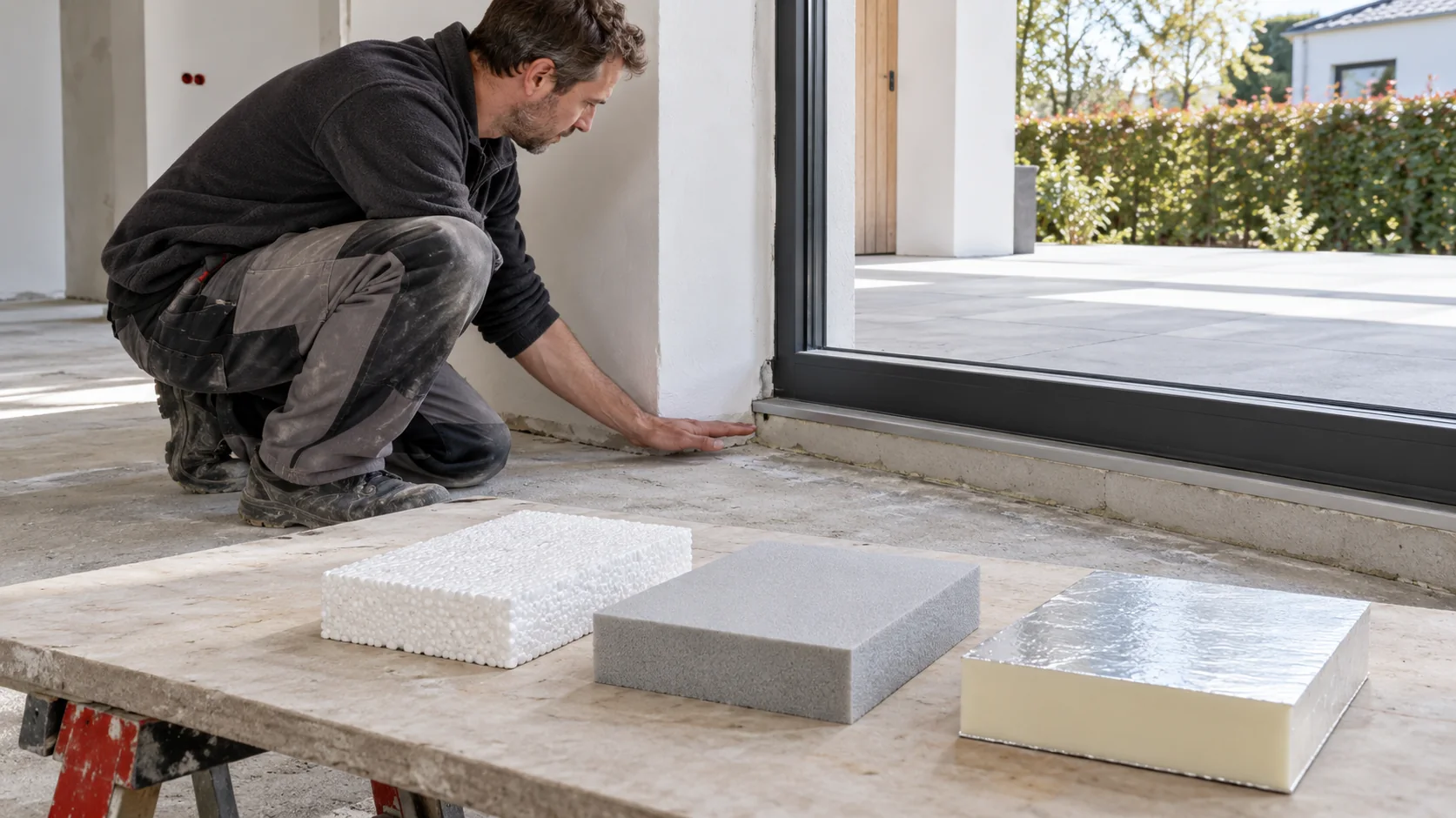
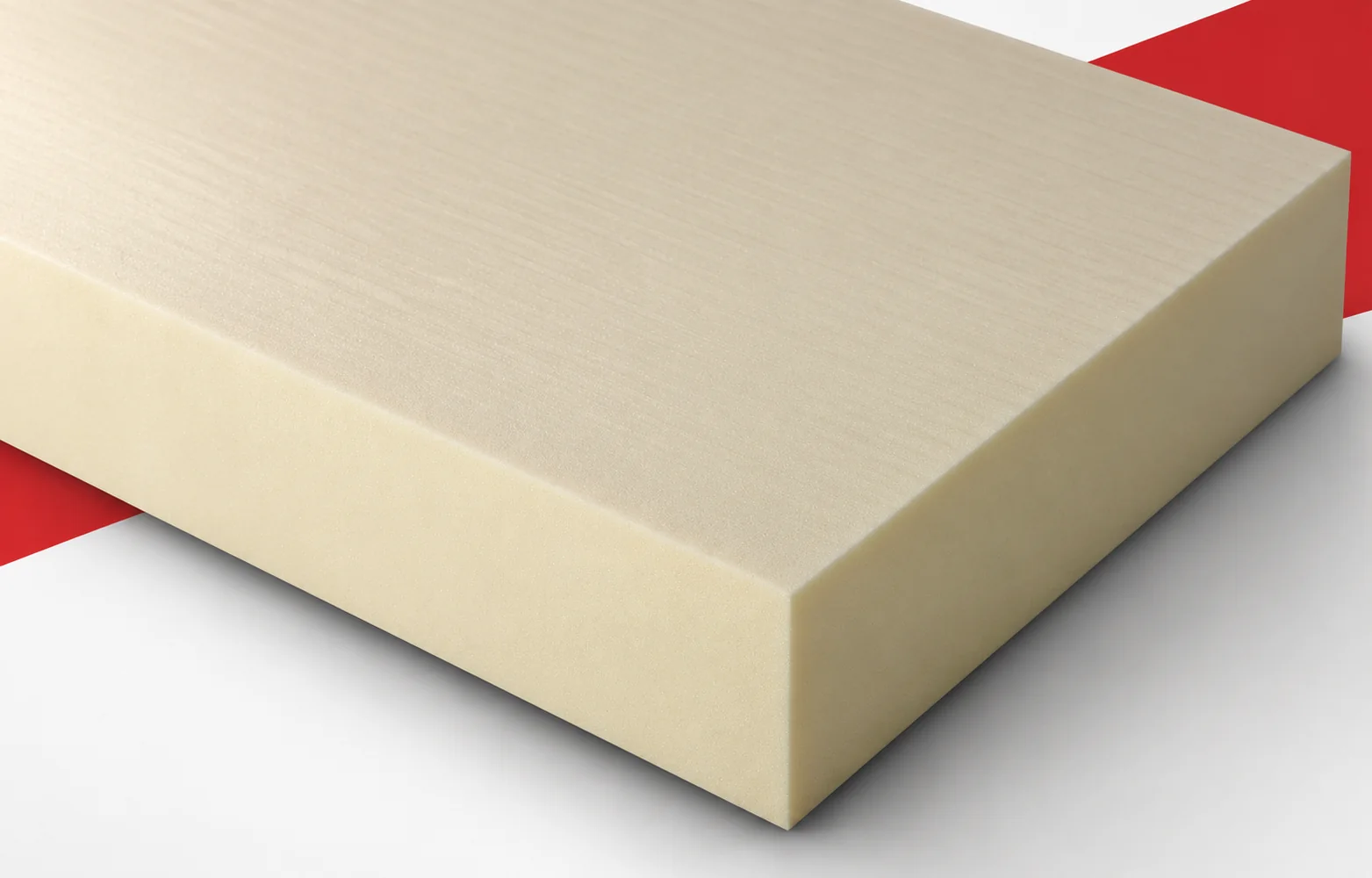
No single insulation material is best throughout a house. On a façade the render system matters, in a floor the loading, and on a roof the position relative to waterproofing. EPS, XPS and PIR differ in structure and available variants. In renovation, select them for a specific task and the existing building’s constraints. EPS is expanded polystyrene, formed from expanded beads. XPS is extruded polystyrene with a compact cellular structure. PIR is rigid polyisocyanurate foam, often made with specific facings. These materials may look similar from a distance, but their names are not interchangeable.
In this article
Identify three different materials
Each group contains different products. Façade boards, floor boards and those intended for moisture contact can have different properties. Neither colour nor a generic material name settles the choice. You need the exact variant’s designation and documentation.
Start with the most demanding condition
In an old house, floor height, reveal width or water near the foundation may be the main constraint. Record that before comparing conductivity. If a material cannot cope with the expected moisture or loading, its thermal performance is no help. Also check that the substrate permits the system’s specified fixing method.
| Location | What needs to be established |
|---|---|
| Rendered façade | Whole-system compatibility and substrate condition |
| Floor | Loading, available height and load-distributing layer |
| Flat roof | Waterproofing position, drainage and maintenance |
Compare thermal performance at equal resistance
Lower conductivity gives the same layer resistance at a smaller thickness. In an example with R = 4.00 m²K/W, a material with λ 0.036 needs 144 mm; λ 0.034 needs 136 mm; and λ 0.022 needs 88 mm. These are theoretical calculations using the stated values, not a selection of actual products.
Use actual declarations and available thicknesses in the design. Fleece-faced PIR for rendering may have different conductivity from aluminium-faced PIR. The resistance of the complete element includes existing layers too. Centimetres saved are therefore not a fixed percentage attached to a material name.
Check moisture and load data in the documentation
Selected XPS grades are used in assemblies exposed to moisture and higher loads. Special EPS variants also exist for specific applications. Do not extend that suitability to every board in either group. Low water absorption does not make insulation a substitute for waterproofing.
For loading, long-term conditions and concentrated pressures matter. CS(10) describes a test at 10% deformation, not permissible service pressure over many years. Beneath heavy fixtures, terrace supports or vehicle wheels, check the full floor assembly and force distribution.
Account for facings, fire and drying
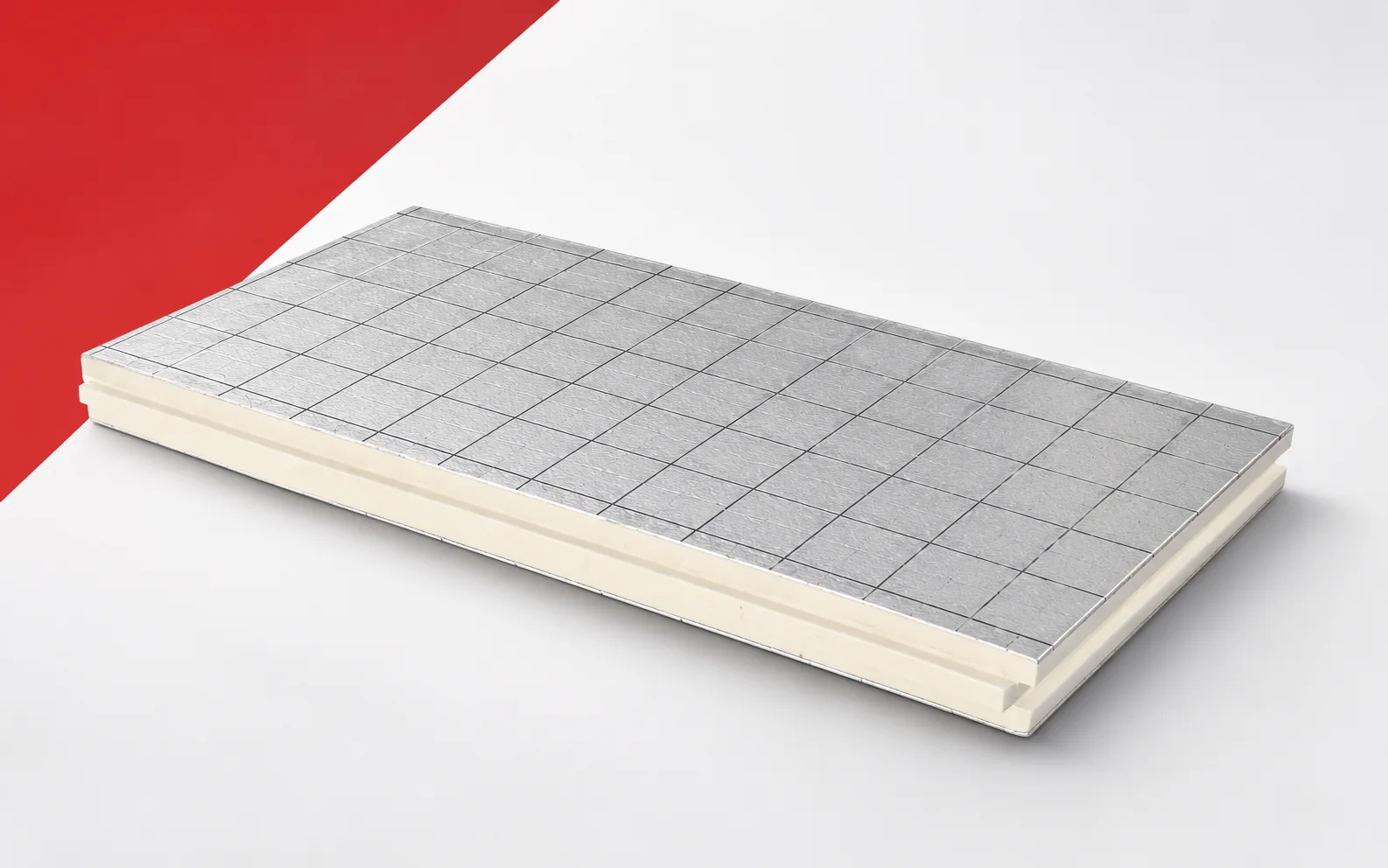
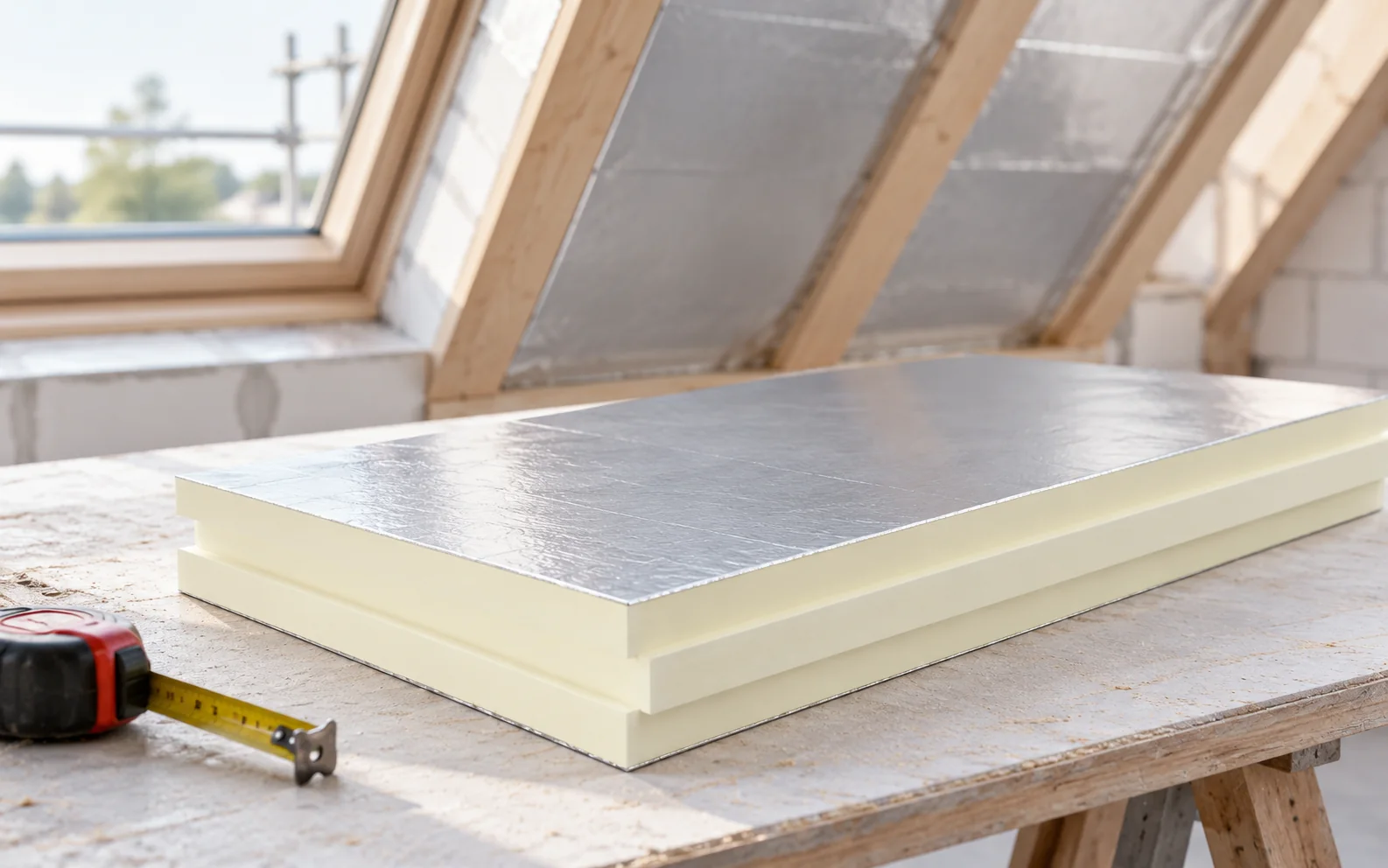
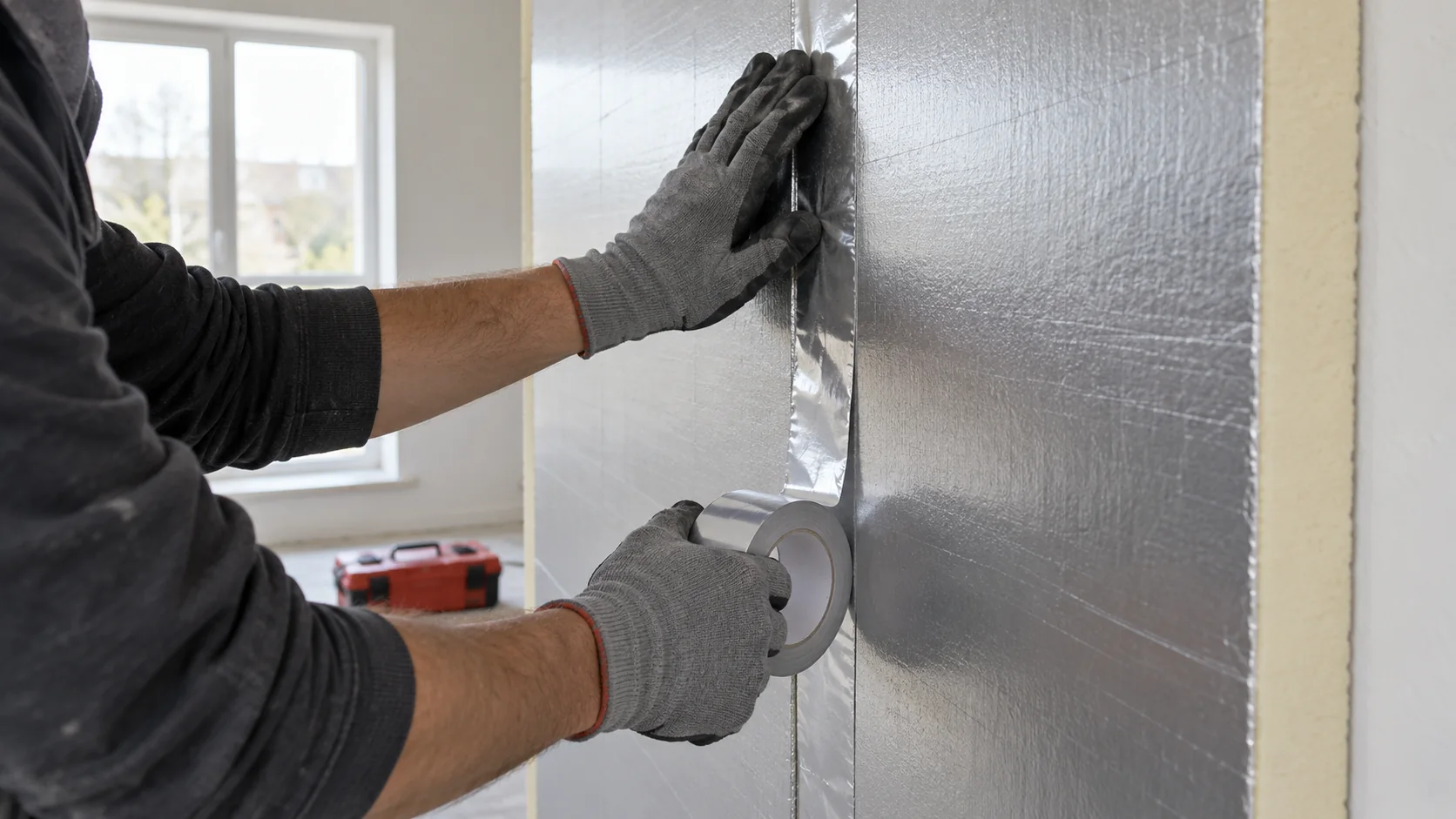
A gas-tight aluminium laminate on PIR affects water-vapour movement, particularly with internal insulation. A board without that facing may behave differently despite a similar core. Vapour-control layers should follow an assessment of the element, not an assumption that more membrane always helps.
Read reaction-to-fire classifications for the specific product. Fire resistance, in contrast, applies to a defined assembly. It cannot be attributed to an entire house from the foam type. On façades, system classification matters; for roofs, performance under external fire exposure matters too.
Compare the full renovation and repair options
PIR can help where a thinner build-up avoids alterations to thresholds or flashings. EPS may be considered for large areas where sufficient thickness fits and the system is compatible. XPS may suit different moisture conditions. Final cost depends on the chosen variant and associated work.
Include substrate preparation, fixings, waterproofing, finishes and waste. Check how local damage can be repaired. Do not automatically claim an environmental advantage for a material. A comparison needs consistent data for the complete solution, its durability and the assumed thermal performance.
For phased renovations, retain documentation for every product variant used. Apparently similar boards may have different compression or moisture properties. At the next stage, the product designation will help more than a photograph of its colour.
Questions and answers
Can one board type be used throughout the house?
Only if the specific variants are intended for all the locations considered. Façades, floors and damp areas usually have different needs. Select materials by function while maintaining compatibility of the complete systems.
Does the lowest conductivity mean the lowest heating cost?
Not by itself. Thickness, insulation continuity, thermal bridges, ventilation and heating arrangements all count. Materials with different conductivity can provide similar resistance at appropriately selected thicknesses.
7 branches. Materials closer to your project.

Free quote
Materials for your project


You may also find useful…
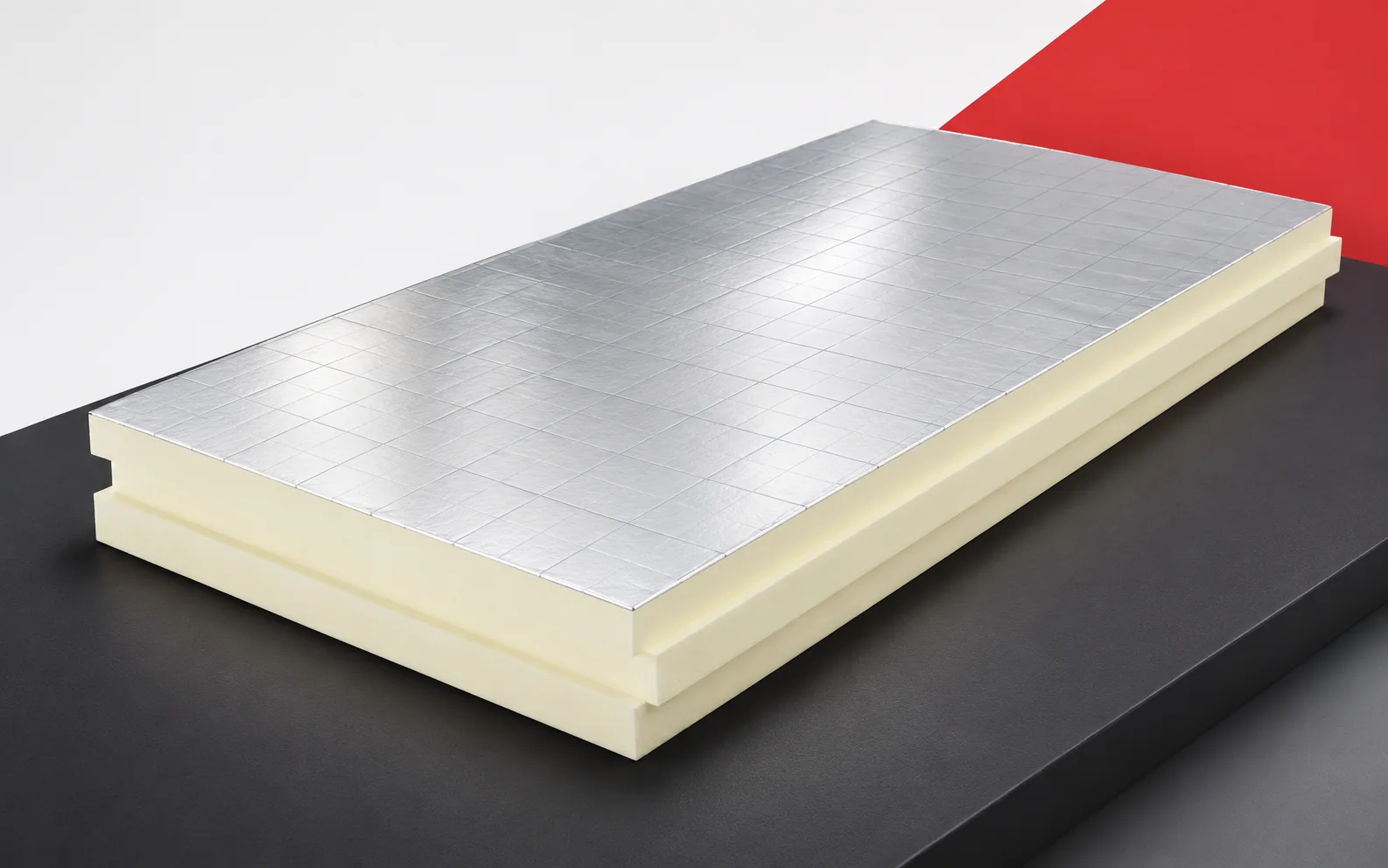
On a flat roof, a good lambda value must go hand in hand with correct drainage. PIR boards can reduce the height…
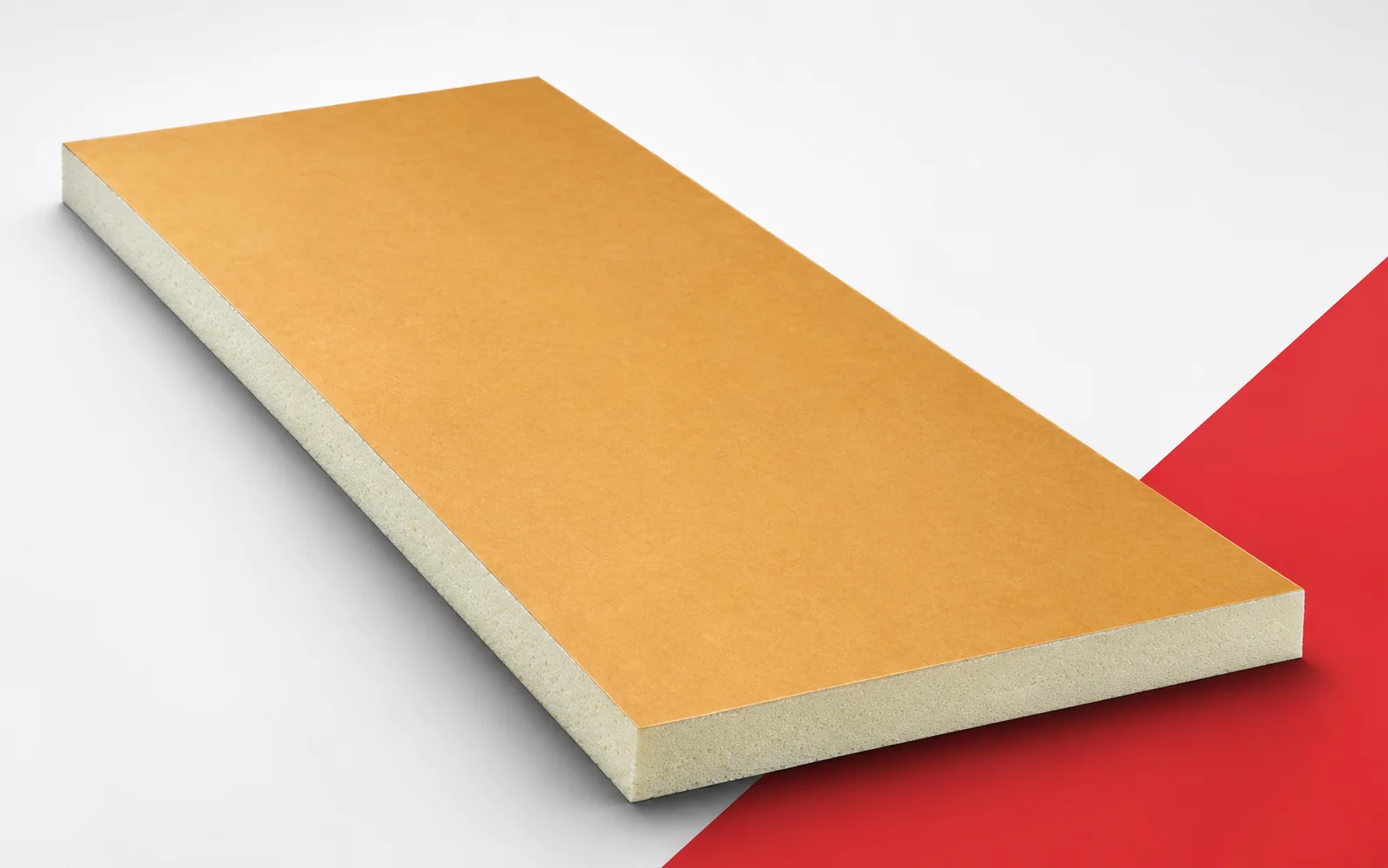
The designer has a thin ALU+ layer and a thicker variant from the same family to compare. At first glance they differ…
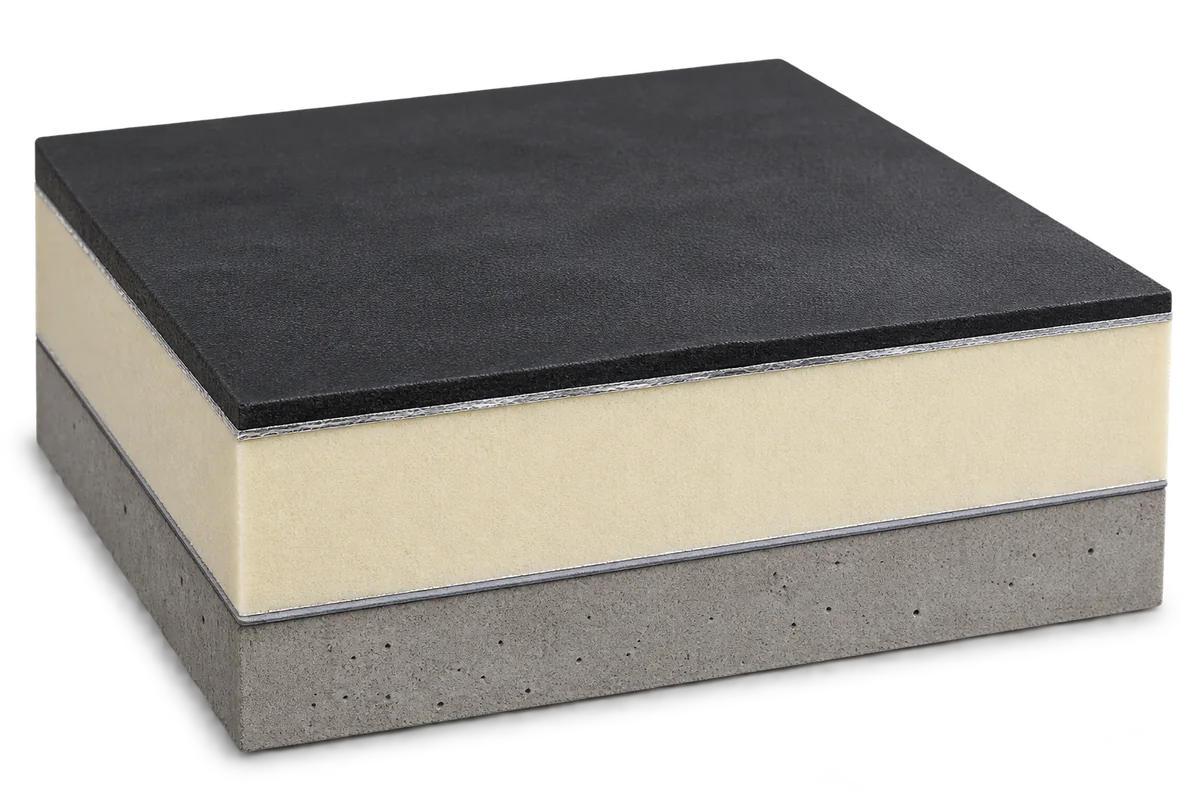
Selecting flat roof waterproofing and insulation means checking their interfaces as well as individual products. A board with adequate thermal performance may…
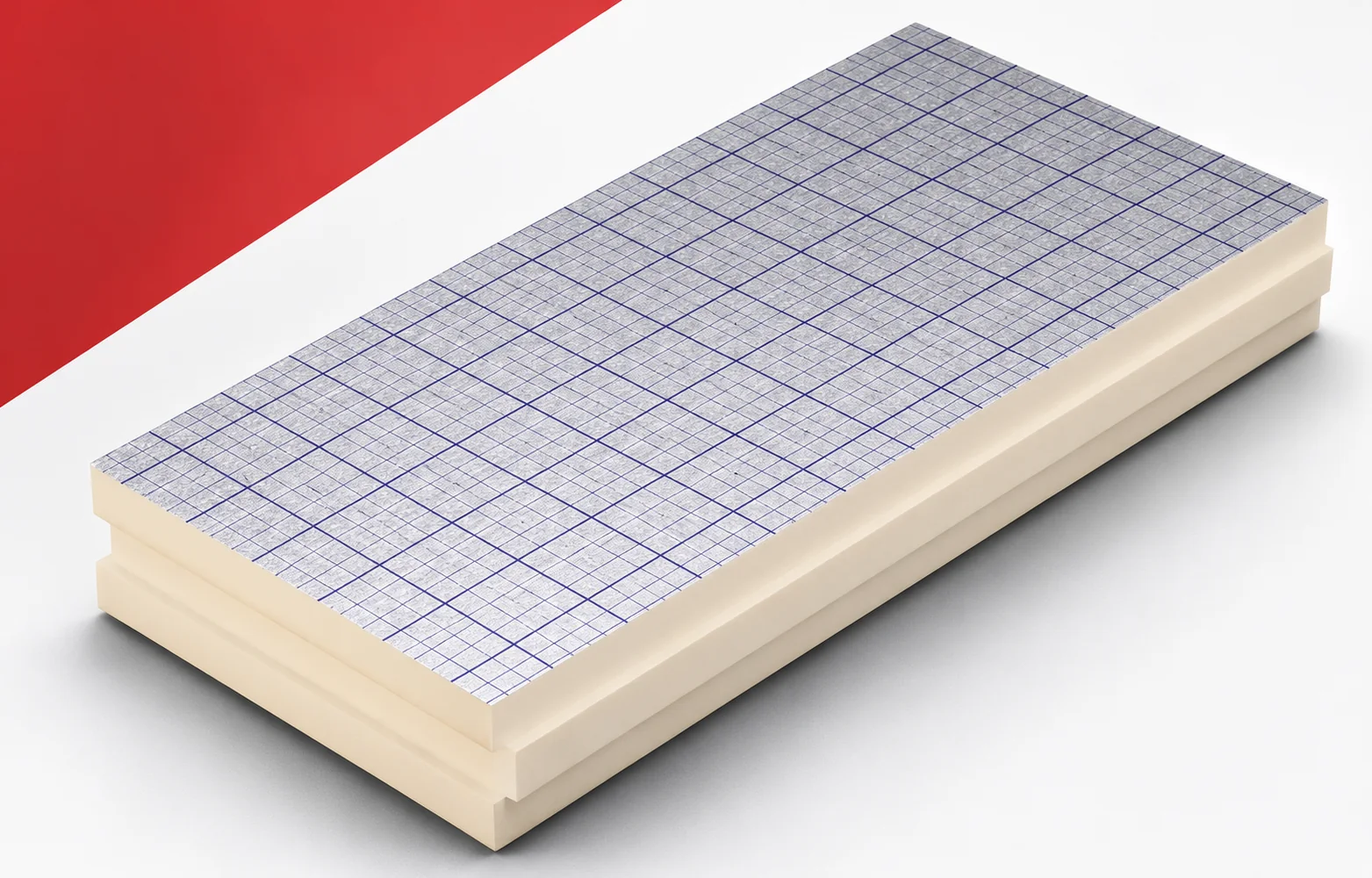
The edges of swissporPIR Alu influence how adjacent elements are joined. The thermal benefit depends on correct fitting, not on the profile…
The roof is to receive new falls and better thermal insulation. A BauderPIR T design should combine both tasks in a single…
IDELCO α-therm WALL is intended for the thermal portion of a cavity wall. Its low lambda helps to limit its thickness, but…
Answering the question of how to plan and carry out roof insulation step by step requires first of all establishing the boundary…
An aluminium facing on a PIR board can greatly restrict water vapour diffusion. The performance of the finished wall depends on how…