

Sheet metal flashings
Ordering verge flashings: what you need to finish a gable
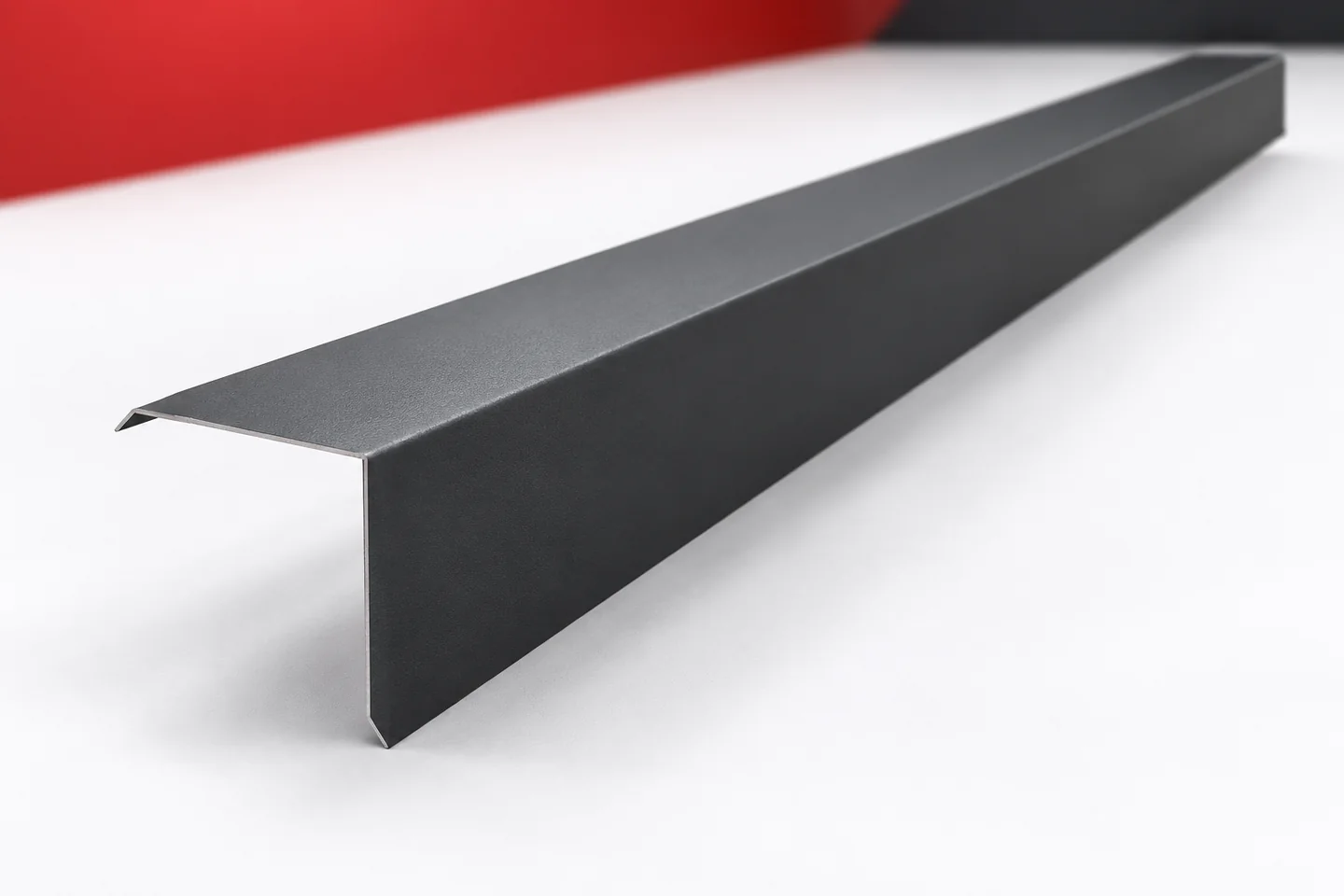
At the top of the roof, the covering, the board or edge casing and the water-guiding flashings meet. Verges are the visible part of this arrangement, but they sometimes need an additional channel or board cover. It is worth starting the order by examining the cross-section of the whole gable. This allows matching parts to be bought and avoids costly fabrication of components during the works. Verges protect the side edge of the roof slope. They help limit wind-driven precipitation under the covering and finish the area exposed to wind. However, they do not replace the correct fixing of the roof sheets. The effectiveness of the whole gable is determined by the profile, the substrate and the designed connections, not by the width of the visible metal alone.
In this article
First establish what closes the roof edge
Prepare a sketch showing the position of the last sheet, the height of its rib and the run of the gable board. If the gable is closed with a sandwich panel, mark the thickness and the termination of the cladding. Such a drawing quickly clarifies whether a top verge, a side verge or a set made up of several parts is needed.
One name can mean different cross-sections
Verges are sold with different leg widths, with a return fold or with additional ribs. There are also variants intended for specific coverings. A similar appearance at the front does not mean the same method of installation. The differences often become apparent only at the end of the profile, that is, in its cross-section.
Do not order a substitute on the basis of length and colour alone. Compare the bearing point, the folds and the water-discharging edge. Modular verges may have a left-hand and a right-hand version. Even on a symmetrical house, each side must be calculated according to the direction of installation, rather than assuming that one component can be reversed at will.
The drainage channel is sometimes a separate component
Some gable solutions use a concealed channel at the edge of the covering. Its task is to guide water in accordance with the system detail. The outer cover and the channel are then not two versions of the same product. They form a set to which brackets and the board flashing may be added.
Check the scope of each item in the offer. If you see only the price of the verge, ask about the parts required beneath it. It is also worth establishing whether delivery includes the corner terminations at the eaves and ridge. These are small pieces, but they affect the appearance and the way the water path is closed at the extreme points of the gable.
Calculate the lengths allowing for joints
The total length of the gable slopes is a good starting point, but it does not complete the calculation. Allowances for laps and cuts are also needed. A piece from one slope cannot always be used on the opposite side. The reason may be the direction of the fold, the shape of the end or the decorative side of the coating. Such waste is allowed for before purchase.
Compare verges by effective length if the manufacturer states it. For individual lengths, agree the method of jointing with the contractor. A longer profile reduces the number of joints but requires careful transport. A component bent in transit can leave a wavy line even when its dimensions are correct.


Match the material to the service conditions
Verges can be made from galvanised, aluzinc or coated steel sheet. The choice is determined by compatibility with the covering and the service environment. Coloured coated sheet helps achieve a uniform gable line. Galvanising and aluzinc leave a metallic appearance, but they are not the same type of surface protection.
Thickness is not the only measure of quality. Geometry, protection of the steel and correct support also matter. An excessively wide, flat leg may behave differently from a narrower profile with a suitable fold. Do not increase dimensions by eye. If the standard does not fit, have a non-standard sheet metal flashing checked against a sketch.
Agree the connections with the other flashings
At the ridge, verges meet the ridge tiles. At the eaves, they work together with the gutter aprons and the board cover. In these places the correct sequence of layers must be maintained. A well-prepared set shows which component covers which and where the water is to drain away. Simply cutting all ends equally is not enough.
Starter profiles depend on the type of covering, so their position must also be included in the gable drawing. Chimney flashings are usually calculated separately, but it is worth ordering them with a matching surface finish. A shared list of details reduces the risk of mixing shades, gloss levels and different types of coating on one roof.
Check the set before going onto the roof
Lay out the labels and compare the delivery with the list of lengths. Check the number of left-hand and right-hand verges if such a distinction applies. Inspect the ends of the profiles, scuffing on the ribs and any crushing. Long components should also be viewed along the edge, because a local bend is difficult to see from above.
Only pass a complete set on to installation. Fixings and their spacing should be taken from the covering documentation and the roof conditions. Fixing too sparsely does not become correct by adding sealant. Verges fulfil their role well when they are part of a considered finish, not a late addition to a completed roof slope.
Questions and answers
Does every verge require a channel?
No. It depends on the edge detail and the covering used. A channel is needed where the specific set of flashings provides for one.
What should be supplied when ordering a made-to-measure verge?
The cross-section with leg dimensions and angles, the length, the number of pieces and the coated side. A sketch of the connection to the eaves and ridge is also useful.
7 branches. Materials closer to your project.

Free quote
Materials for your project
You may also find useful…
The price of one square metre of a solar roof does not answer the question of profitability. That figure may include both…
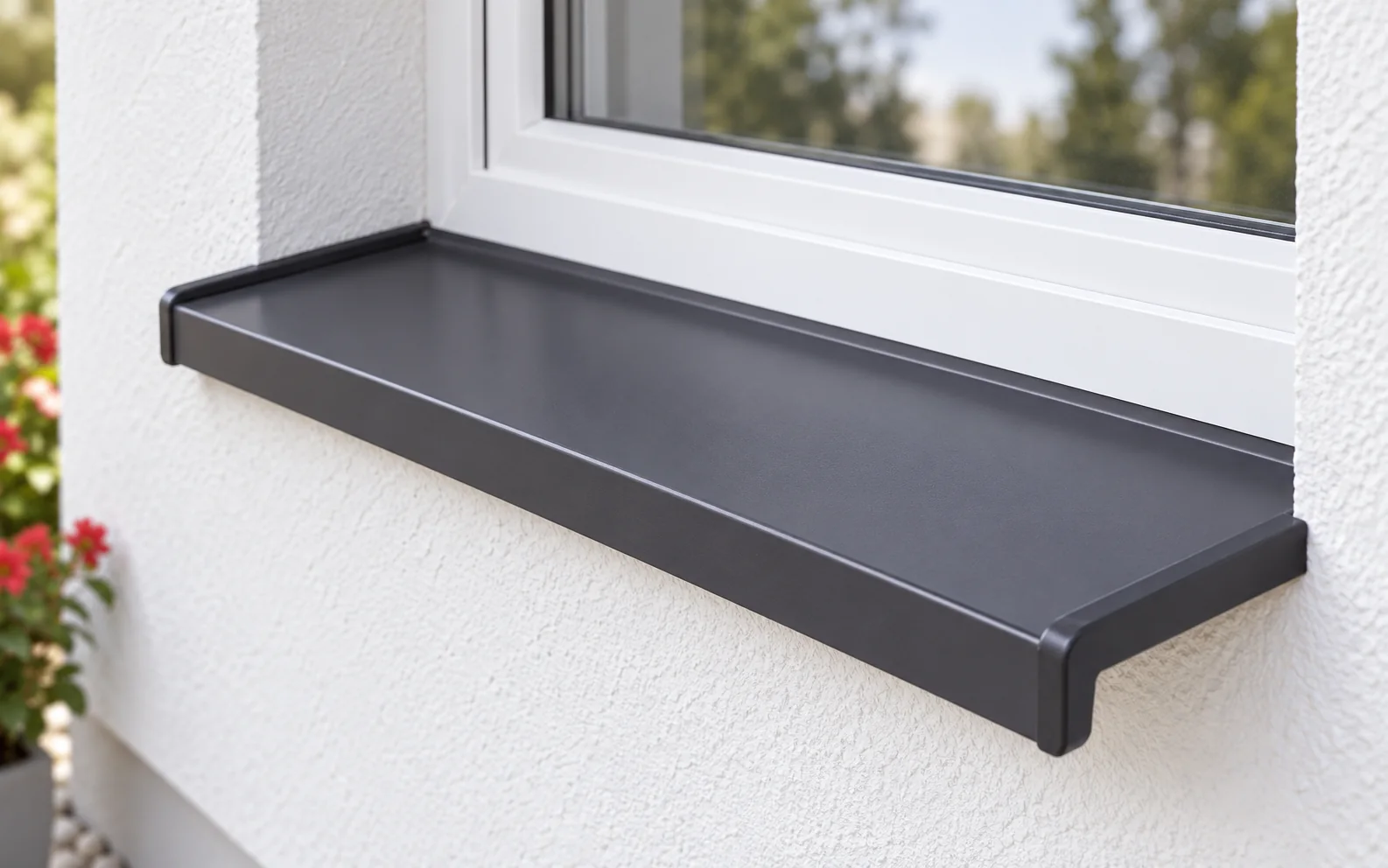
An external window sill is a detail that takes over the water running down the glass and must discharge it beyond the…
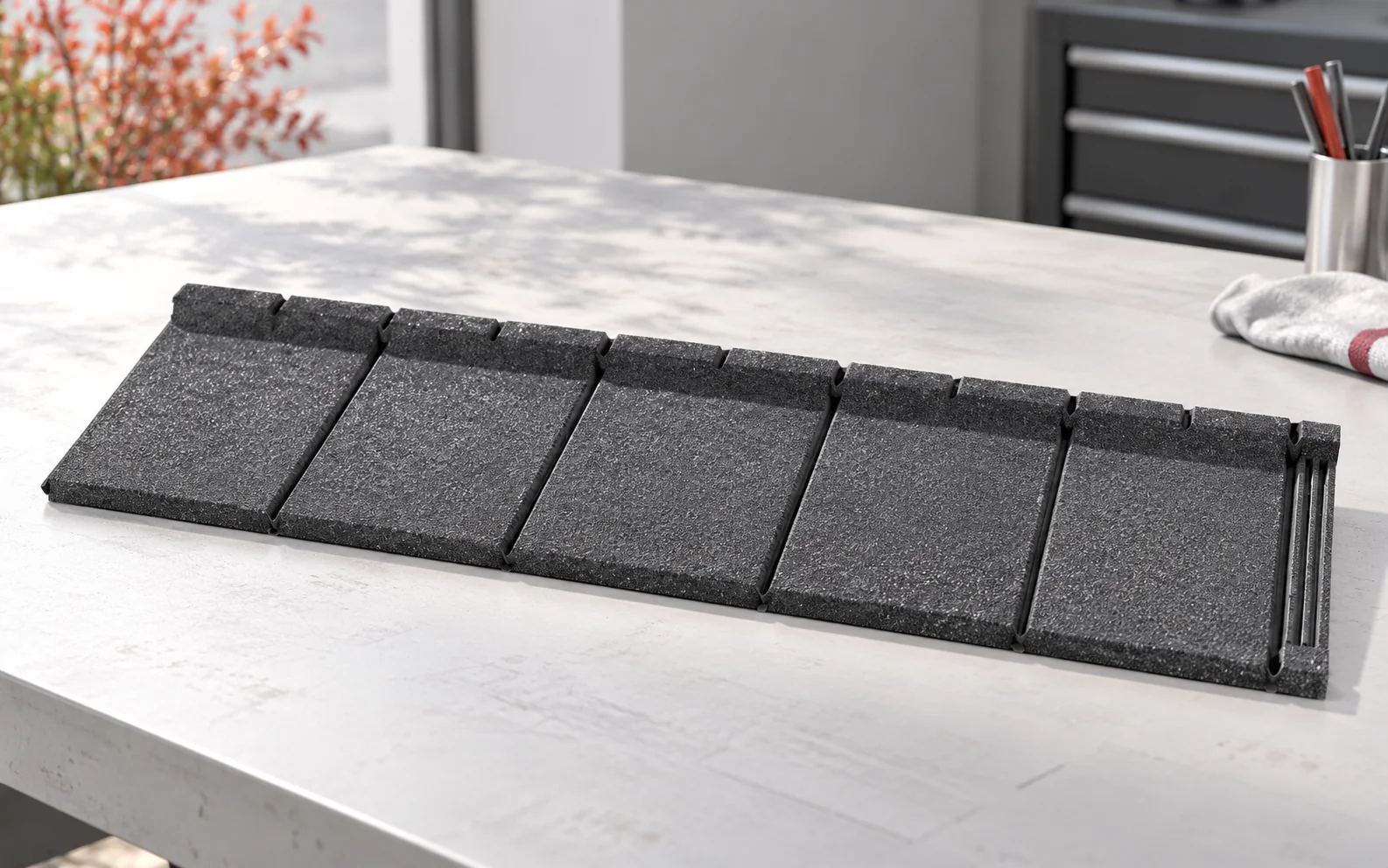
A granular-coated tile-effect metal roof has a steel core and an outer layer of fine mineral aggregate held by a suitable binder.…
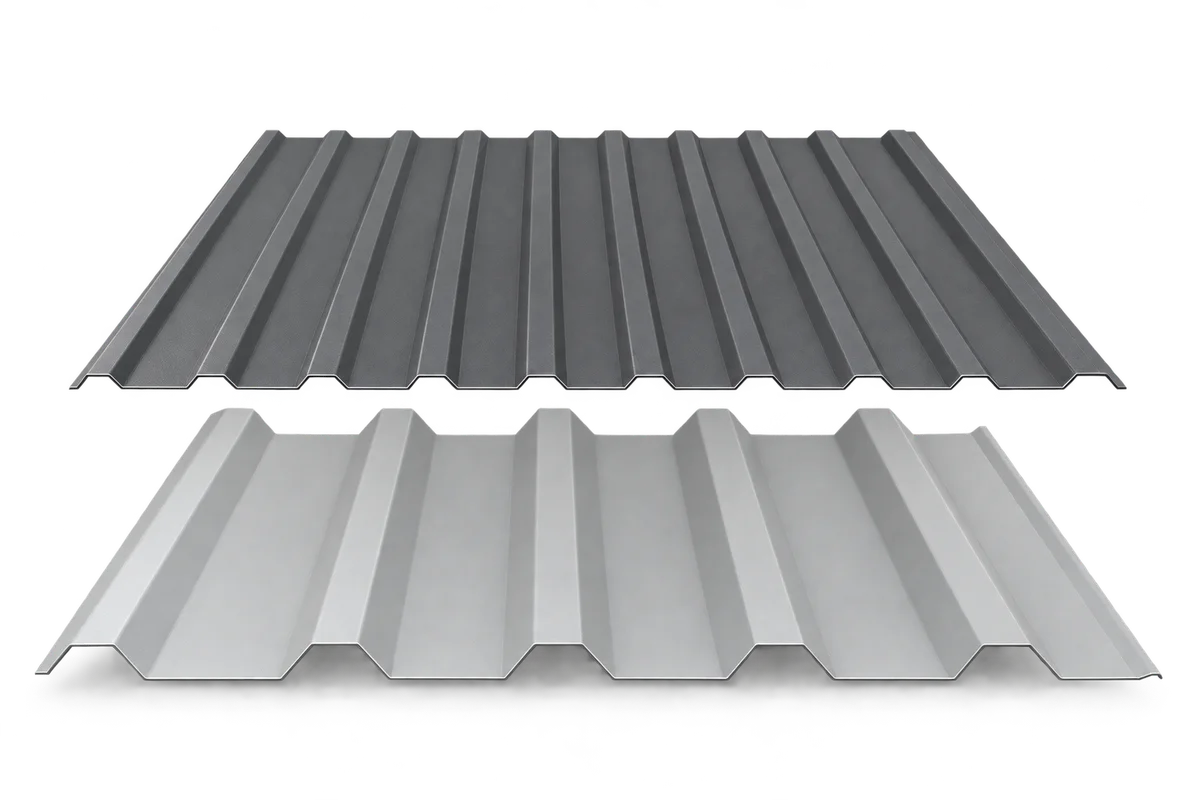
Trapezoidal steel sheet can clad a garage, form a house façade or serve as the structural roof deck of an industrial building.…
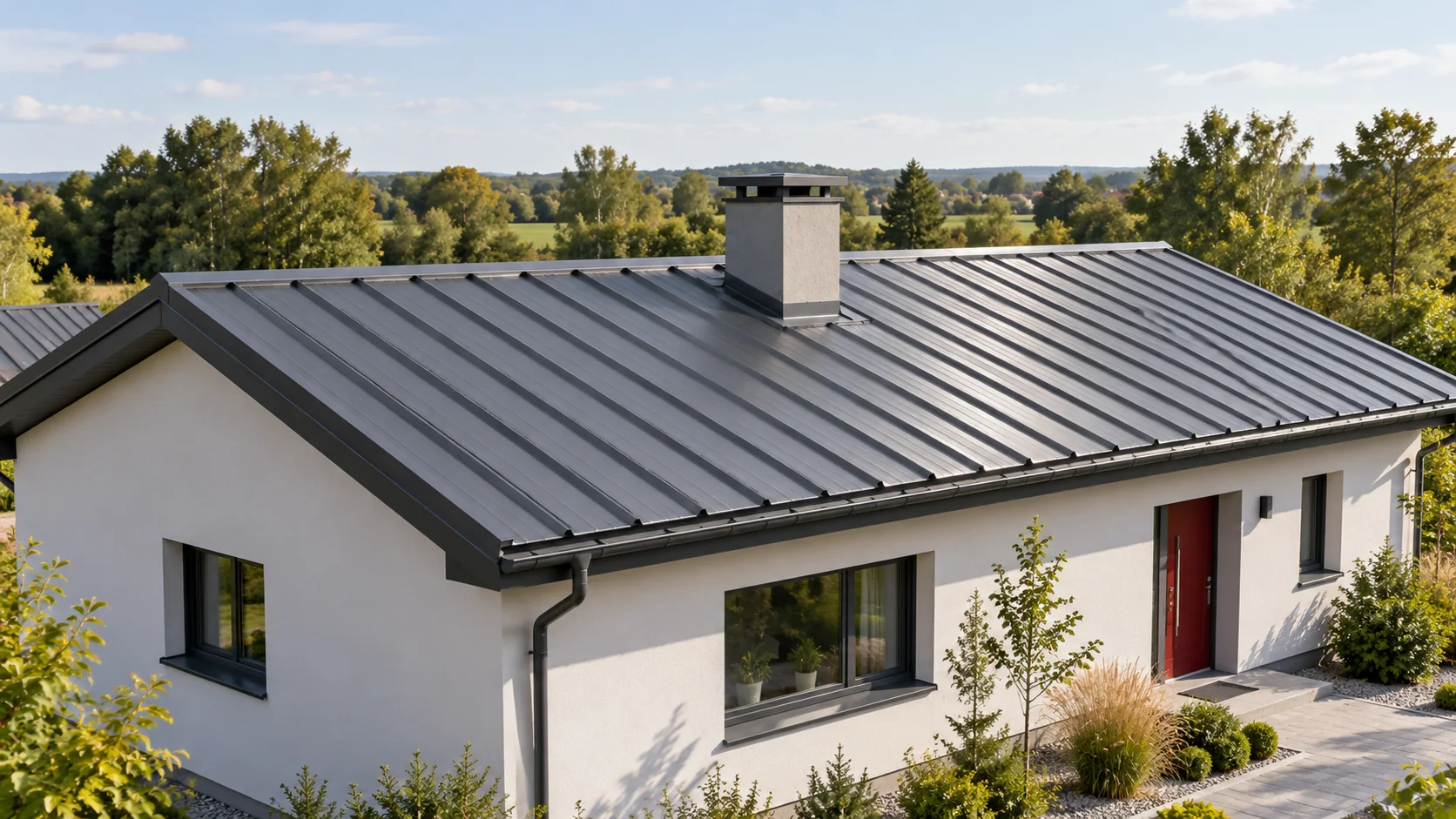
Before repairing chimney flashing, trace the water and inspect the chimney itself. Another layer of sealant will do little if the flashing…
Start with how the building will be used. An open shelter and a heated workshop place different demands on a roof. Match…
The price of a single ridge cap does not yet tell you how much it will cost to finish the roof. What…
Roof defects often arise before the last sheet is laid. An uneven substrate, a damaged coating, incorrect fixings, interrupted ventilation and faulty…