PIR on flat roofs: insulation performance, falls and parapet height

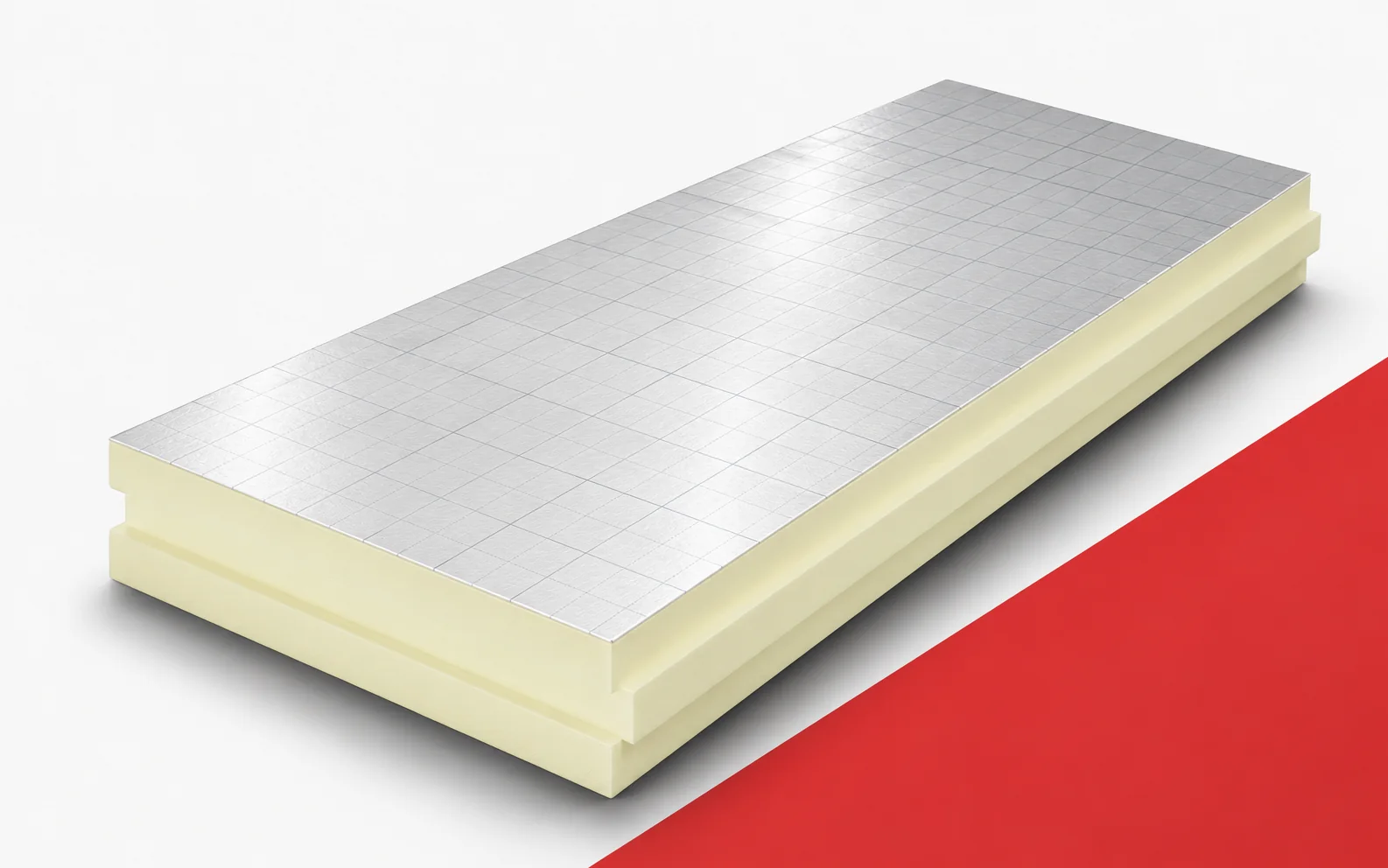
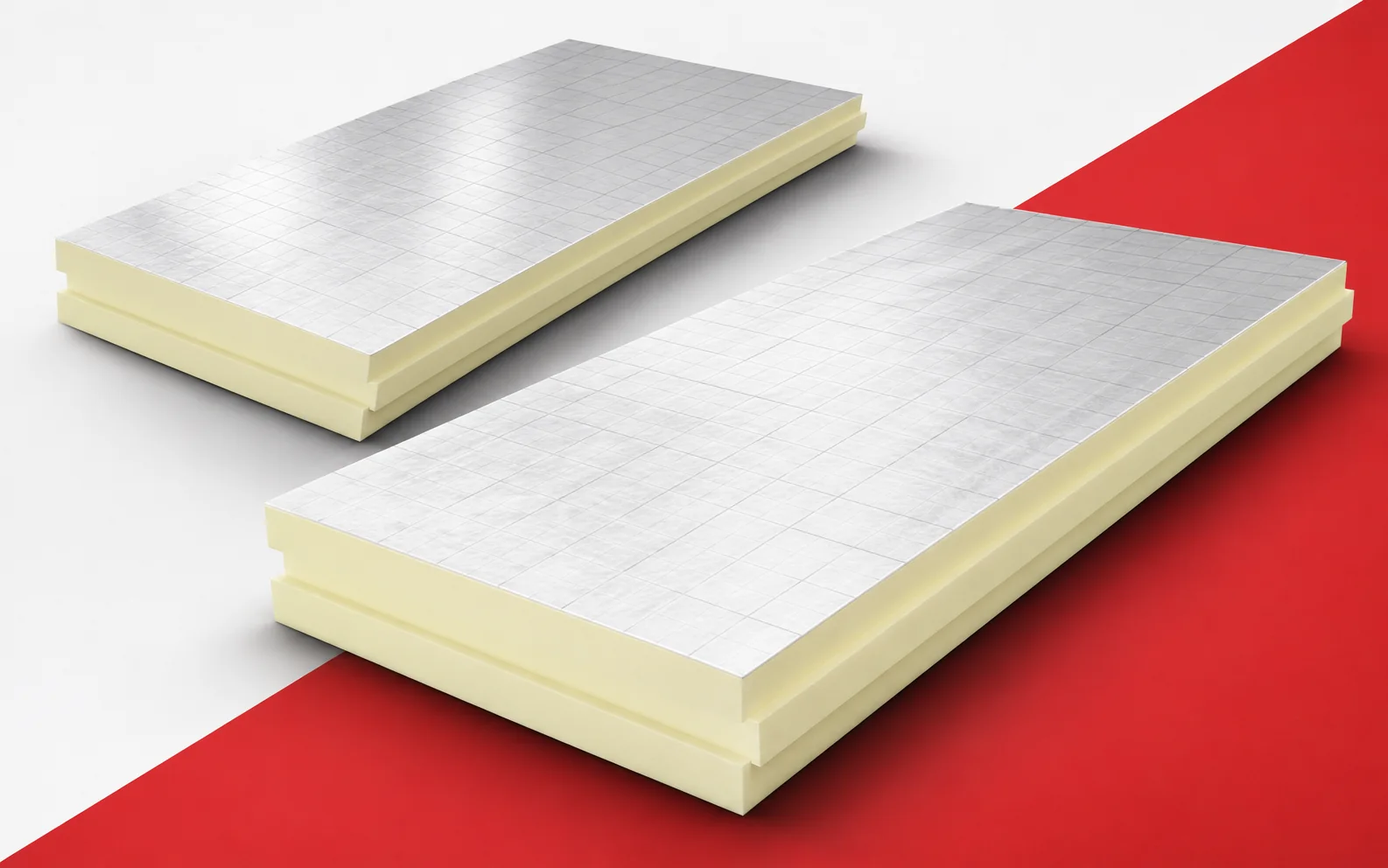
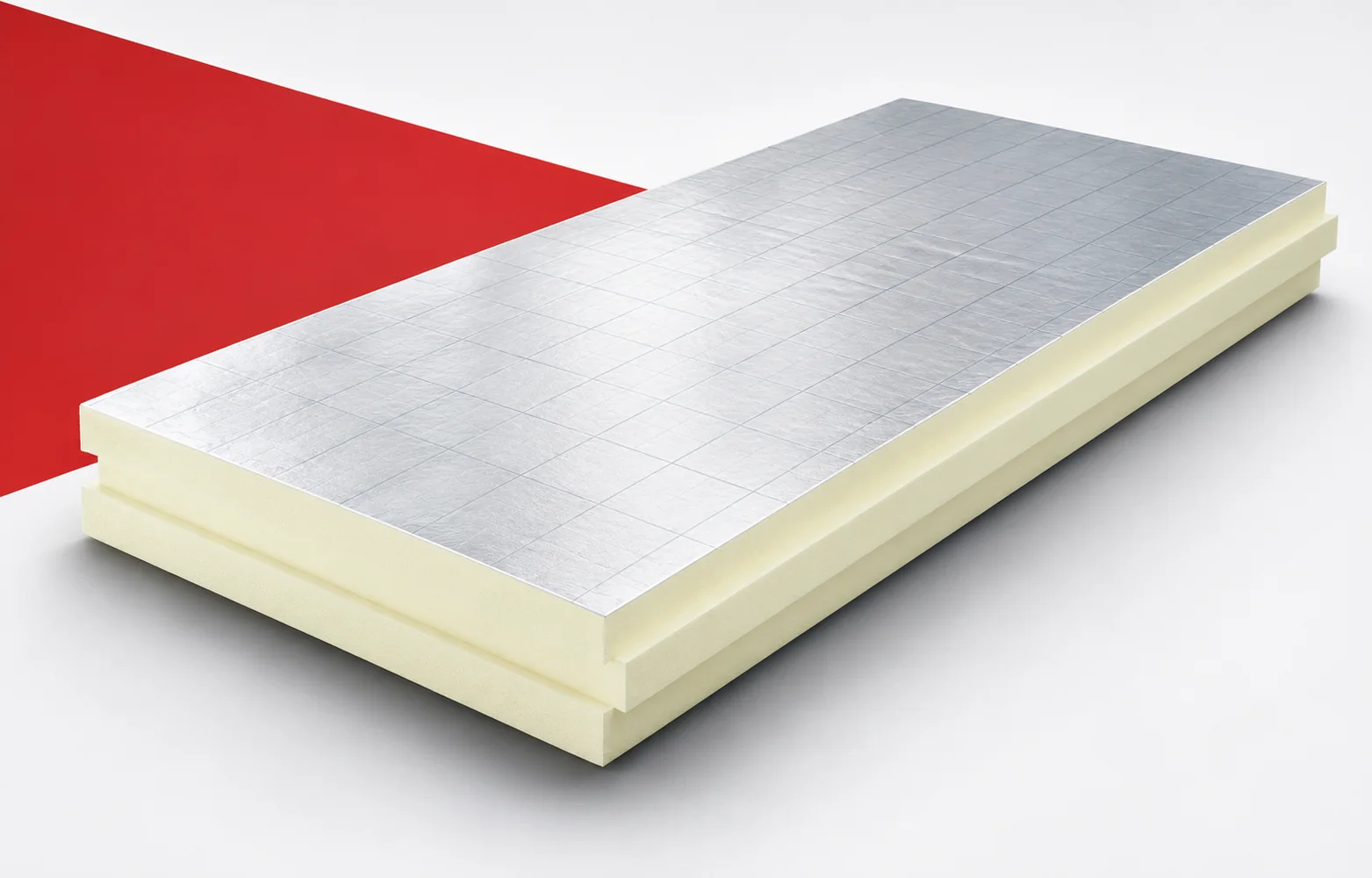
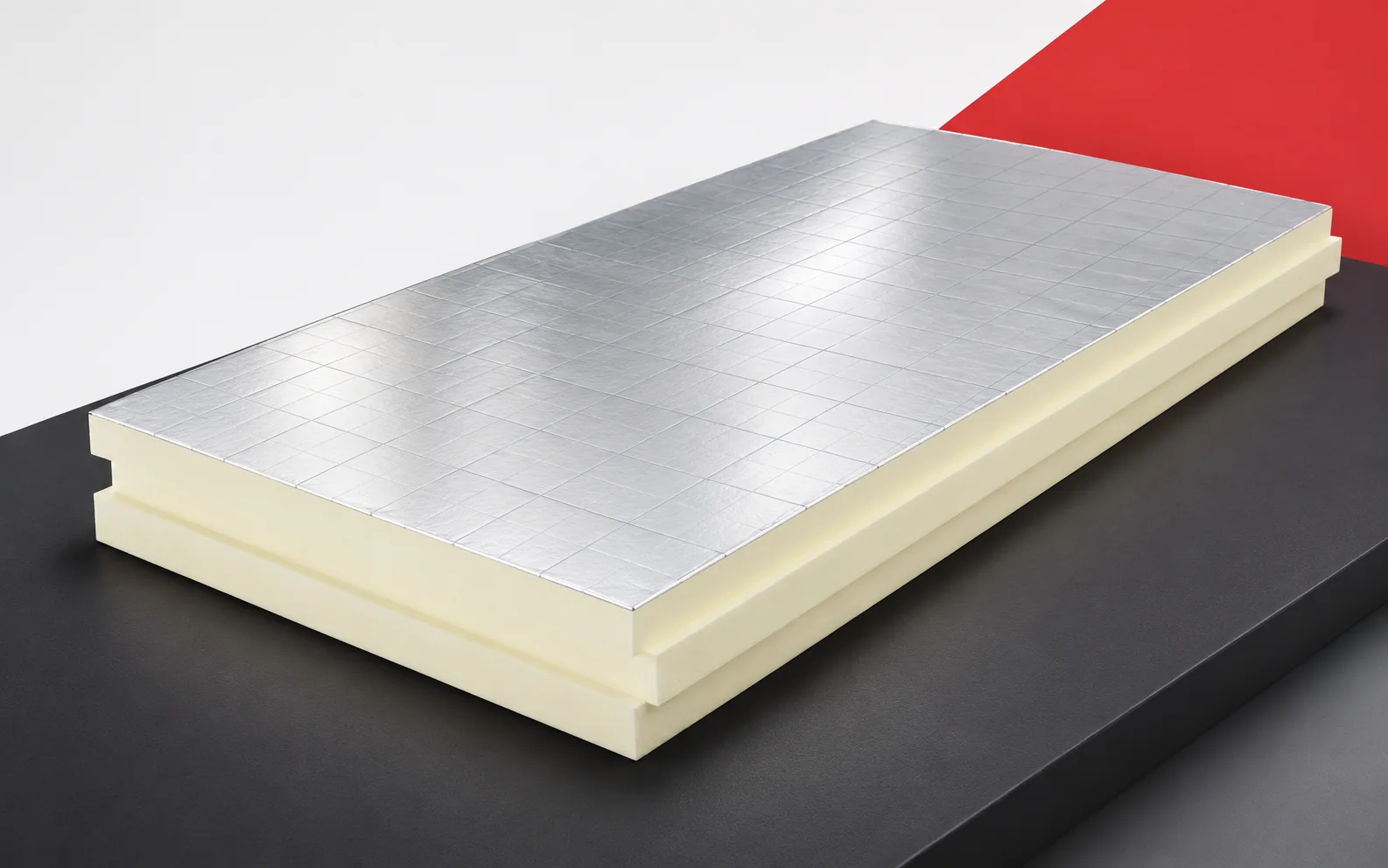
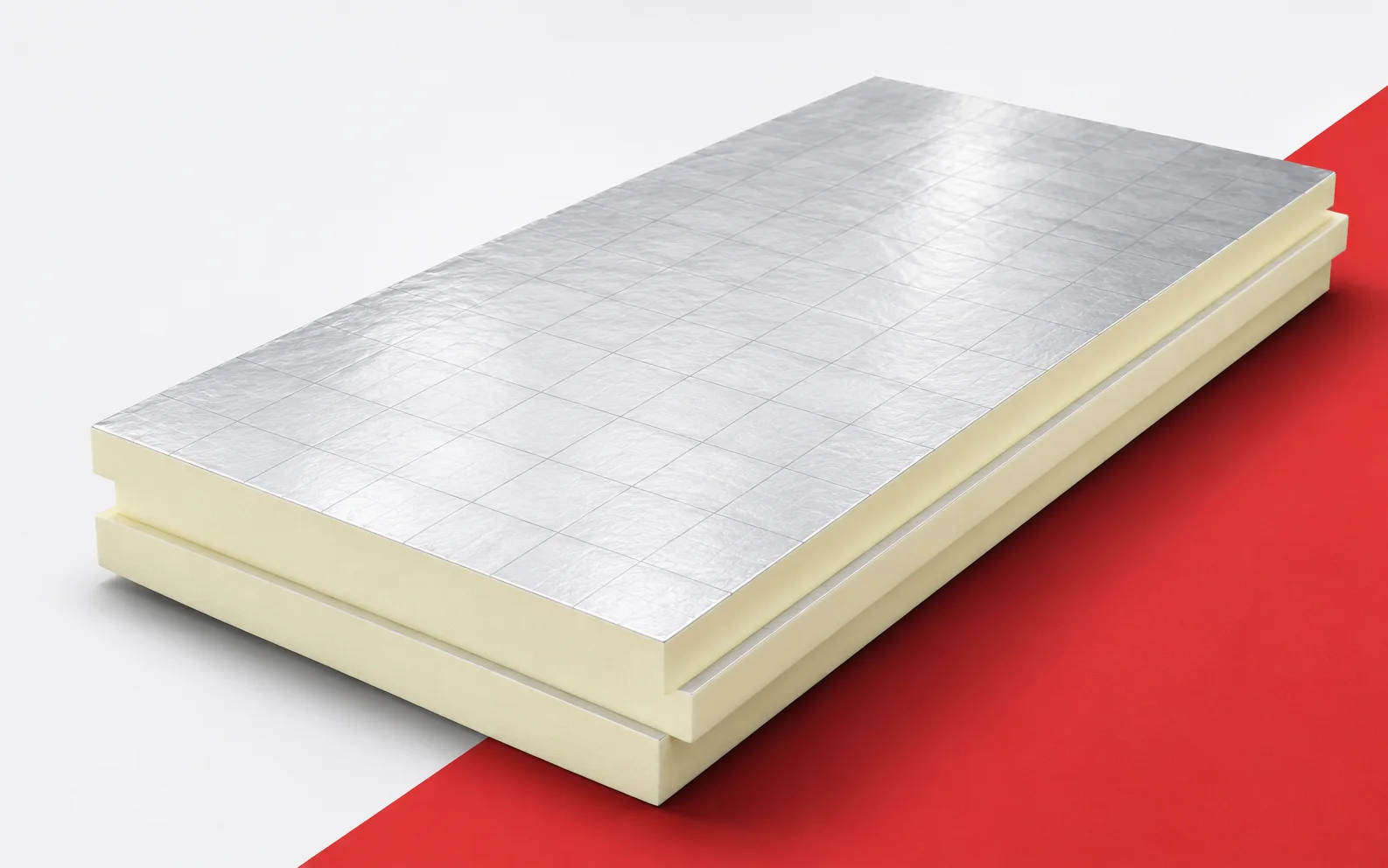
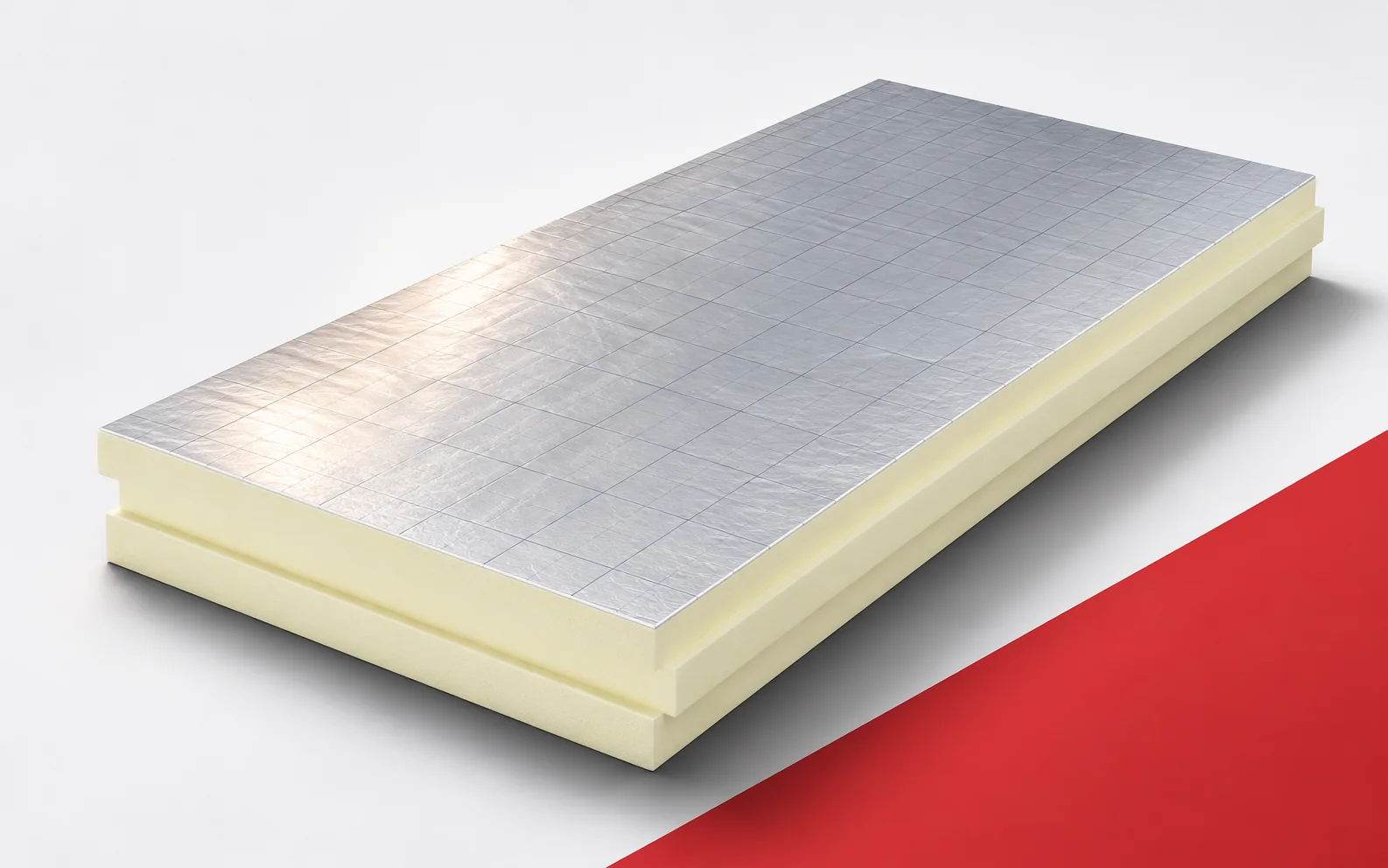
On a flat roof, a good lambda value must go hand in hand with correct drainage. PIR boards can reduce the height of the layers, and tapered variants help to shape the path of the water. Both benefits must be checked at the outlets, parapets and the planned waterproofing. PIR boards for a flat roof are selected according to how the covering is to be installed. Aluminium laminate, glass fleece and bitumen-coated facing are not interchangeable surfaces. The thinnest variant does not always work with the chosen covering. The facing must be selected together with the system, and only then should the required thickness be compared. A favourable lambda should be chosen among boards suitable for the given covering. Otherwise, an apparent saving in thickness may require an additional contact layer.
By |2026-11-14T21:59:17+01:002026-11-14|Expert guides|Comments Off on PIR on flat roofs: insulation performance, falls and parapet height

PIR boards above the rafters: where continuous insulation makes a difference

Insulation above the rafters allows the timber structure to be covered with a continuous layer. This is a useful characteristic of PIR boards, particularly where good thermal performance and the preservation of loft space are priorities. However, the outcome also depends on the roof edges and on a careful junction with the wall. PIR boards laid above the rafters form a layer that also covers the timber structural members. This can reduce their contribution to heat flow through the roof. Timber penetrating the layer between the rafters creates a repeating path for heat flow. A layer above it can limit this effect without reducing the room height. If the insulation sits only between the rafters, heat also has a path through the timber.

By |2026-11-14T21:59:16+01:002026-11-14|Expert guides|Comments Off on PIR boards above the rafters: where continuous insulation makes a difference

PIR, cellulose and wood fibre: insulation thickness and summer comfort

Insulation is meant to limit the flow of heat throughout the year. PIR boards help when there is no room for a thick layer. Cellulose and wood fibre have different strengths. The choice is best based on the construction of the building element and the conditions that cause the interior to overheat. PIR boards are rigid products of a defined thickness with a facing. Cellulose can be blown into prepared cavities. In a tight cross-section, what counts is the effect achieved from every centimetre. In an empty chamber between joists, what may matter more is filling the entire volume precisely. For an energy comparison, one drawing showing the boundary of the heated part of the house is useful. In an unused loft the boundary may run along the ceiling, while in a lived-in attic it runs along the roof slope.

By |2026-11-14T22:03:27+01:002026-11-14|Expert guides|Comments Off on PIR, cellulose and wood fibre: insulation thickness and summer comfort

PIR or mineral wool? Comparing insulation thickness and performance

PIR and mineral wool can both effectively limit heat loss, but they offer different sets of properties. When choosing, it is worth separating space savings from fire and acoustic requirements. PIR boards have a strong argument in their low lambda value. However, the final benefit is determined by the whole building solution. PIR boards with suitable facings often have a lambda of 0.022 W/(m·K). Mineral wool products are available with various values. A single figure should not be assigned to the entire product family. Compare the documents for two selected products and their thicknesses for the same thermal objective. If the aim is to limit thickness while maintaining resistance, compare specific lambda values.

By |2026-11-14T21:59:12+01:002026-11-14|Expert guides|Comments Off on PIR or mineral wool? Comparing insulation thickness and performance

How thick should PIR insulation be? Thermal conductivity and resistance explained

Lambda helps compare materials, but it does not explain the whole energy balance of a house. When describing PIR boards, it is worth considering conductivity, the resistance of the layer and the U-value of the building element separately. Each of these figures answers a different question. Separating them makes it possible to assess what an extra centimetre of insulation really delivers. The lambda value is given in W/(m·K). A lower value means less heat conduction under comparable conditions. It is a property of the material determined under established test and declaration conditions. It does not express the room temperature or the annual heating costs of a particular house. When assessing savings, start from the value assigned to the chosen variant. A number copied from the series heading may not cover every thickness.

By |2026-11-14T21:59:00+01:002026-11-14|Expert guides|Comments Off on How thick should PIR insulation be? Thermal conductivity and resistance explained

PIR boards in an energy-efficient building: what thin insulation can achieve

Less space for insulation does not have to mean giving up good thermal resistance. PIR boards help to solve this problem if they suit the chosen building element. When assessing savings, it is worth moving from the characteristics of the core to the details of the building. Only then is it clear what we are really paying for. PIR means rigid polyisocyanurate foam. It belongs to the polyurethane family, but it is not just any foam sold under the abbreviation PUR. In thermal insulation boards the core is produced in the factory. It is given a specific thickness and works with a facing chosen for the particular product. At the start of any comparison, separate the material from the way it is used. Factory-made polyurethane foam has specific parameters, but the client also buys the facing, the format and the edge preparation.

By |2026-11-14T21:58:58+01:002026-11-14|Expert guides|Comments Off on PIR boards in an energy-efficient building: what thin insulation can achieve

What does the NT marking on a fibre cement sheet mean?

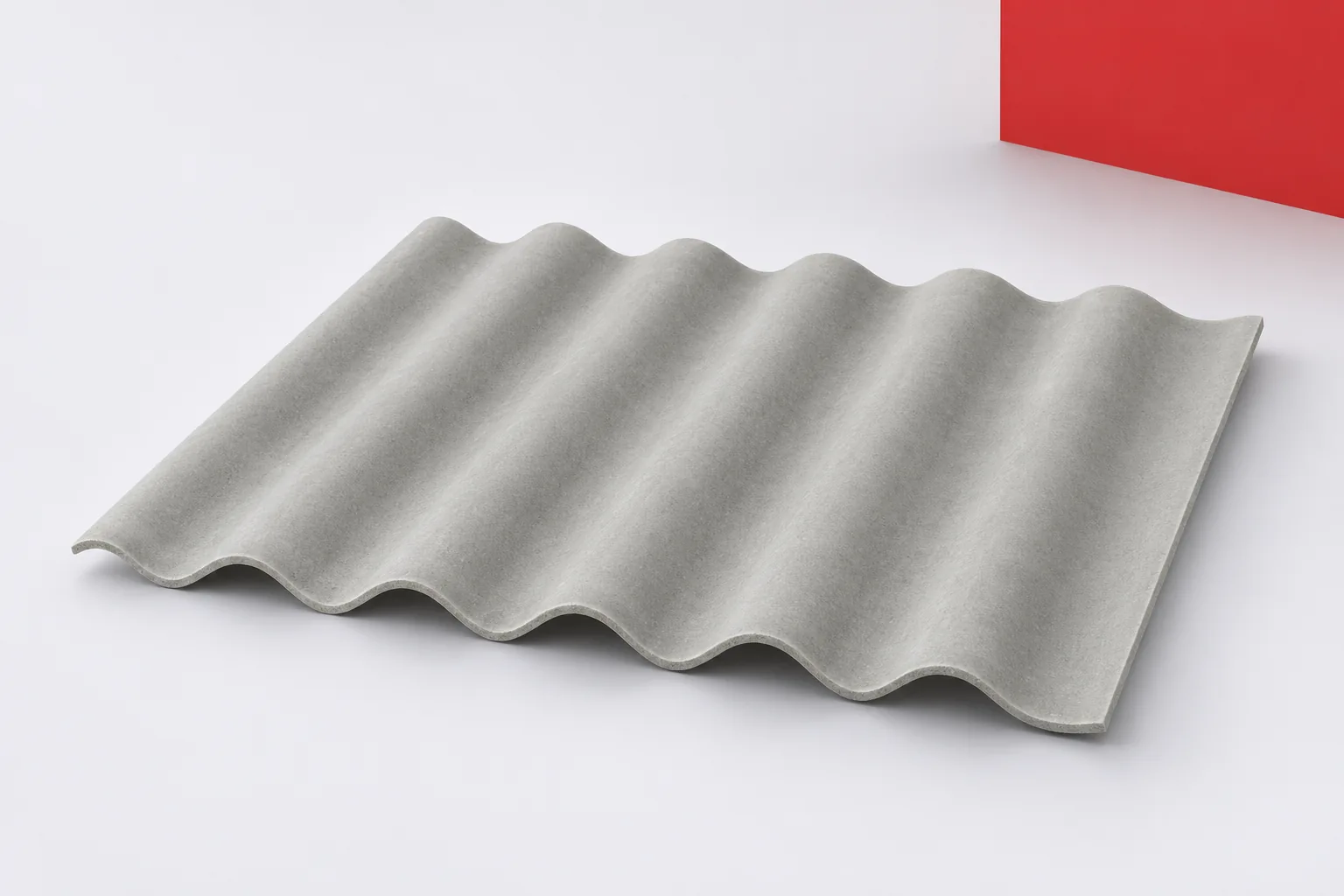
The NT marking appears in the documentation and labelling of modern fibre-cement products. It helps identify asbestos-free technology, but it must be read in the context of the specific product. Fibre-cement sheets also carry other markings relating to profile, properties and origin. Asbestos-free eternit is therefore not a complete technical name. Before buying or renovating, it is worth establishing what the mark actually confirms and what cannot be inferred from it. In verified sheet documentation, the NT marking identifies asbestos-free products. It does not in itself specify length, number of corrugations or method of installation. Fibre-cement sheets marked in this way may come in various formats and variants.

By |2026-11-14T21:58:56+01:002026-11-14|Expert guides|Comments Off on What does the NT marking on a fibre cement sheet mean?

Collecting rainwater from a fibre cement roof: uses and limits

Rainwater harvesting requires looking at the entire path of the water: from the roof slope through the gutters to the tank and the point of use. Fibre-cement sheets can form part of such a system, but the material name alone does not confirm the quality of the run-off. Asbestos-free fibre cement must be distinguished from old covering of unknown composition. Before installing the system, the specific product, its surface and the requirements of the intended water use must be checked. For a new roof, the starting point is the documentation for the ordered sheet and information about the coating. On an old building, colour and profile alone must not be relied upon. The term asbestos-free fibre cement should be supported by identification of the product.

By |2026-11-14T21:58:54+01:002026-11-14|Expert guides|Comments Off on Collecting rainwater from a fibre cement roof: uses and limits

Does a durable roofing material always make a roof economical?

A durable material can help to limit expenditure, but it does not guarantee a cheap roof. Fibre-cement sheets have to be bought, delivered, correctly installed and subsequently maintained. Each of these stages affects the cost. Asbestos-free fibre cement is worth assessing as a complete system rather than by the price of a single sheet. Savings arise when the material suits the structure and does not force unnecessary work or frequent repairs. The quotation should include all the components needed to complete the covering. Ridges, fittings, fixings and flashings have their own price and influence the labour. Fibre-cement sheets bought by nominal area may look attractive in a table, although once converted to actual coverage the difference shrinks.

By |2026-11-14T21:58:53+01:002026-11-14|Expert guides|Comments Off on Does a durable roofing material always make a roof economical?

How to plan maintenance for a fibre cement roof and avoid unnecessary repairs

Roof maintenance should not begin with a breakdown. Fibre cement sheets need checks on the joints, the drainage and the places where the covering meets other components. The scope of work depends on the system and on the surrounding conditions. Asbestos-free fibre cement can perform its function for a long time if minor problems are noticed early. It is therefore worth planning inspections and service access already at the handover of the works. After installation is complete, keep photographs of the roof slope and details. Images of the eaves, ridge, penetrations and junctions at walls will be useful. Record the type of sheets and accessories, as well as the date of completion. Fibre cement sheets may change in appearance over time under the influence of the environment.

By |2026-11-14T21:58:38+01:002026-11-14|Expert guides|Comments Off on How to plan maintenance for a fibre cement roof and avoid unnecessary repairs
Back to top