

Mineral wool sandwich panels
Choosing fixings for mineral wool wall panels that can be inspected in service
Each fastener transfers loads from the panel to the supporting structure and must seal the hole through the facing. Select it for the substrate, panel thickness and service environment. Alongside length, check drilling capacity, corrosion resistance, washer type and the clamping pressure needed for a seal. A steel side rail, a timber member and a concrete support require different fixing solutions. For a steel frame, establish the thickness of the member receiving the fastener. A self-drilling screw has a specified drilling range, and the load capacity of the finished connection also depends on the properties of the support.
In this article
Identify the support first
On refurbishment work, identify the material behind the facing and assess its condition before choosing a replacement screw. The appearance of the old screw tells you little about the support. Corrosion, existing holes or insufficient bearing width may require a different fixing detail. A longer screw cannot restore a weakened support.
Allow for the full connection thickness
Fastener length must accommodate the panel and the required engagement in the substrate. For some fasteners the geometry of the drill point and threaded sections also matters. Obtain the dimensions for the particular combination from the fastener and cladding system documentation. There is no universal allowance to add to every panel thickness.
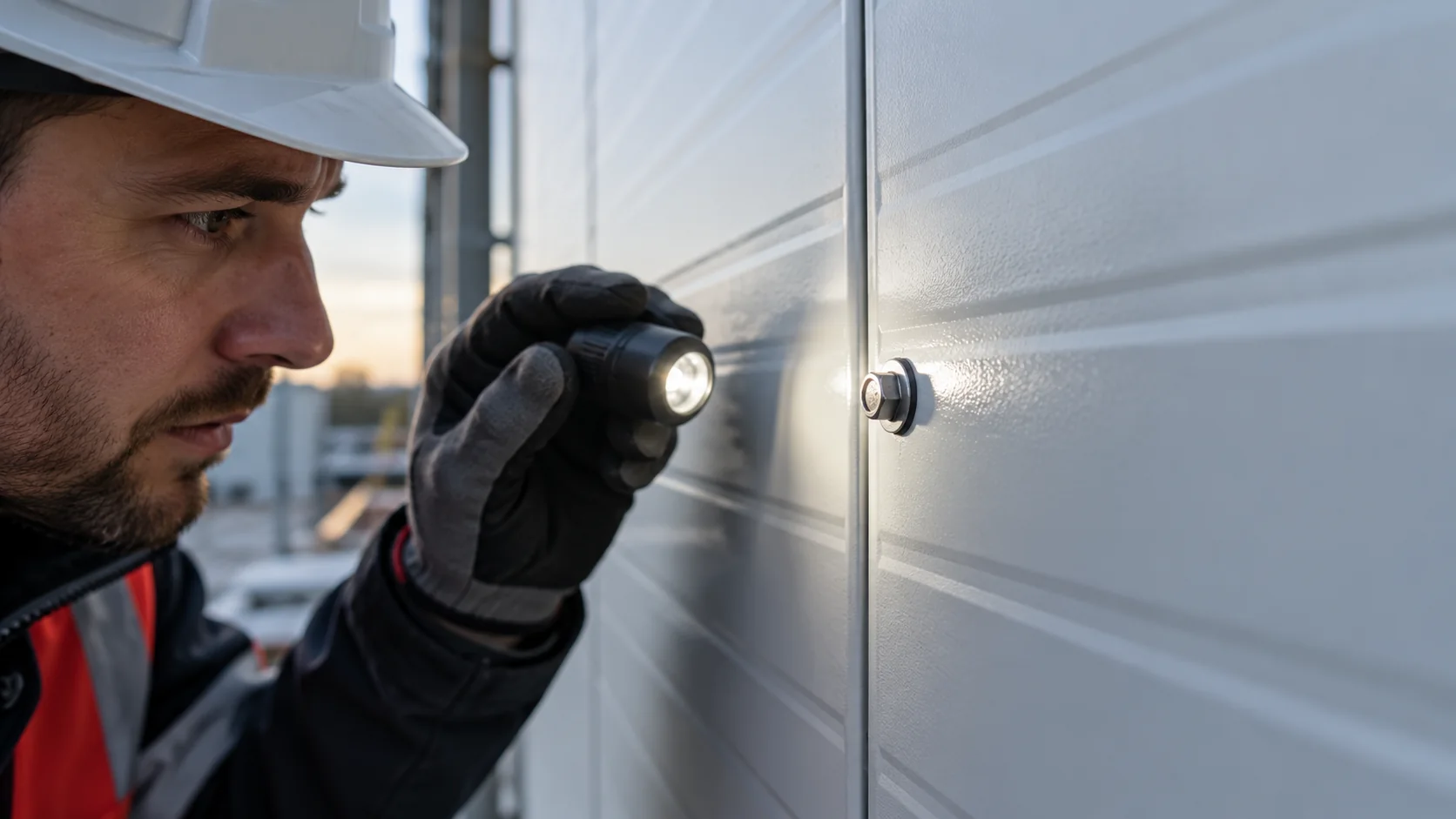
A concealed joint may use a special load-spreading washer. With exposed fixings, the sealing washer must seat correctly against the facing. Use the components specified for the detail. Before ordering coloured caps, check whether they are permitted and whether the fixing can still be inspected.
Determine the number of fasteners from the load
The layout depends on wind loading, building height, position on the façade, panel span and connection capacity. Corners and edges may need a different pattern from the central bays. Once a layout has been designed, an average number of fasteners per square metre can help estimate the order quantity.
The design should show how many fixings are needed at each support and where to place them. Check both fastener resistance and the risk of the head and washer pulling through the facing. Adding holes at arbitrary positions gives no assurance of a safer wall.
Give installers a fixing schedule for each bay
One delivery may include different panel thicknesses or panels for different supports. Sort the fasteners accordingly and identify each set on the installation schedule so similar-looking screws go into the right bays. If the support on site differs from the design, resolve the discrepancy before continuing. Checking the first few connections is easier than inspecting a whole façade for screws of the wrong length.

Clamping pressure affects the seal
An undertightened screw can leave its washer loose. Overtightening can distort the washer, dent the steel facing or impair the connection. Use a tool with suitable tightening control and check the result against the instructions for that fastener.
A single driver setting can produce different clamping pressures on different supports. After a trial section, check washer seating, panel alignment and the coating for damage. Remove drilling swarf before it starts to rust on the surface.
Provide access for future inspections
Exposed fixings can be inspected from outside, provided access is available at higher levels. Concealed fixings give a different appearance and require a repair procedure that should be understood before installation. Find out whether replacing one panel means removing adjacent panels or flashings.
In wet areas or chemically aggressive environments, pay particular attention to fastener corrosion protection. It must suit the exposure and the materials in the joint. A screw suitable for a dry warehouse may have inadequate resistance to a detergent used for regular washdowns.
Agree the repair detail before drilling
If a screw spins without clamping the panel, assess the substrate, panel edge and available repair detail before drilling a replacement hole. The spacing must suit the repair. Every unused hole needs a durable seal compatible with the cladding system.
Record the location of the repair and the fastener type used. At subsequent inspections it will be easier to see whether the damage is recurring. Consider the fixing alongside the maintenance of the entire façade, since the connection needs to perform over many seasons.
Questions and answers
Is panel thickness enough to select the screw?
You also need the substrate details, drilling range, required load capacity, washer type and corrosive exposure. Use these together with the required length to specify the fastener.
Should every screw be tightened again during an inspection?
Assess the connections first and follow the applicable instructions. Further tightening of a correctly seated fixing can damage the washer or the facing.
7 branches. Materials closer to your project.

Free quote
Materials for your project
You may also find useful…
For a carport roof, T18 or T35 can be considered, but the choice is determined by the support spacing, pitch and loads.…
Effective roof drainage starts with identifying which roof slopes, valleys and dormers will deliver water to each gutter run, not with the…
A galvanised surface does not mean that the steel can be stored in any conditions. Cold-formed profiles often arrive on site in…
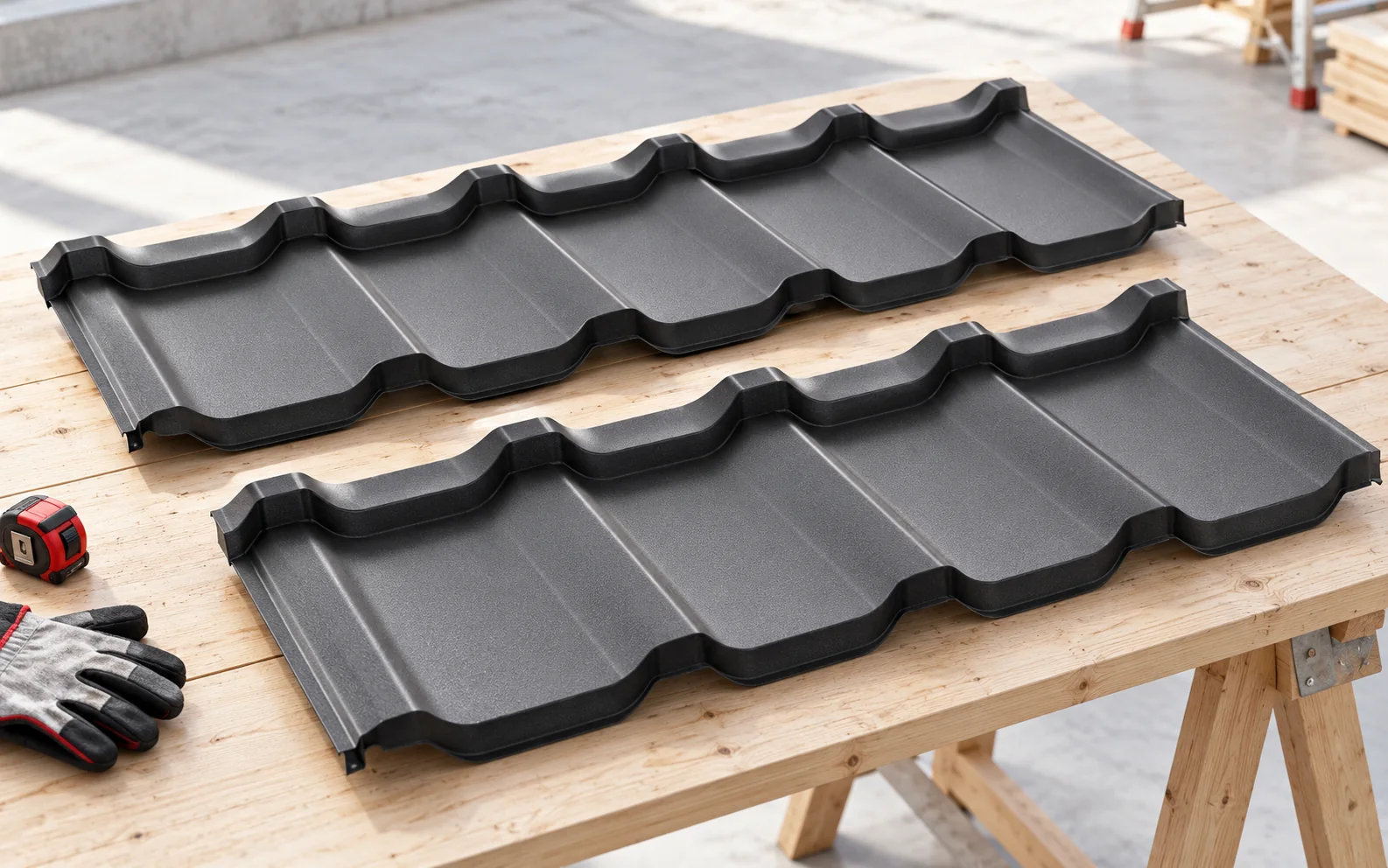
Installation of modular metal roof tiles begins with a level substructure, the correct layer sequence and a properly formed eaves zone. Only…
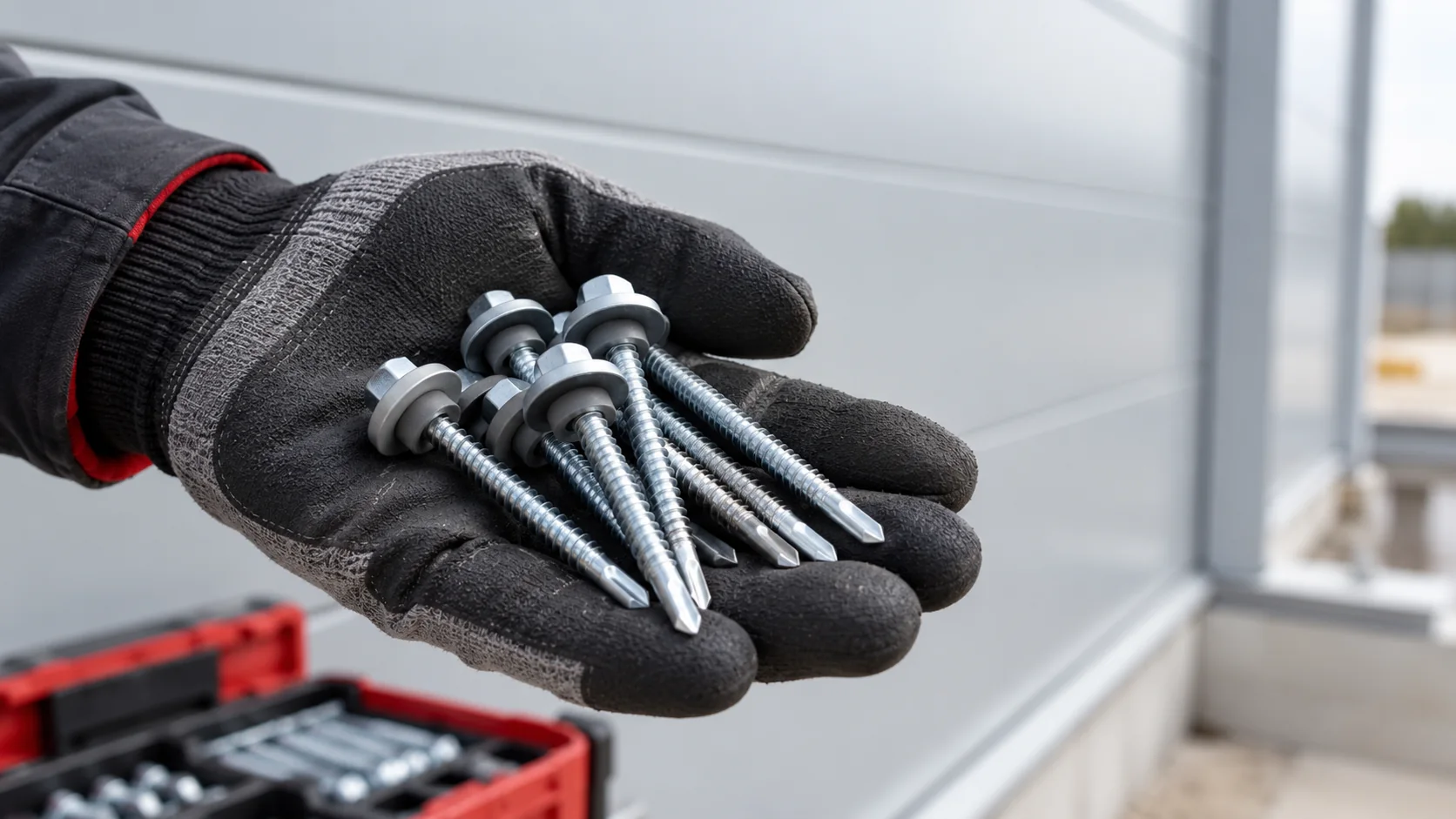
Start with the fixing layout for the building. It shows how many primary fasteners each panel needs at each support. The layout…
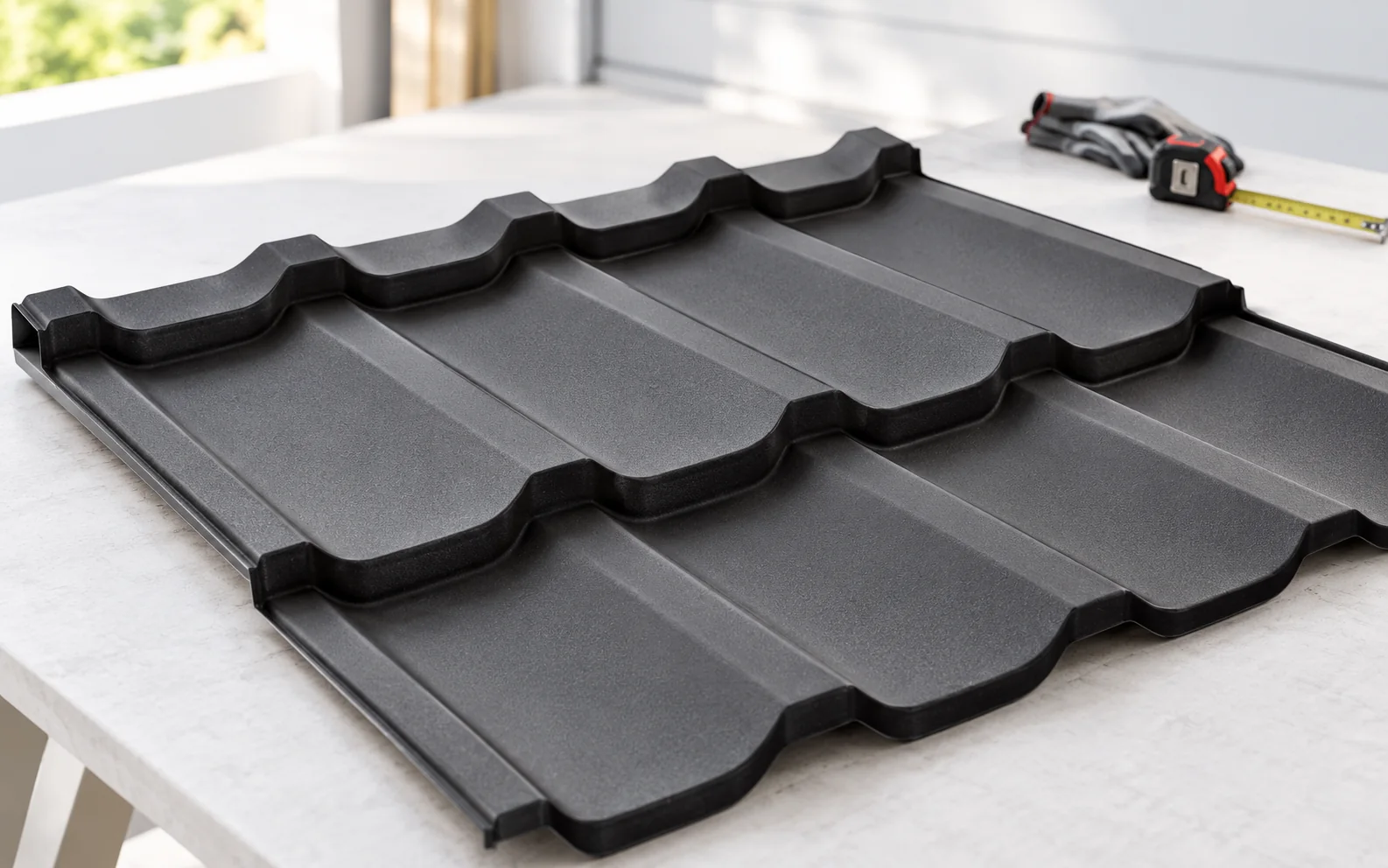
Modular tile-effect metal roofing combines a tile profile with a smaller, repeatable panel format. It can make transport and the organisation of…
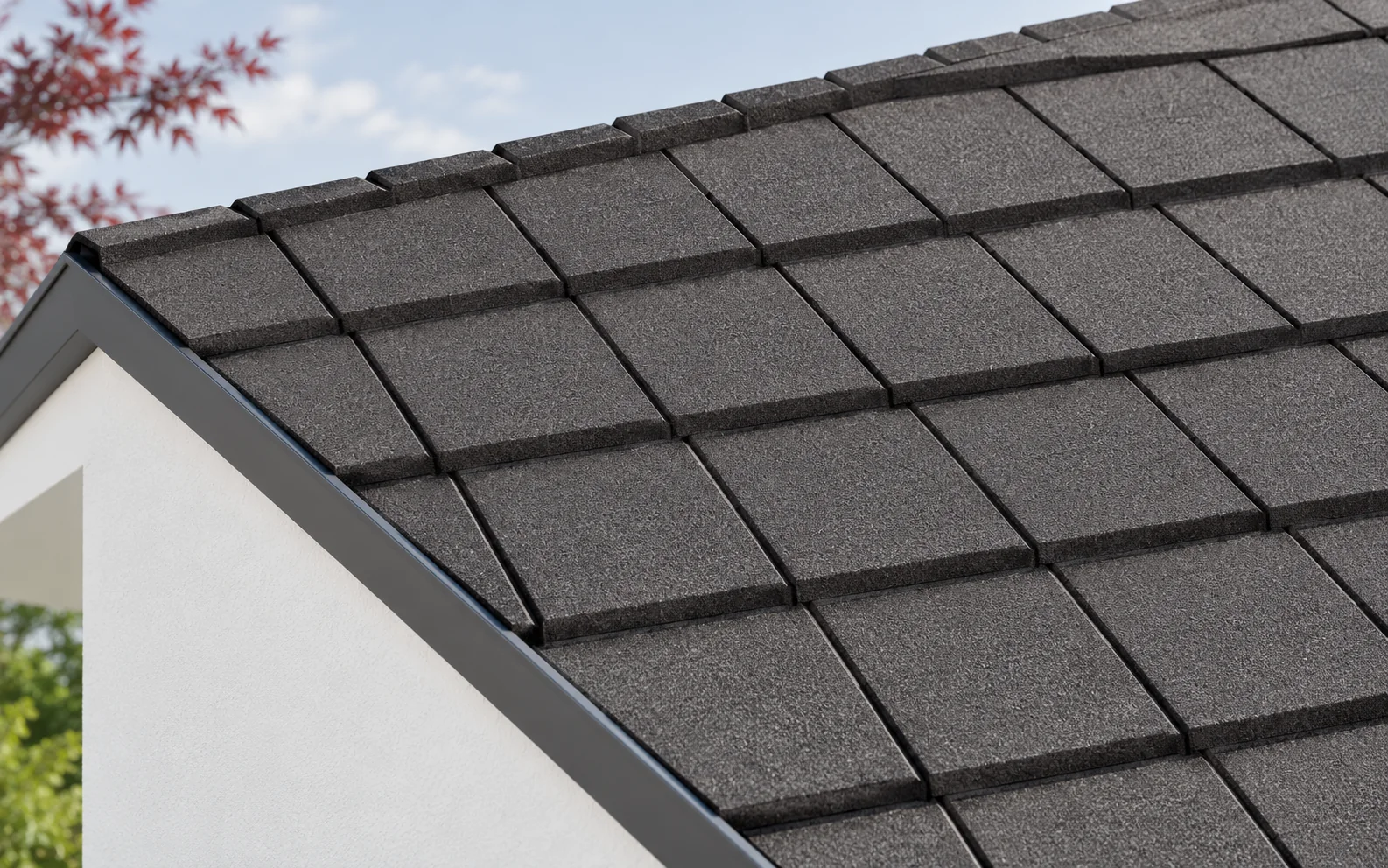
Tile-effect metal roofing with granules is installed according to the rules of the specific system, which may differ from the installation of…
How a modular tile-effect metal roof looks on a finished house depends, among other things, on the wave width, the height of…