

EPS and insulation
Comparing EPS costs at different thermal conductivity values
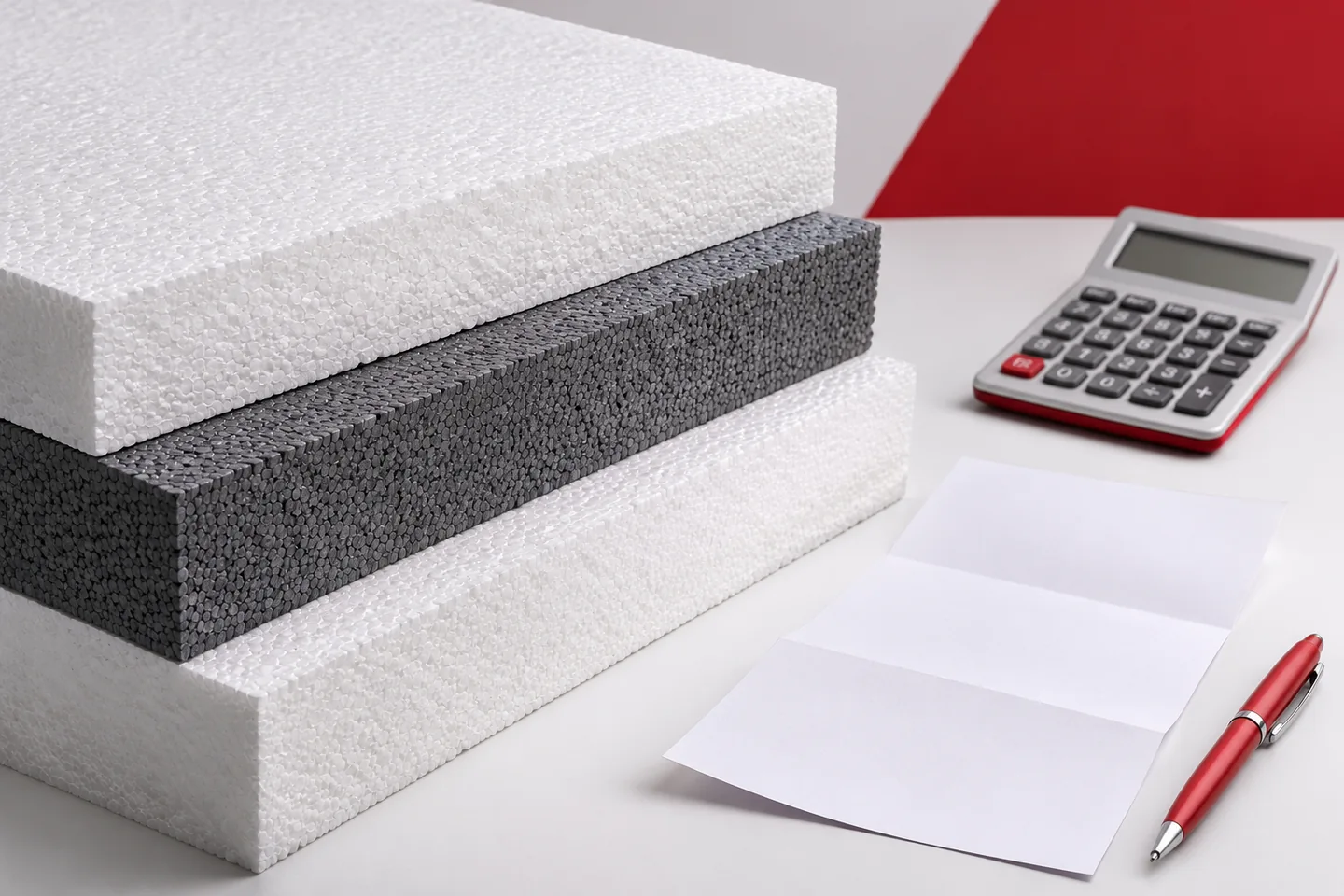
EPS price comparisons make sense only at similar thermal performance and for compatible applications. A cheaper cubic metre may require a thicker layer, while a more expensive board may reduce some detailing costs. Establish the required insulation resistance first, then the price per square metre and the completed assembly cost. Do not overlook mechanical properties or documentation. Pack contents vary: board quantity and area depend on format, thickness and packaging. Two similarly priced packs may cover different areas. Comparison becomes harder if one offer is for rebated boards and the other for straight-edged boards quoting a different usable area.
In this article
Why can pack prices mislead?
For the initial comparison, record price, pack volume, coverage and thickness. Check whether tax and transport are included. If the supplier prices by m³, calculate the m² cost of the selected layer. This simple structure can expose an apparently attractive offer without judging the material’s quality.
How do you establish a common thermal target?
For homogeneous insulation, R = d/λ. To achieve 5.00 m²·K/W, a material at 0.040 needs 20 cm, while one at 0.031 needs around 15.5 cm. These thicknesses are comparable for the layer’s resistance alone. Assess the complete element separately, including its other components.
In practice, order available sizes. If you choose 16 cm rather than 15.5 cm, record that option’s actual resistance. The difference may be small but should be explicit. Comparing equal-thickness prices answers a different question: what does better insulation cost without increasing the space occupied by EPS?
A worked example of layer costs
Use hypothetical prices that are not a current market offer. White EPS costs PLN 250/m³ and graphite EPS PLN 320/m³. A 20 cm layer of the first costs PLN 50/m². A 16 cm layer of the second costs PLN 51.20/m². The cubic-metre price difference is large, but the cost of two thermally similar layers is close.
This is only a calculation method. Replace the figures with real quotations from the same day and for the same delivery scope. The amounts exclude adhesive, labour, waste and finishes. The example shows why a board should not be dismissed on one unit price without calculating the required thickness.
Which costs beyond EPS may change?
Greater thickness can require longer fixings, different sills and flashing adjustments. A short eaves projection may require a changed roof detail. Graphite material, meanwhile, needs appropriate sun protection during installation. A sound quotation includes work organisation and protective measures.
Scaffolding, masonry preparation and finishing make up a substantial share of many renovation costs. Cheaper EPS does not remove these items. Compare completed-façade costs for both options. If the total difference is small, space savings or better thermal performance may decide the choice.
Why must the boards suit the same application?
The lowest conductivity cannot compensate for insufficient load resistance beneath a floor. Nor does thickness alone make a façade board suitable for foundations. Before comparing prices, check required TR, CS(10), long-term properties or water absorption. The necessary parameters depend on the installation location.
Density is not a sufficient common denominator. Products of similar weight may differ in conductivity and declared performance. Compatibility with the ETICS system or floor and roof assembly also matters. Apparent savings from comparing non-interchangeable products are not a real alternative for doing the same work.
When buying full packs, calculate quantity rounding too. Two offers with the same price per metre can require different surplus purchases.
Preparing a clear quotation comparison
For each option, list conductivity, thickness, calculated resistance, pack coverage and m² price. Add required properties and transport cost, followed by differences in labour and detailing. The table need not be elaborate. It should show where each amount comes from and whether the offers deliver the same result.
Manufacturers of different EPS variants include Swisspor, Arbet, Styropmin and Yetico. Include the exact product code in purchasing documents even if the description for the client remains general.
Calculate operating savings separately. They do not follow directly from price or conductivity differences, but depend on the entire house, heat source and use conditions. A good purchasing comparison helps select material; an energy assessment shows the option’s effect on long-term costs.
7 branches. Materials closer to your project.

Free quote
Materials for your project
You may also find useful…
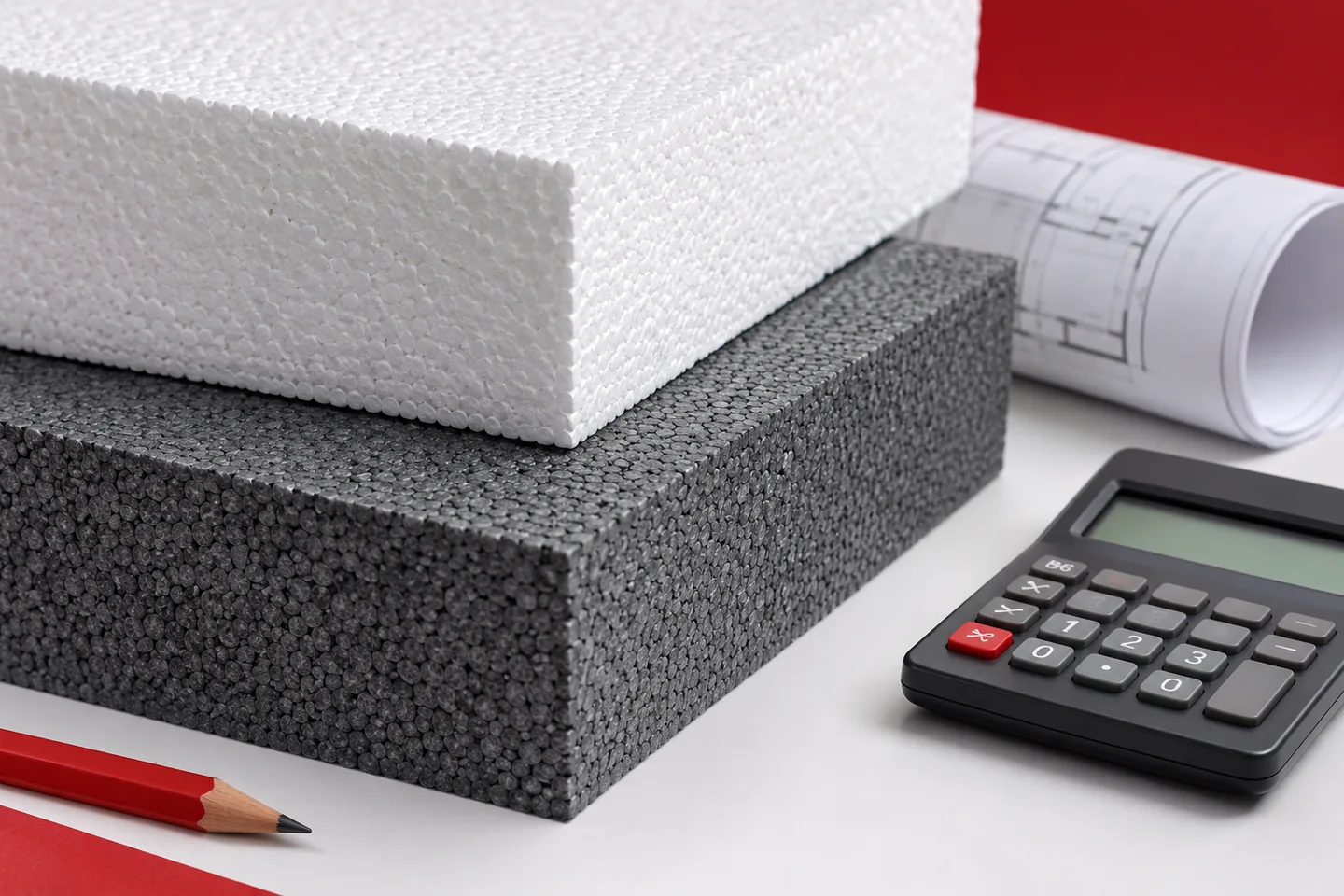
Changing conductivity from 0.040 to 0.031 W/(m·K) increases the thermal resistance of EPS at the same thickness. It may also permit thinner…
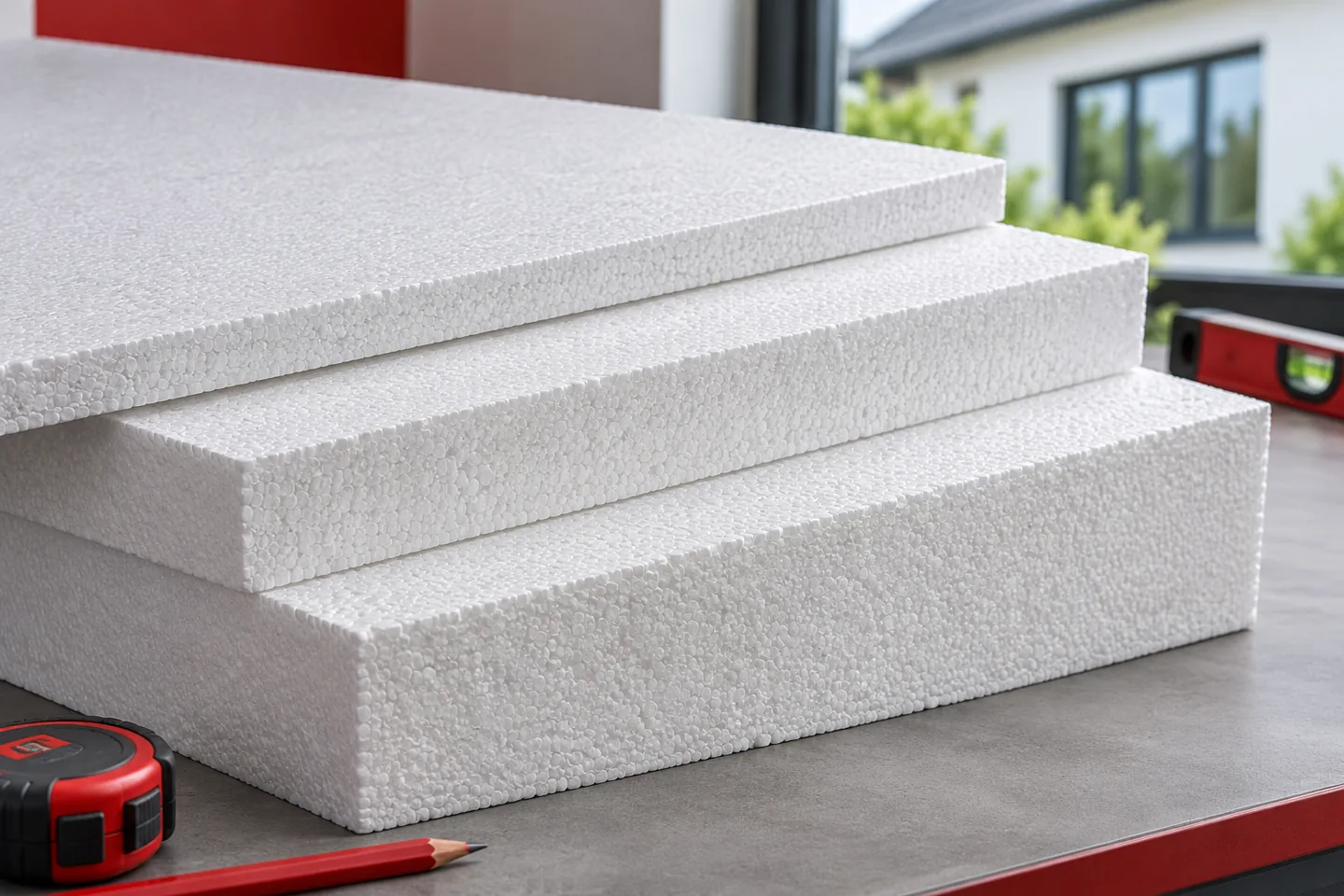
A thicker layer of polystyrene reduces heat transfer through a correctly constructed building element. Each additional centimetre, however, brings a progressively smaller…
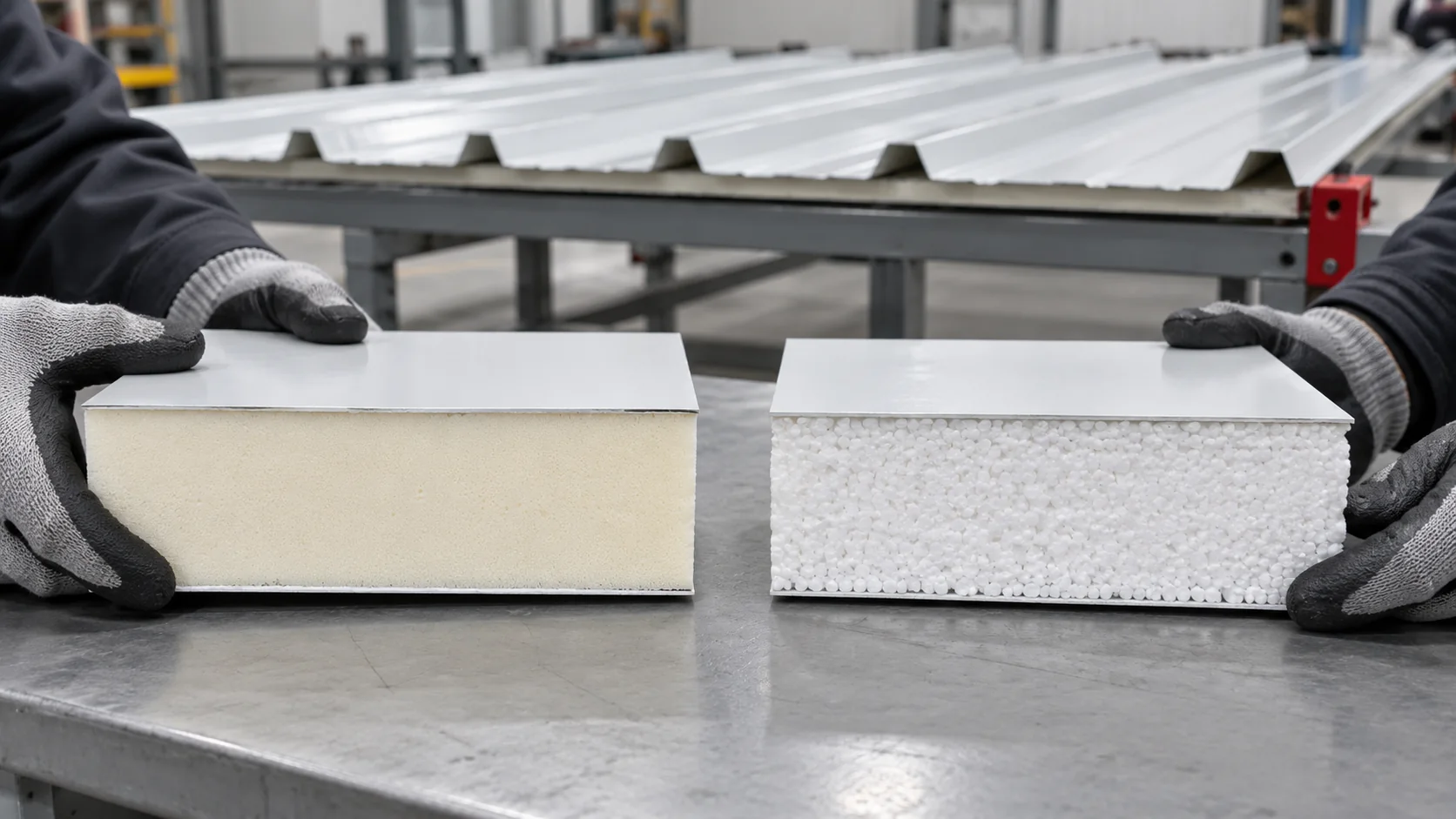
When replacing a roof, compare complete roof panels with two facings and a profile designed for roofing. The PIR or EPS core…
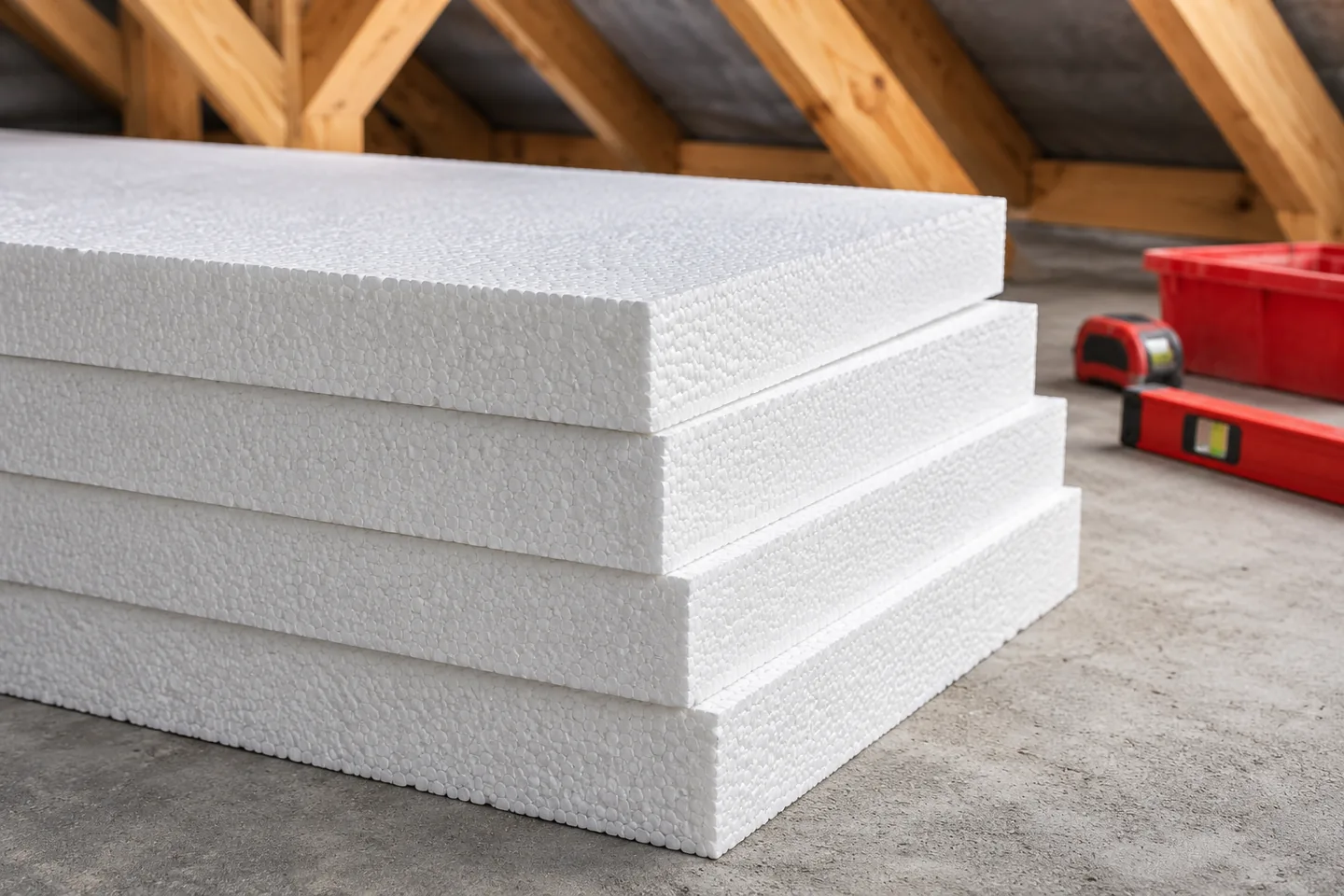
When the loft remains unheated, insulating the ceiling can make more sense than insulating the roof slopes. In that case it protects…
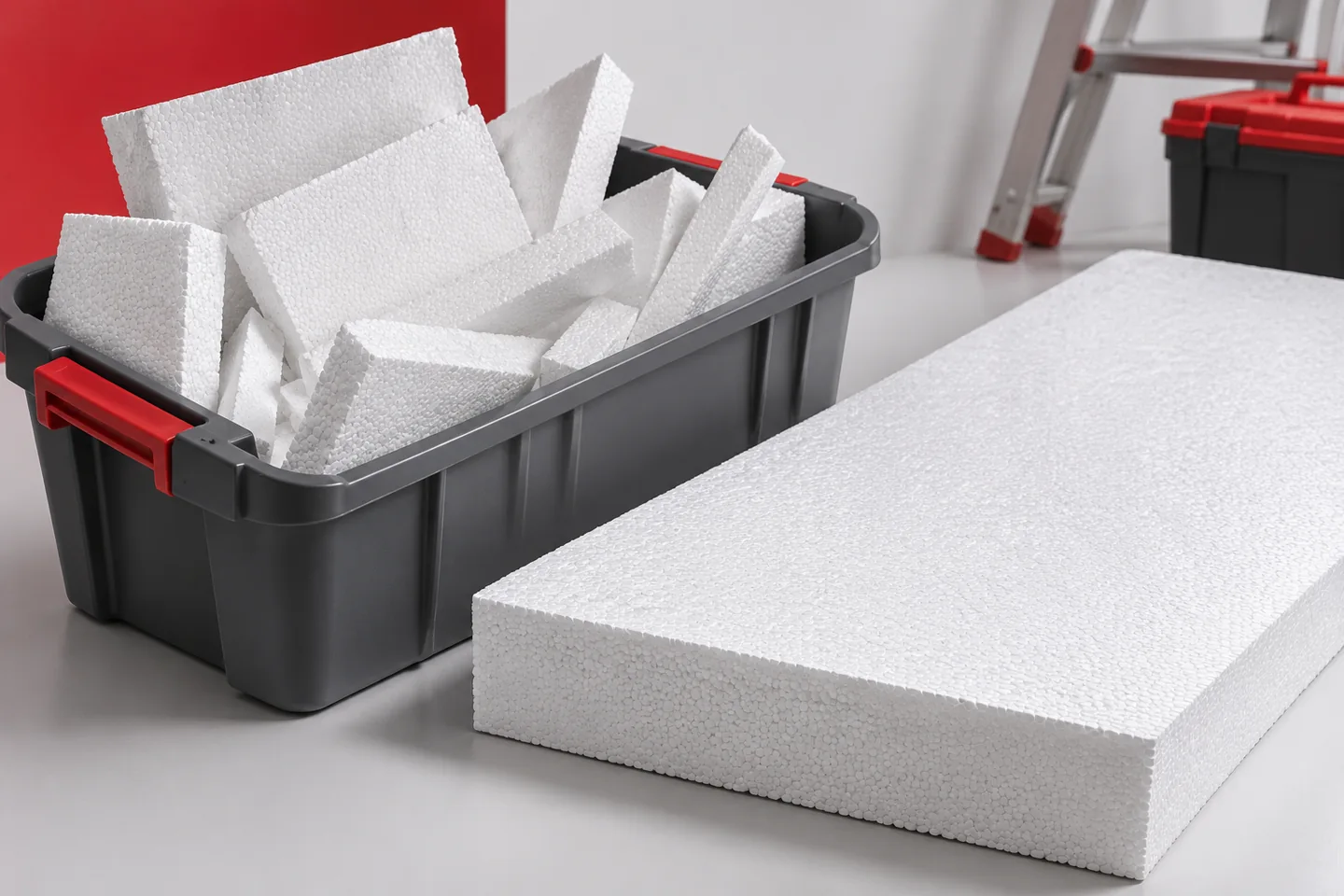
EPS can be recycled, but the route by which the waste is managed depends on its origin and purity. Offcuts from installation…
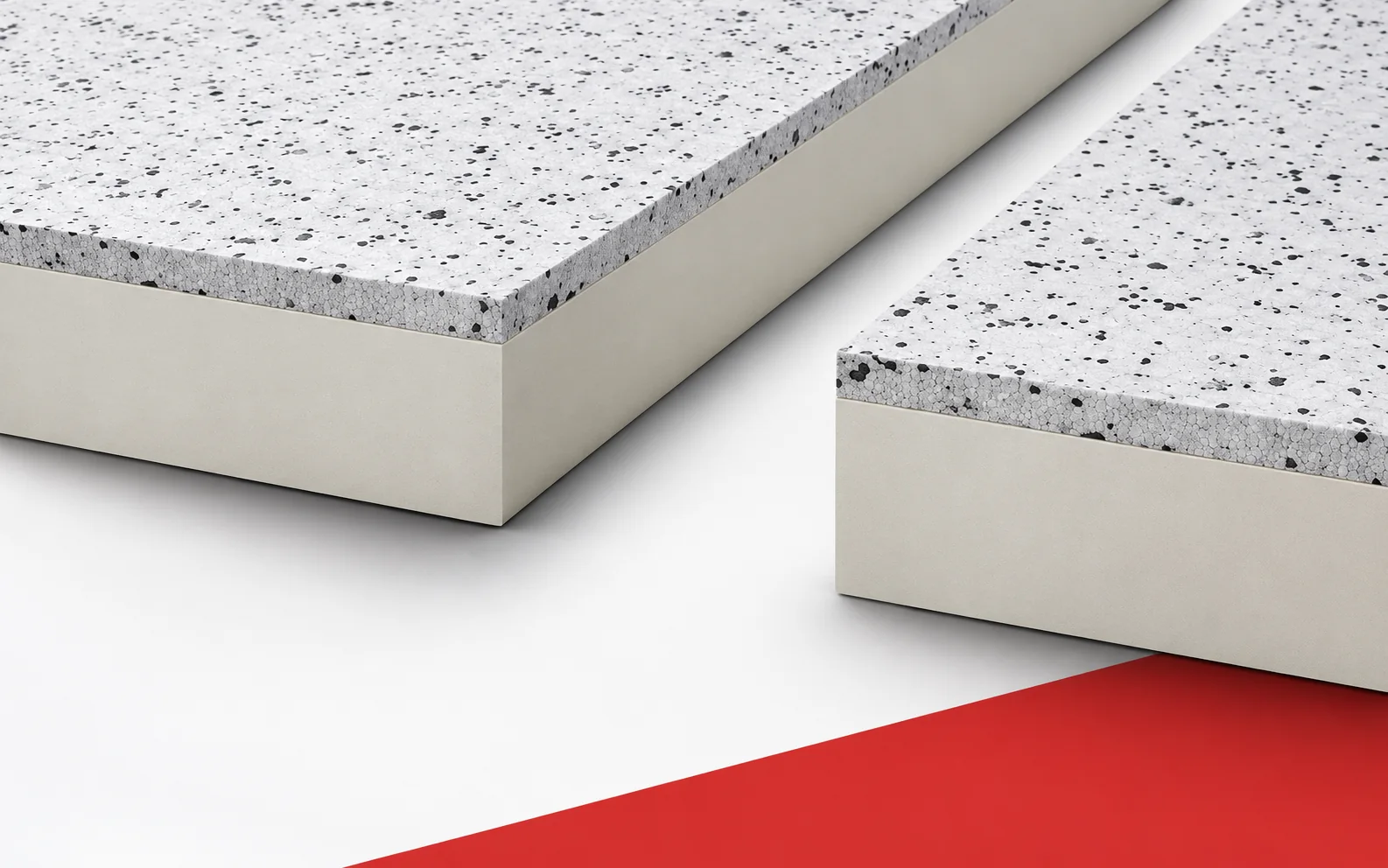
Thermano ETICS combines the low thermal conductivity of PIR with an outer layer of EPS. This solution is intended to help in…
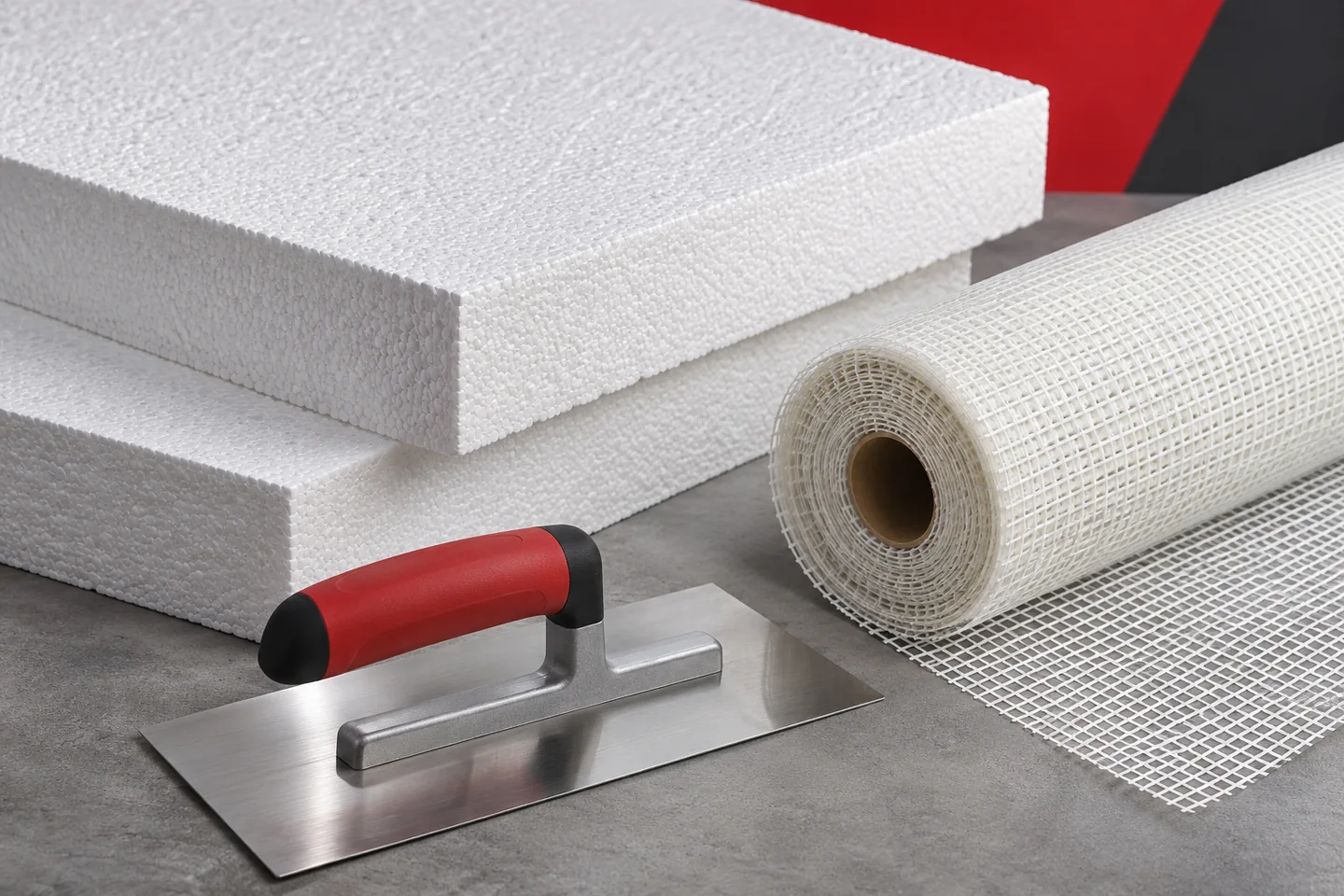
ETICS is a complete wall insulation system in which the polystyrene works together with the adhesive, reinforcement and render. Durability depends on…
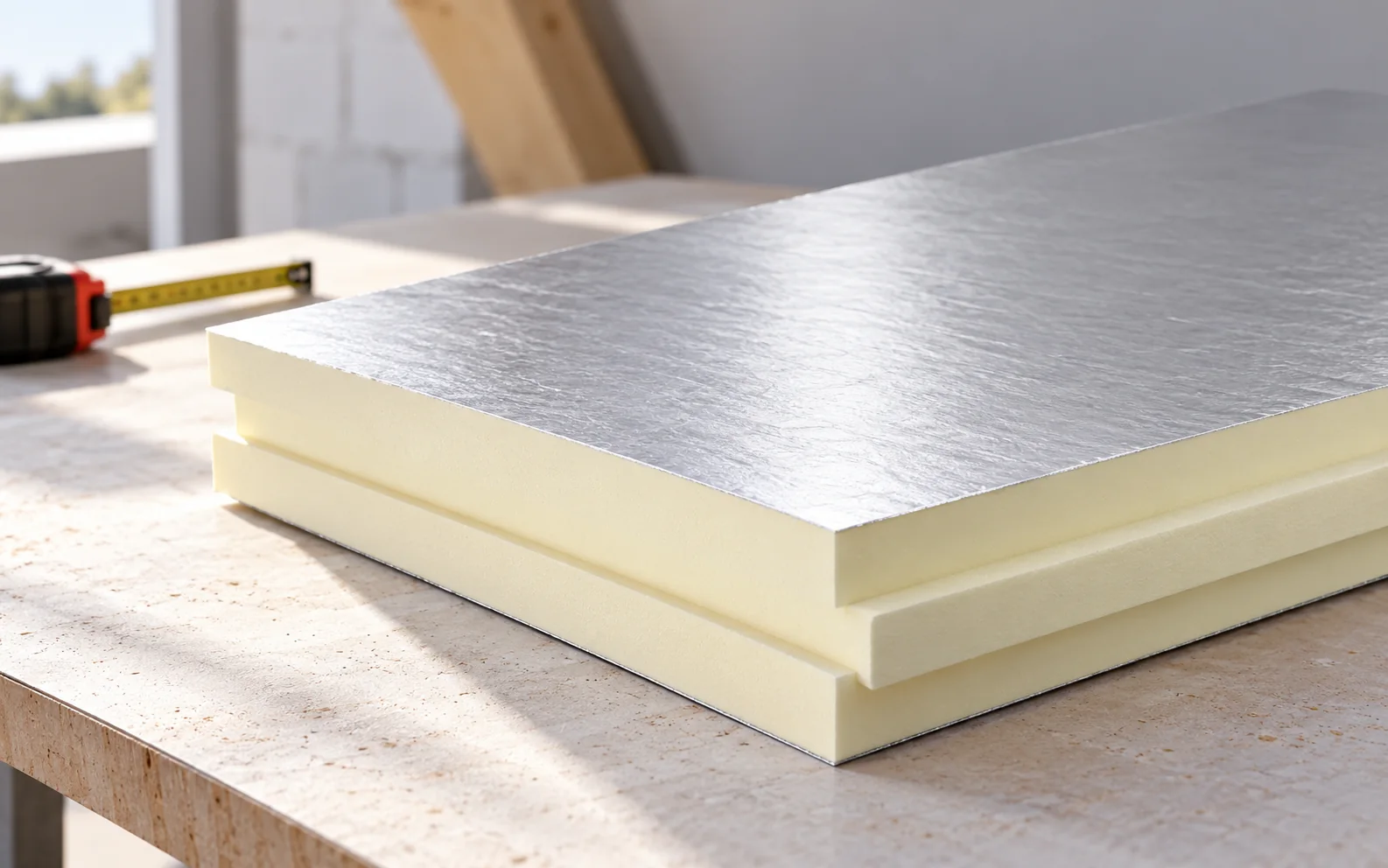
Select roof insulation for the layer arrangement, available height and loads. PIR often achieves the required thermal resistance at a smaller thickness.…