

Cladding installation and maintenance
Which sandwich panel installation faults only show up once the building is in use?
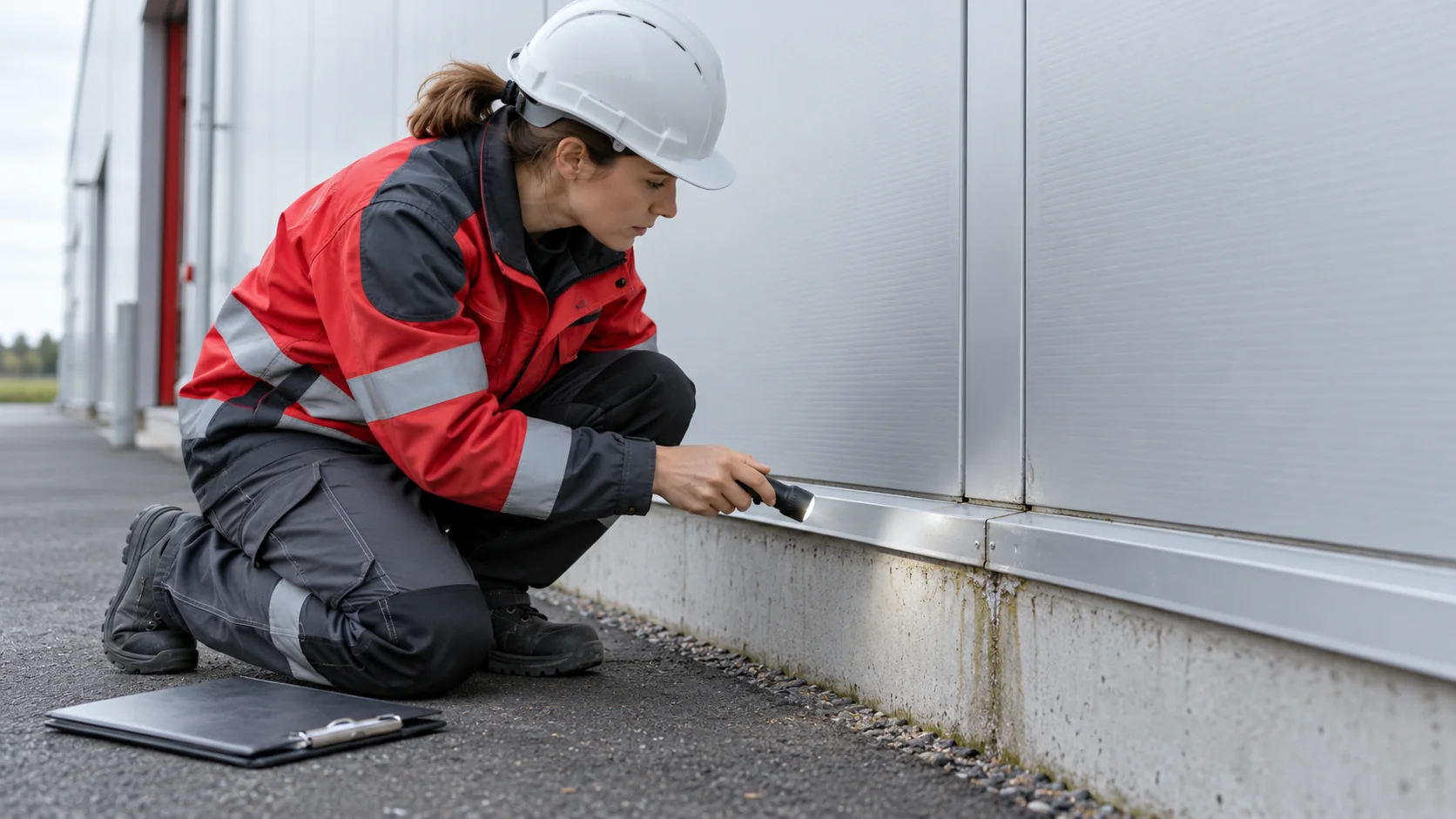
The first heavy rain, a spell of frost or a thorough washdown can reveal faults that were invisible when a sandwich panel building was handed over. Start with the joints, fixings and flashings. A wall can look straight while a gap behind a trim lets in air or water. Check the supporting frame as well. Pulling a panel tight against uneven rails can dent the facing, cause ripples and prevent the panel joint from closing properly. Side lighting often makes these marks easier to see. Compare any unevenness with the specified tolerances for both the panel and the frame before attributing it to installation.
In this article
How an uneven frame shows through the facing
Check the alignment and geometry of the supports before the panels go on. If distortion is already visible on a finished wall, tightening the screws further may make it worse. Establish whether the cause is the frame, the panel, the clamping pressure or another part of the assembly.
Check the pressure on sealing washers
A loose washer may let water through the screw hole. An overtightened washer may distort and damage the facing. Check that the installer used a suitable tool and that each fastener is seated correctly. A correct screw count alone tells you little about the seal at each hole.
Check that each fastener suits the substrate and that its corrosion protection is intact. If a screw spins without clamping the panel, find out why. Drilling a succession of new holes leaves further openings that will all need to be sealed.
Trace rust marks back to swarf and cutting damage
Metal swarf left after drilling can rust on the surface. Its marks can look like corrosion of the sheet itself. Hot particles from an unsuitable cutting process can also damage the coating, even if the damage is hard to spot on installation day.
Use suitable cold-cutting tools and remove debris as work proceeds. On completion, inspect both accessible faces of each element. Select a coating repair compatible with the original finish. An unsuitable paint may adhere poorly or weather differently from the surrounding surface.
Find leaks at joints and junctions
Common trouble spots include the plinth, corners, reveals and roof-to-wall junctions. A break in a seal can cause draughts, condensation or water ingress. Water can travel inside a junction before it becomes visible, so a stain may be some distance from the point of entry.
Trace the water path before adding sealant. The repair should restore the intended sequence of layers and leave the drainage path clear. Apply the same check to service penetrations cut after the original cladding contractor left the site.

Inspect panels in storage and remove protective film on time
Protective film is intended for temporary use. If left in place too long, especially in sunlight, it can become difficult to peel off and leave marks behind. Check the removal deadline and conditions specified for the panels delivered.
Poorly supported packs, water exposure or sliding one panel over another can cause damage before installation begins. Inspect the panels during unloading. Photographs and a written description help distinguish damage present on delivery from damage sustained later on the wall.
Assess alterations to the building envelope
Cutting an unframed opening, hanging heavy equipment from the facing or substituting a similar-looking panel may alter the performance of the envelope. This matters particularly for walls and roofs with a specified fire performance. Keep joints and penetrations consistent with the documented assembly.
Review the drawings and agree the detail before making an alteration. If records are missing, first establish how the structure is built. The ease with which sheet metal can be cut gives no indication of the effect on the assembly. Keep a simple record of new openings and repairs while the building is in use.
Identify the cause before choosing a repair
For a leak, follow the water path. For corrosion, identify how the coating was damaged. For condensation, establish the temperature and humidity conditions. Inspect the affected area before covering it. The findings may call for anything from a small adjustment to a flashing to panel replacement or structural repair.
After repair, check the result under the conditions that first exposed the fault. Keep photographs and details of the materials used. They give the maintenance team a reference at the next inspection. At handover, provide these records together with a plan for ongoing maintenance.
Frequently asked questions
Does every leak mean a panel needs replacing?
No. The fault may be in a junction, flashing or seal. Locate the source and extent of the damage, then assess the panel condition and whether the junction or panel can be repaired.
When is the best time to check for installation faults?
Inspect joints that will be concealed before they are covered. Check the finished envelope at handover and again after the first rainfall and temperature changes, when it has been exposed to actual operating conditions.
7 branches. Materials closer to your project.

Free quote
Materials for your project
You may also find useful…
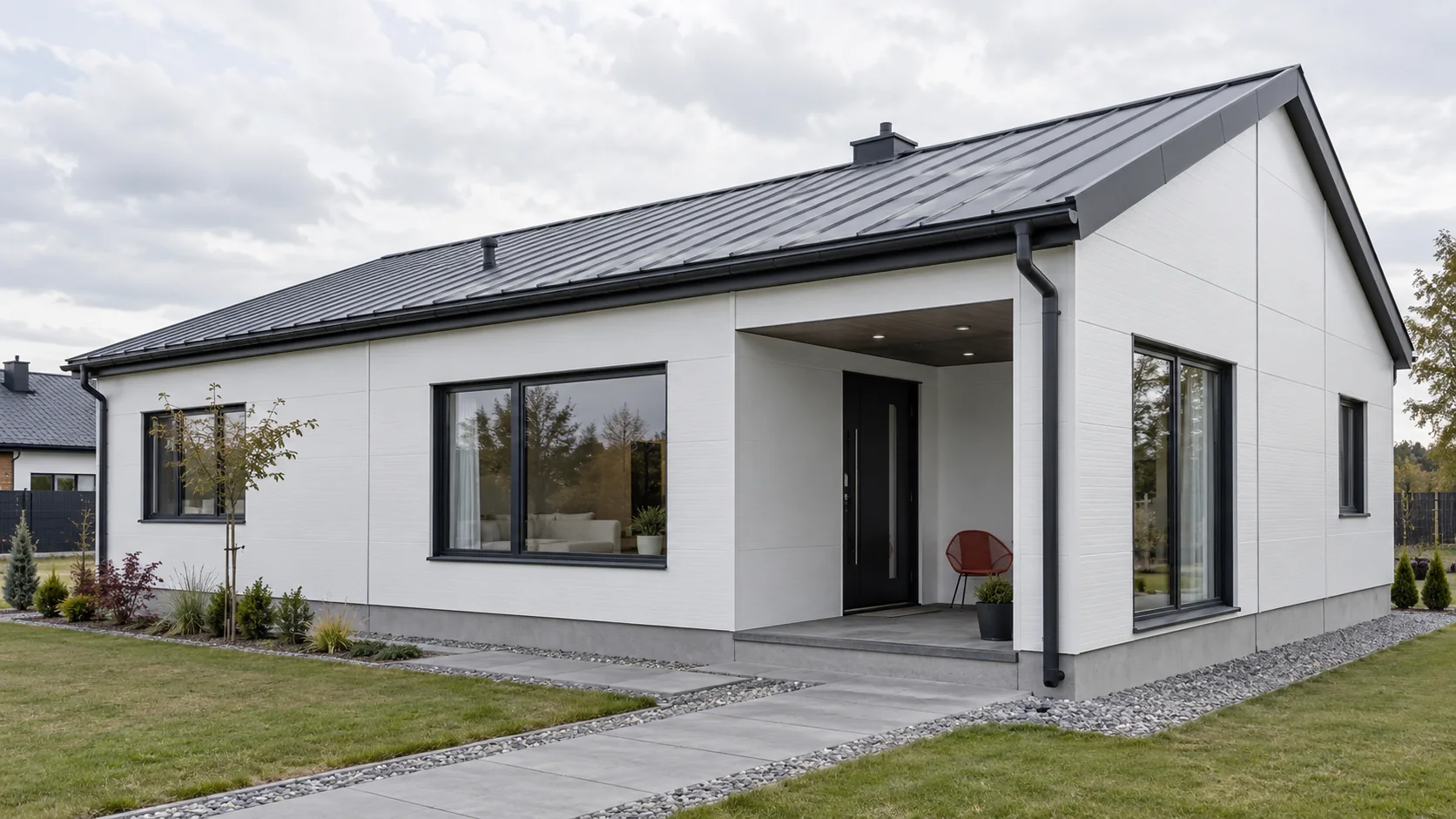
To estimate the cost of a sandwich panel house, establish what the quotation covers. It might cover panel delivery, an enclosed shell…
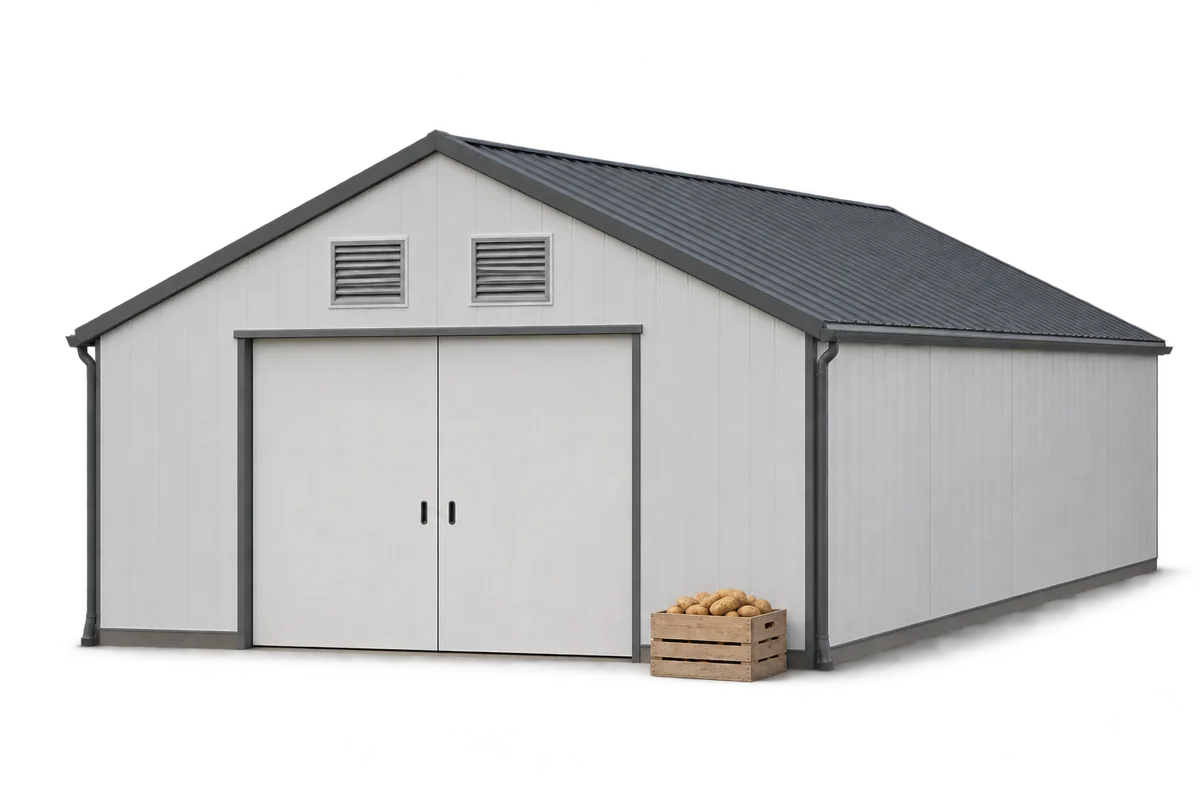
A potato-store refurbishment should begin with a plan for checking the store before loading, rather than with insulation thickness. New insulation and…
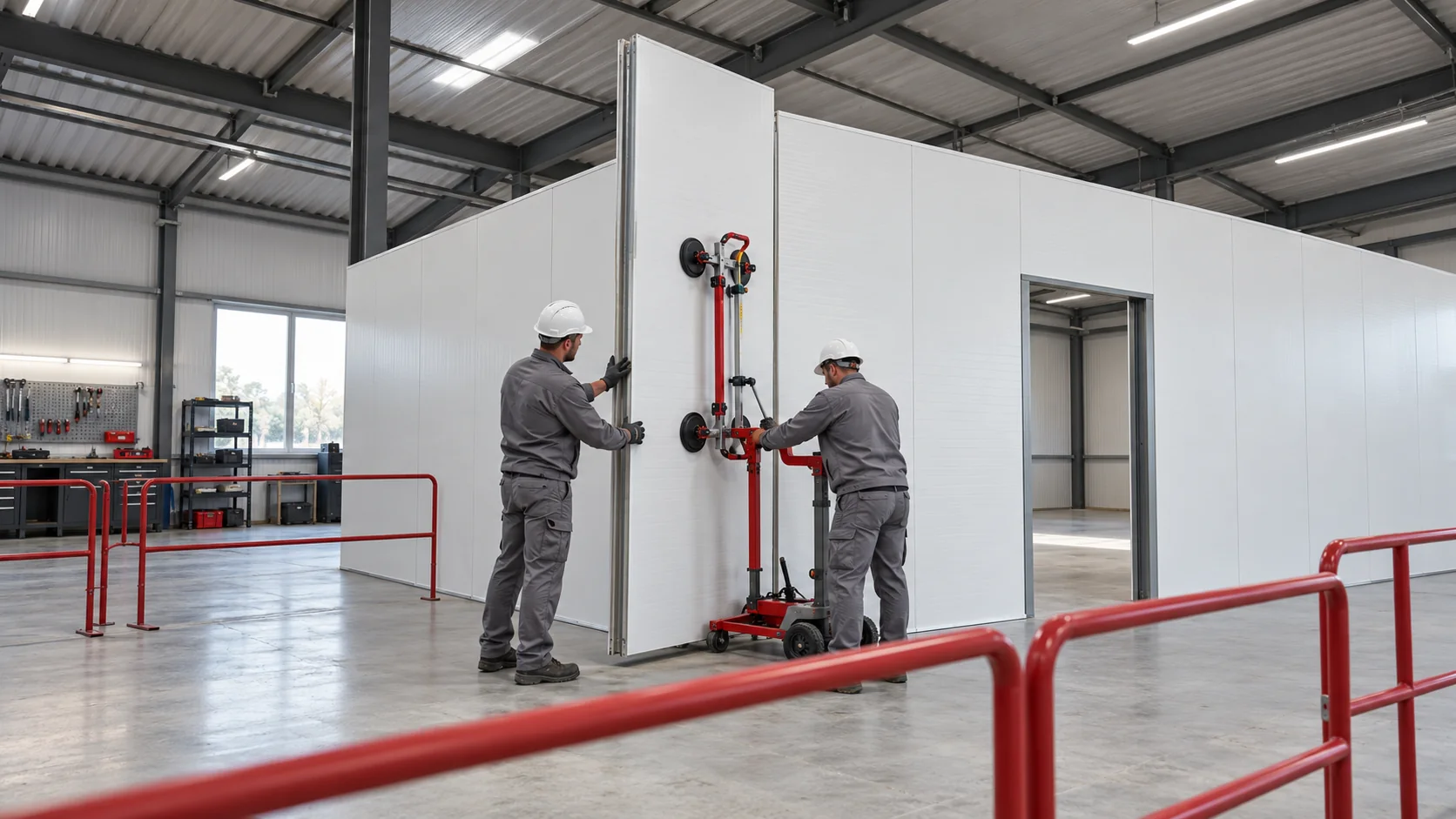
Plan the corners, openings and service penetrations before measuring for sandwich panels. Agree who will erect the frame, fit the panels, install…
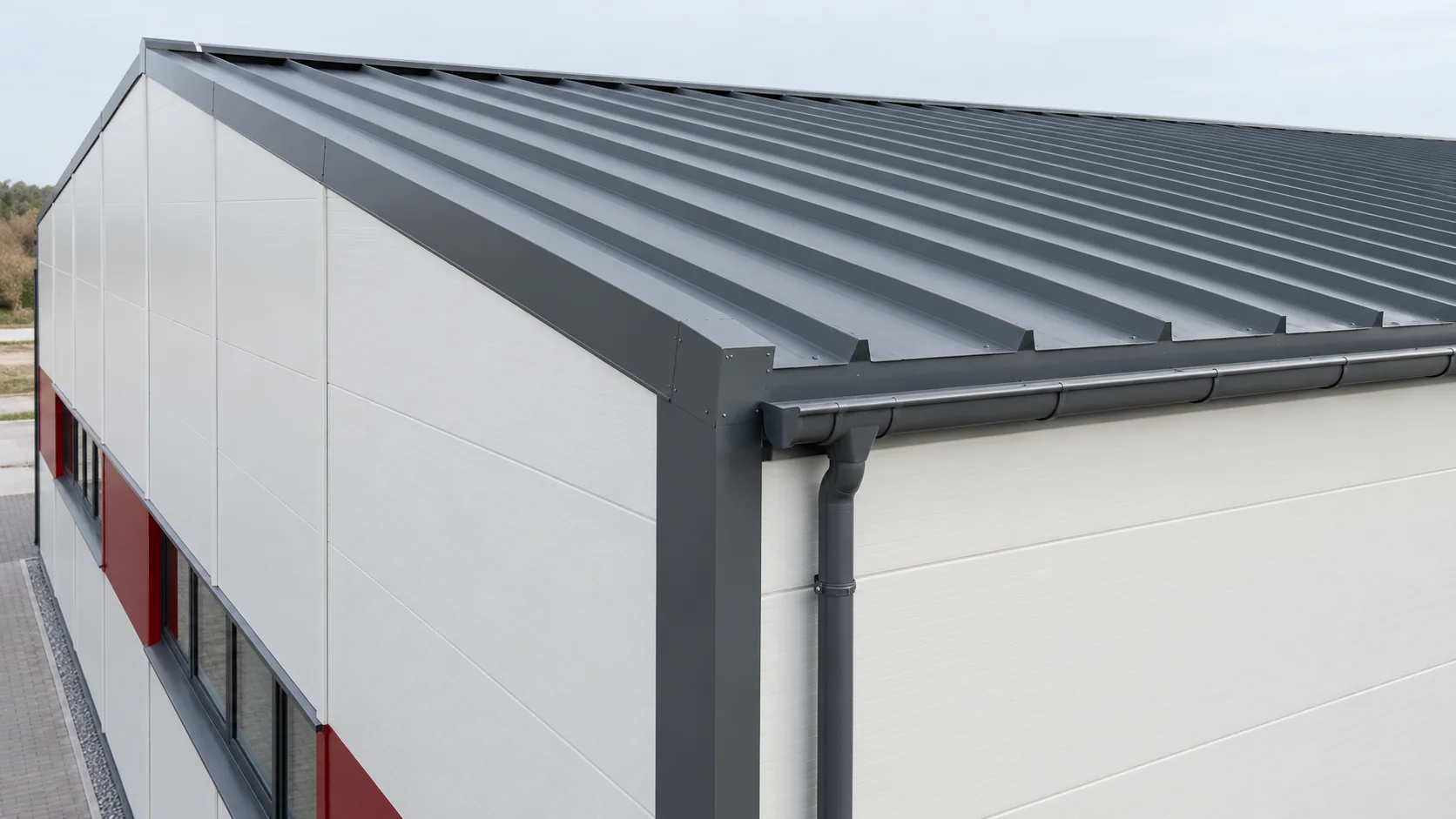
Select sandwich roof panels and wall panels together so that dimensions, costs and junction details agree. Each has a different job. On…
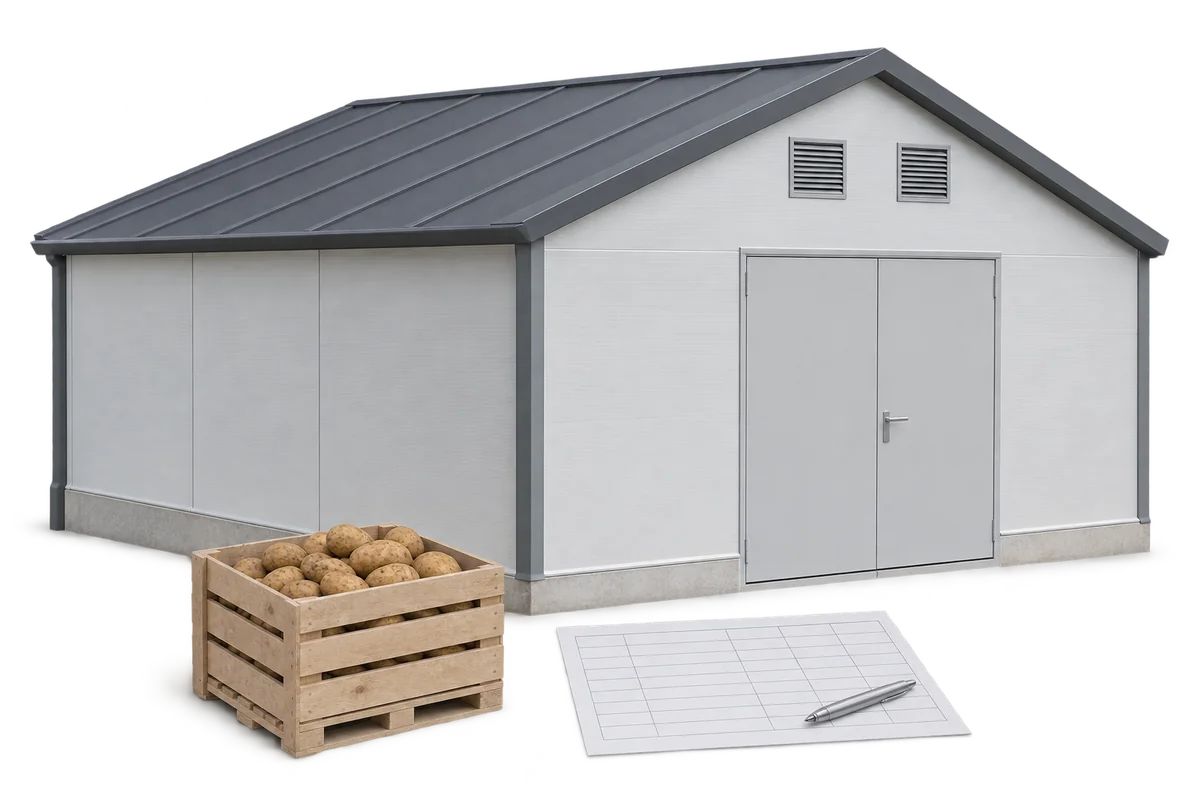
The insulation supplier for a potato storage facility needs more than the surface area of the walls and roof. The enquiry should…
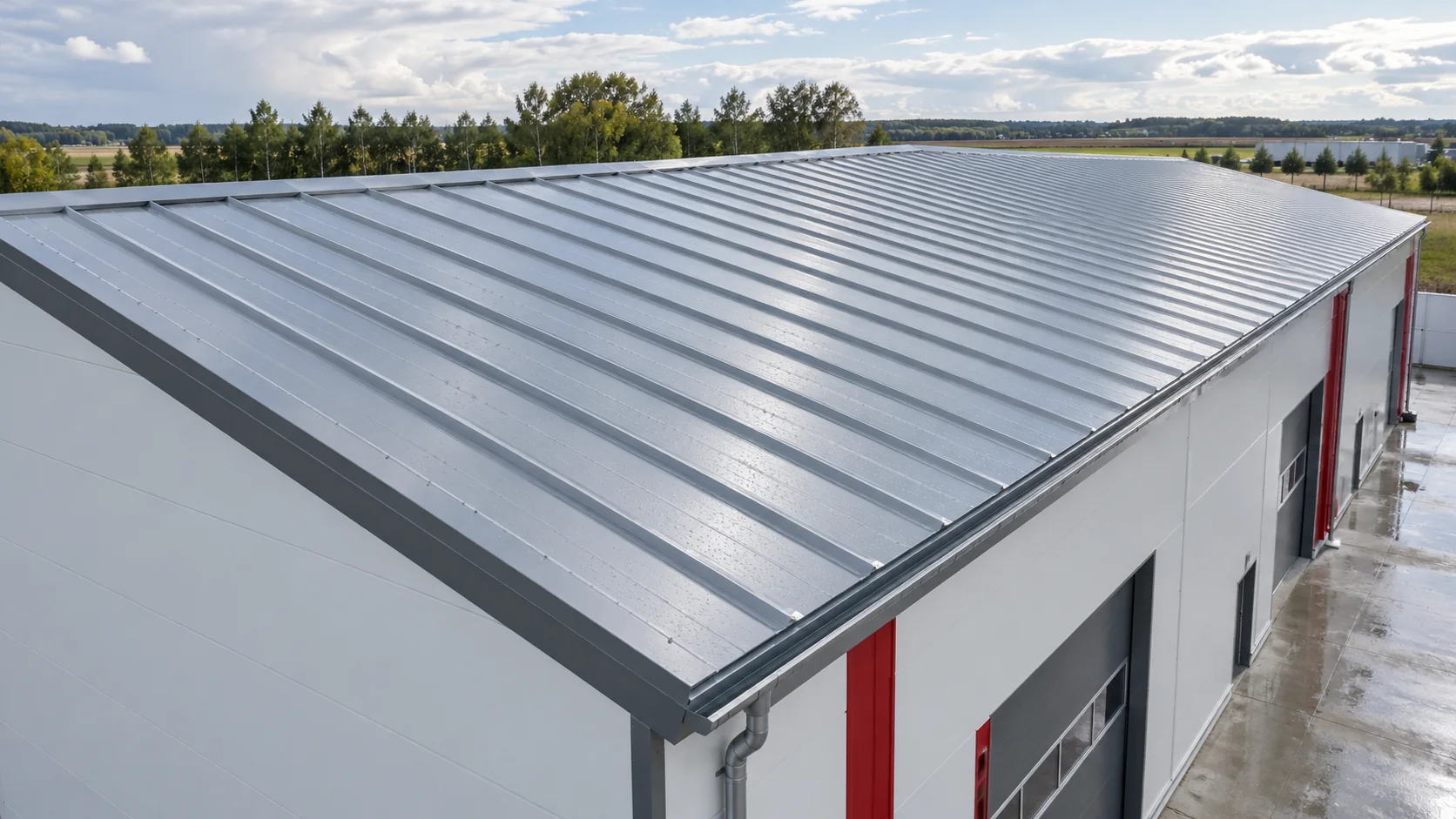
A sandwich panel roof budget should cover everything needed to make the roof weathertight and drain rainwater. Check whether the quotation includes…
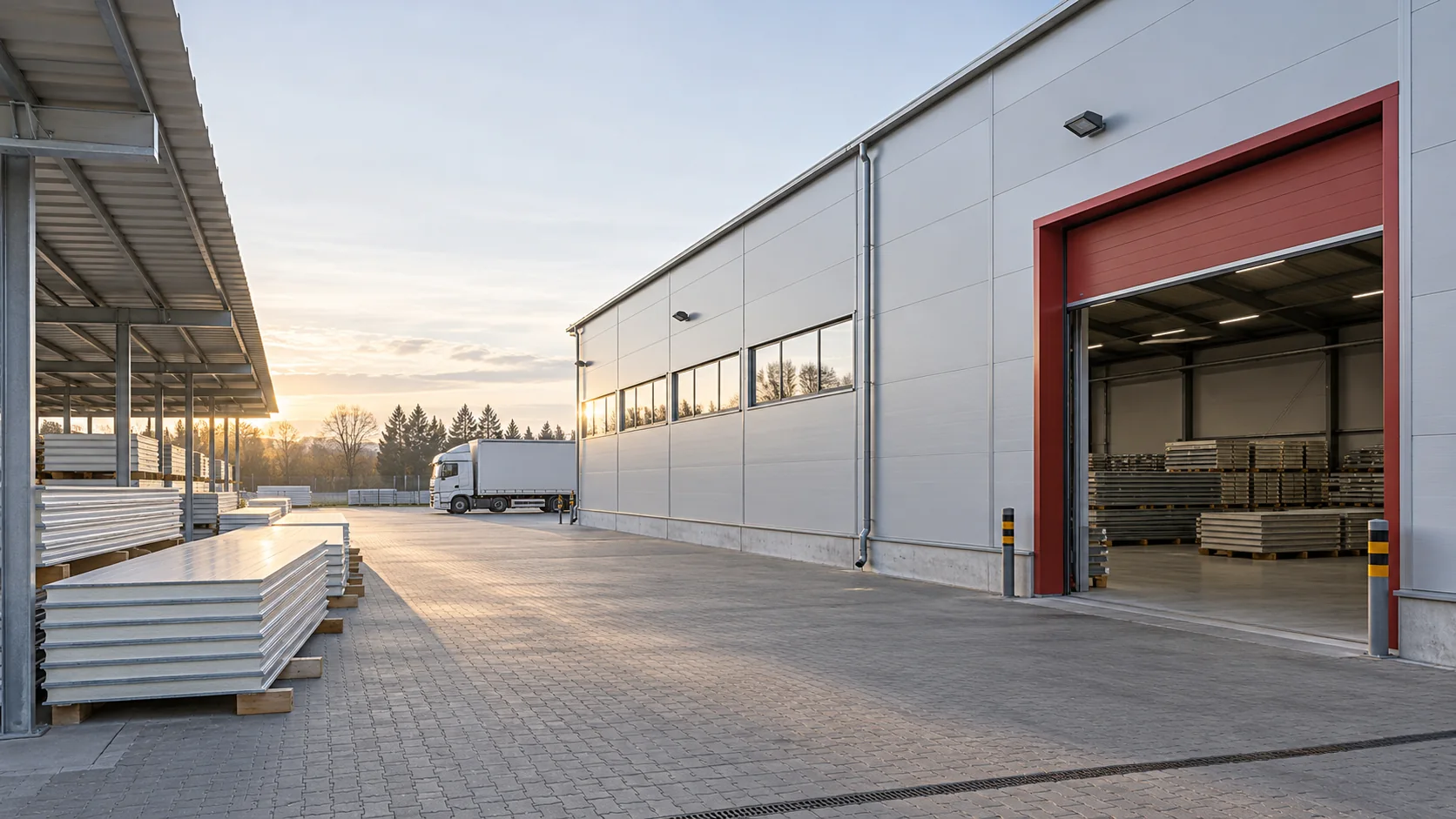
When buying sandwich panels in Wrocław or elsewhere in Lower Silesia, check the actual batch and the route to site before choosing…
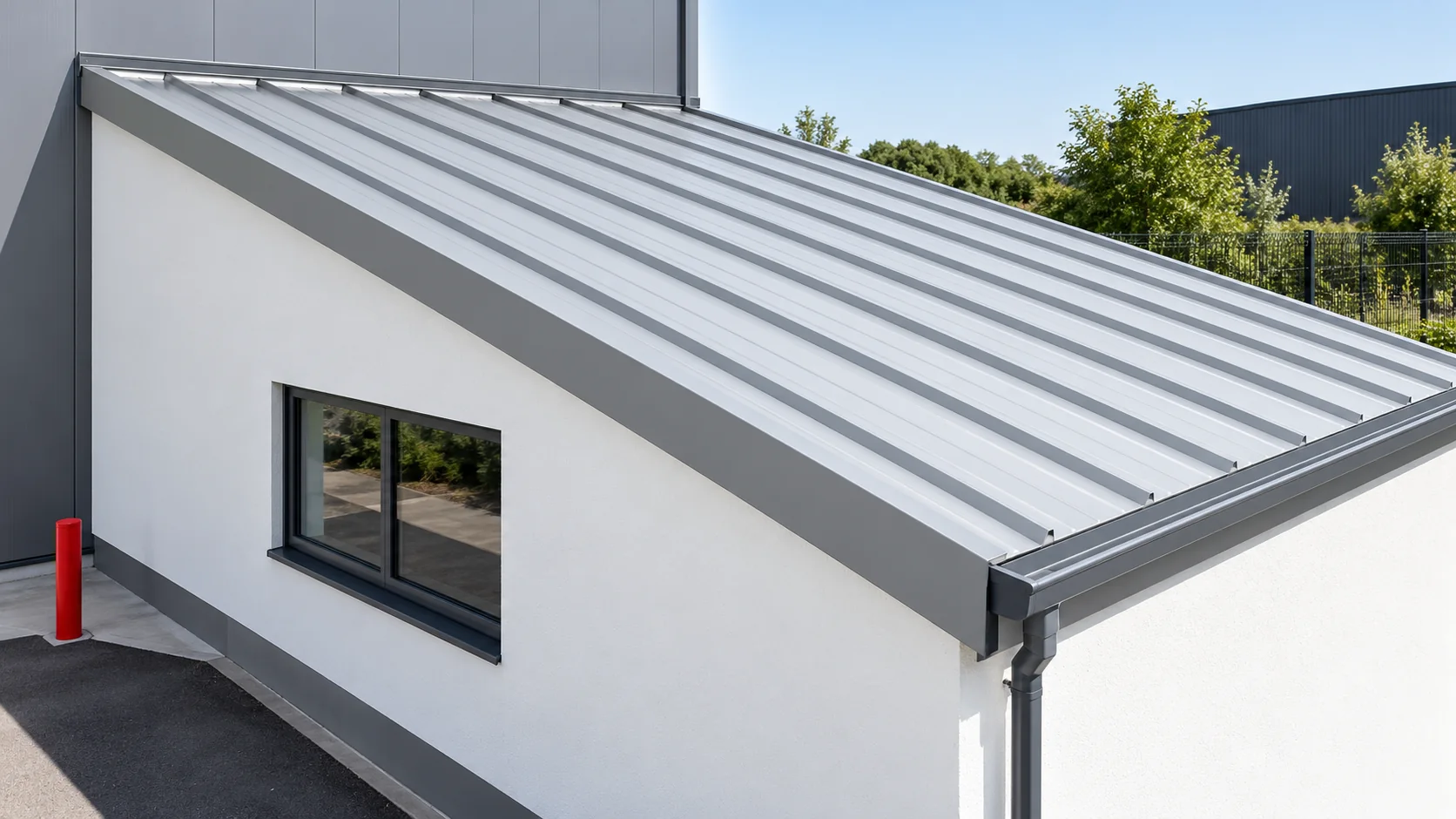
A roof that looks flat from the ground may still have enough fall to drain. For sandwich roof panels, the minimum pitch…