

PIR insulation
Recticel Eurofloor: limiting heat loss when floor depth is restricted
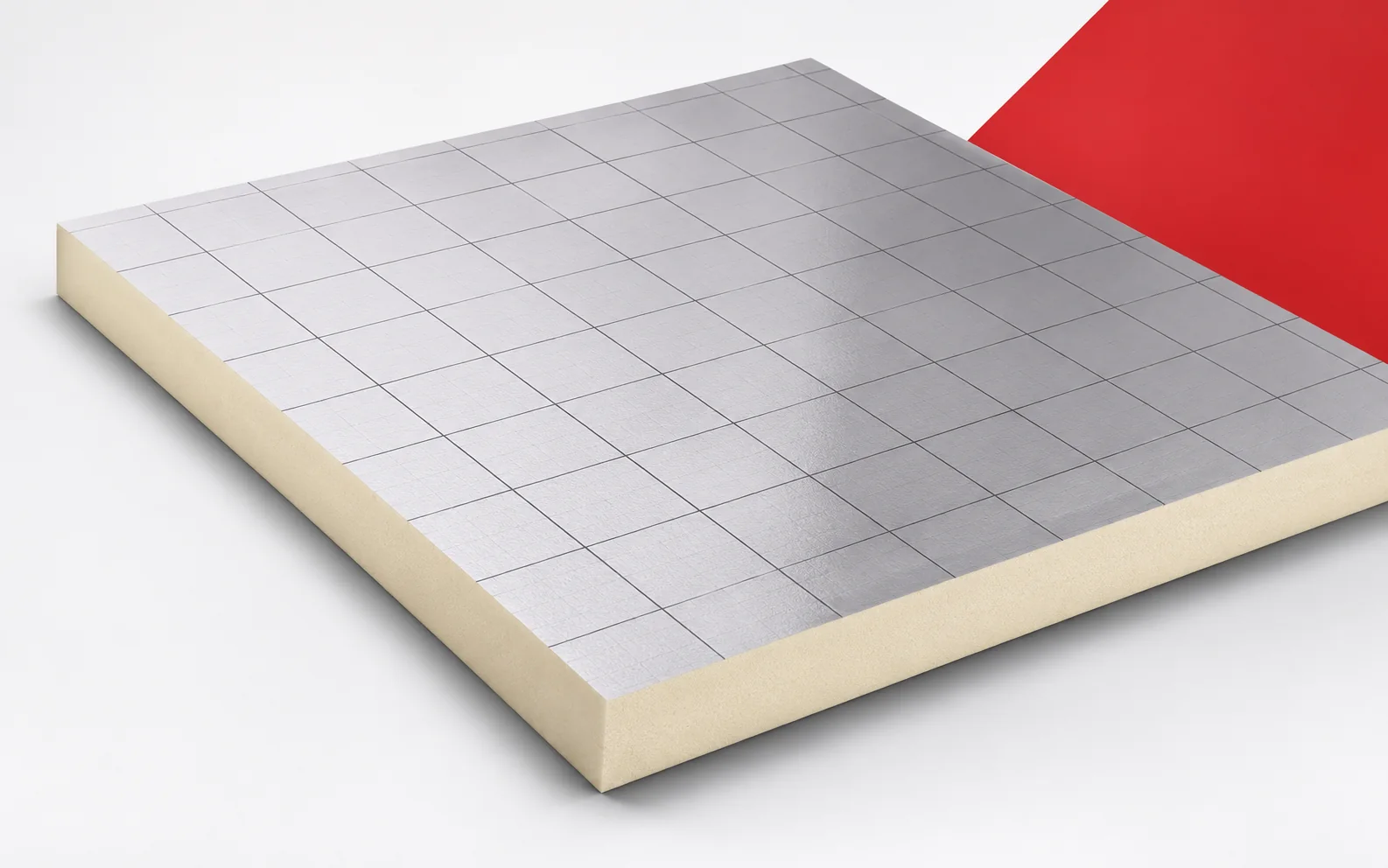
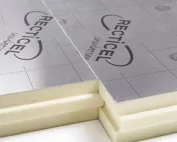
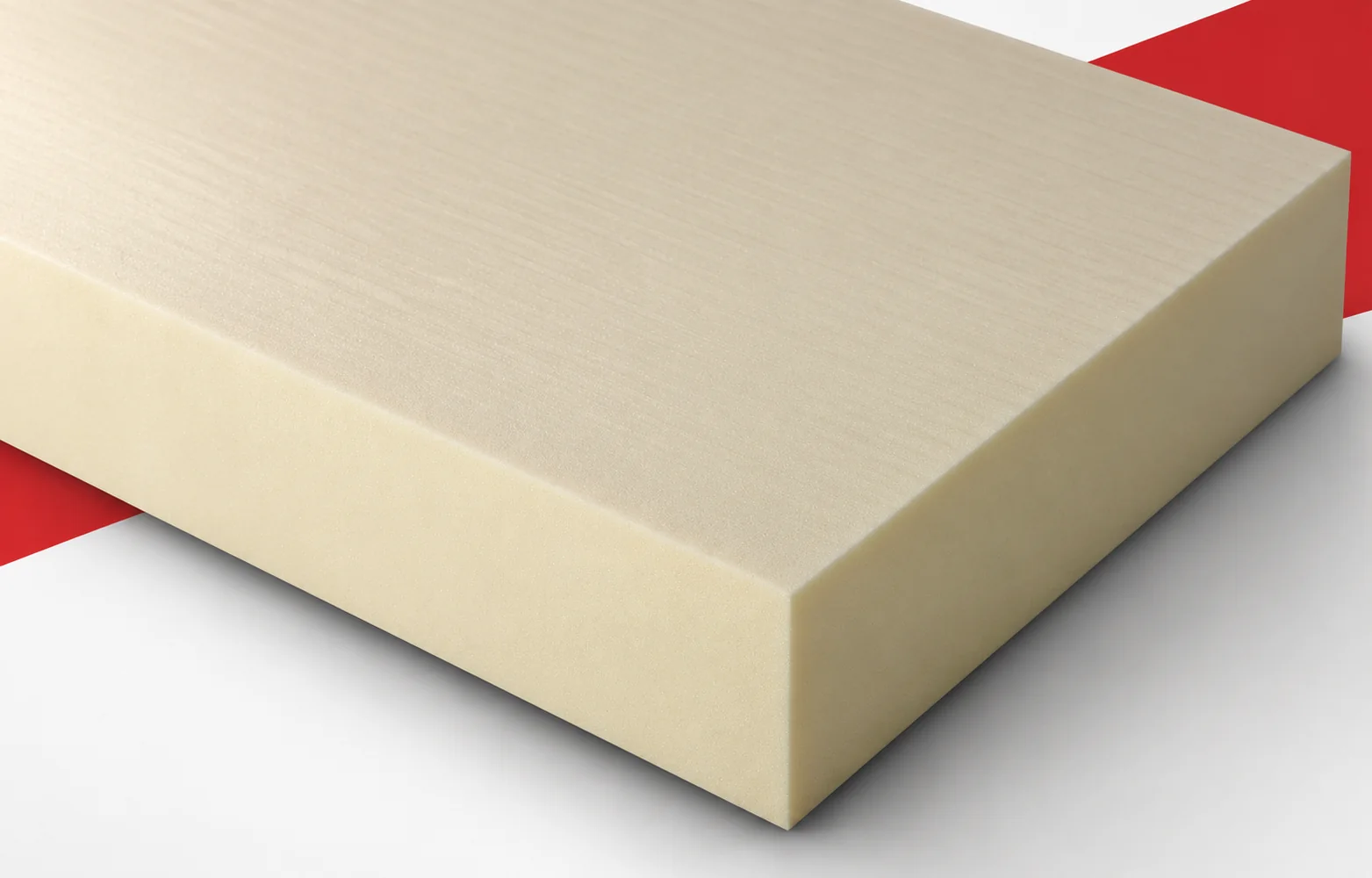
A low floor build-up may leave limited space for insulation. Recticel Eurofloor achieves substantial thermal resistance with a thin board. Before selecting it, however, allowance must be made for services, screed and floor finish. Recticel Eurofloor has a rigid PIR foam core and a multi-layer gas-tight foil on both faces printed with a grid. The manufacturer intends it for thermal insulation of floors, including those with underfloor heating. PIR boards are best assessed against a specific spatial problem, so consider a floor with the heating installation placed in the layers above the thermal insulation. Eurofloor must be placed in the correct floor build-up together with the designed heating installation, because the space saving must be assessed together with the detail geometry.
In this article
What is responsible for the material’s performance
Changing lambda alone is not enough, because the printed grid helps with setting out but does not determine the installation spacing for the designer. The solution should allow the choice of insulation to be linked to the floor height and the routing of the designed heating. As a starting point for comparing variants, record the layer build-up from substrate to floor finish and the layout design for the heating elements.
Thermal resistance versus available thickness
The thermal conductivity of Eurofloor is 0.022 W/(m·K) across the stated thickness range of 20–100 mm. In the datasheet, a thickness of 100 mm is assigned an RD of 4.50 m²K/W.
When comparing polyurethane boards, take into account the declared RD of 4.50 m²K/W assigned to a Eurofloor board 100 mm thick. The RD of Eurofloor describes the insulation layer and does not replace a proper calculation of the floor on ground, so that the comparison relates to the same thermal effect. The result must be read with caution, since the reciprocal of the board’s RD is not a ready-made U-value for the whole building floor. The calculation is intended to help preserve the correct calculation method when comparing different floor insulation variants. In the energy comparison, show the RD value from the datasheet, the floor geometry and the layers and junctions required in the calculation, so that it is clear what exactly changed between the solutions.
In a heated floor, the aim of Eurofloor is, among other things, to limit heat loss towards the substrate. This does not automatically mean faster heating of the whole room. The response of the system also depends on the screed, the installation and the controls. In an energy comparison, therefore, heat losses through the floor must be separated from the heating dynamics. A savings promise should not be derived from the presence of the printed foil alone.
Where the advantage can be lost
According to the current Recticel Eurofloor datasheet, the boards measure 1200 × 1200 mm and have straight edges. This matters both when cutting and when ordering packs.
Check the laying plan based on the current 1200 × 1200 mm format with straight edges, because continuous polyurethane insulation also requires correct terminations. The square boards must be arranged according to the actual dimensions of the room and obstacles in the substrate, because losses at the joints must be assessed together with the main insulation field. A good joint does not arise automatically, since using an older description of a different format may change the number of packs required. The layout of elements should allow the cutting plan to be prepared according to the dimensions of the Eurofloor variant actually supplied. On the detail drawing, show the format on the label, the support at the joints and the arrangement of the end strips at the walls; this record will make later inspection of the work easier.
Protecting the insulation against water and leakage
The Eurofloor film reduces diffusion through the board, yet the joints remain part of the floor solution. Depending on the arrangement, separate damp-proofing and separating layers are required.
When assessing the durability of the thermal effect, include the separating layer and the damp-proofing in the section of the insulated floor. The foil on Eurofloor should not be equated with the complete set of layers protecting the floor against moisture if the insulation is to perform under the conditions assumed in the design. Polyurethane foam does not replace protective layers: a gap between adjacent boards can interrupt the continuity of the foil-covered surface. The specified protections should allow the designed safeguards to be maintained despite the presence of the gas-tight Eurofloor facing. Before covering, assess the type of protective layers, the perimeter junctions and the condition of the substrate before laying the insulation, because later repair may require opening up the finished assembly.
Other requirements do not disappear
Eurofloor declares CS(10/Y)120 and fire reaction class F. The CS value relates to 10% deformation in the test.
A reduced thickness does not exempt the designer from checking other requirements, so analyse where heavy equipment with small feet will stand on the finished floor. The screed above Eurofloor must distribute pressure in accordance with the requirements of the entire floor in use, even when the choice of board was determined mainly by its low lambda. A separate assessment is needed, because without assessing the floor layers, 120 kPa cannot be converted into a permissible weight of furniture. Only the complete set of data will allow the serviceability deformation and the load on the system to be checked instead of relying on the test result alone. Alongside the thermal results, record the dimensions of the supports, the requirements for the screed and the loads envisaged in the given room; this way the comparison will not omit the service conditions.
Cost comparison for the same effect
When ordering Eurofloor, state the planned insulation thickness and the intended method of constructing the floor. The quotation also covers offcuts, protection of the boards and the layers above them.
Polyurethane board insulation should have a calculated effect and defined scope of works; include a quote for floor insulation that also covers offcuts, coverings and protection during subsequent works. The condition of the laid boards must be accepted before handing the surface over to the installation and screed contractor, so that the cost relates to one comparable result. The material price is only part of the decision, since damage occurring after laying the insulation may be difficult to identify once it has been covered. The final comparison should allow responsibility for the condition of Eurofloor to be established between the successive stages of floor construction. Ask for a bill of quantities for the boards, the scope of auxiliary layers and a handover record for the prepared substrate to the next team, so that any additional charge has a stated technical justification.
7 branches. Materials closer to your project.

Free quote
Materials for your project
You may also find useful…
The answer to the question of insulating a loft before installing the lining comes down to the correct sequence of work and…
Modernising the energy performance of a housing estate is not just a matter of replacing individual appliances; it is a planned sequence…
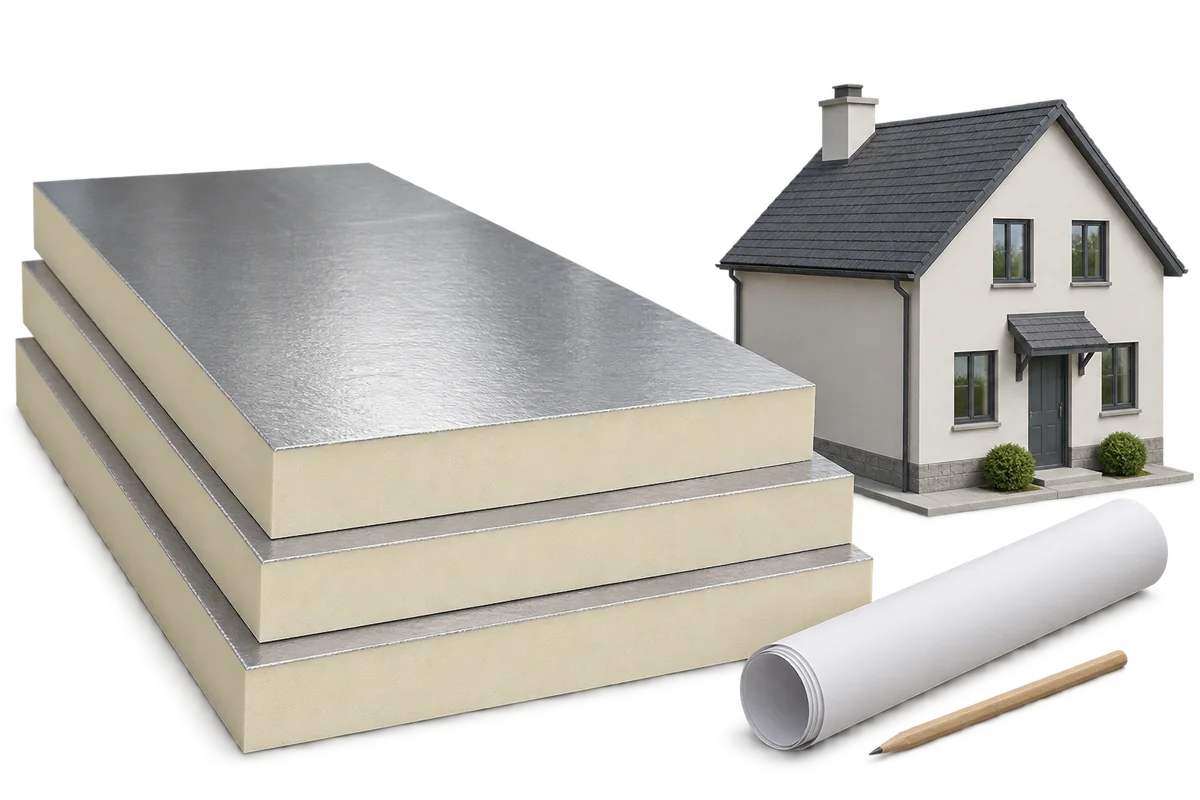
When commissioning energy refurbishment, it is easy to confuse three different things: the expected lower bill, the perceptible improvement in comfort, and…
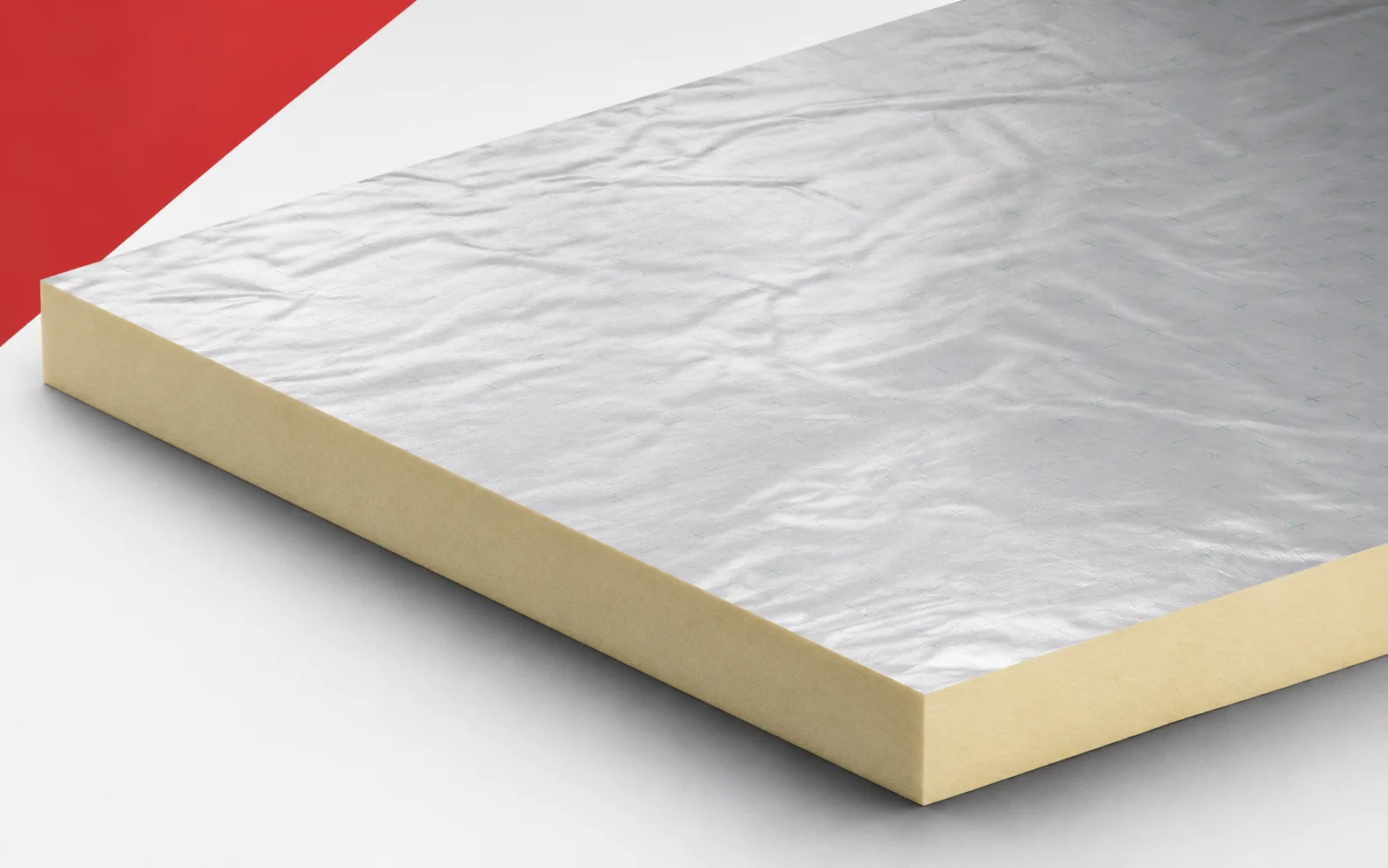
In Therma TT46, thermal insulation meets drainage geometry. The tapered board has a different thickness on opposite sides, so describing the whole…
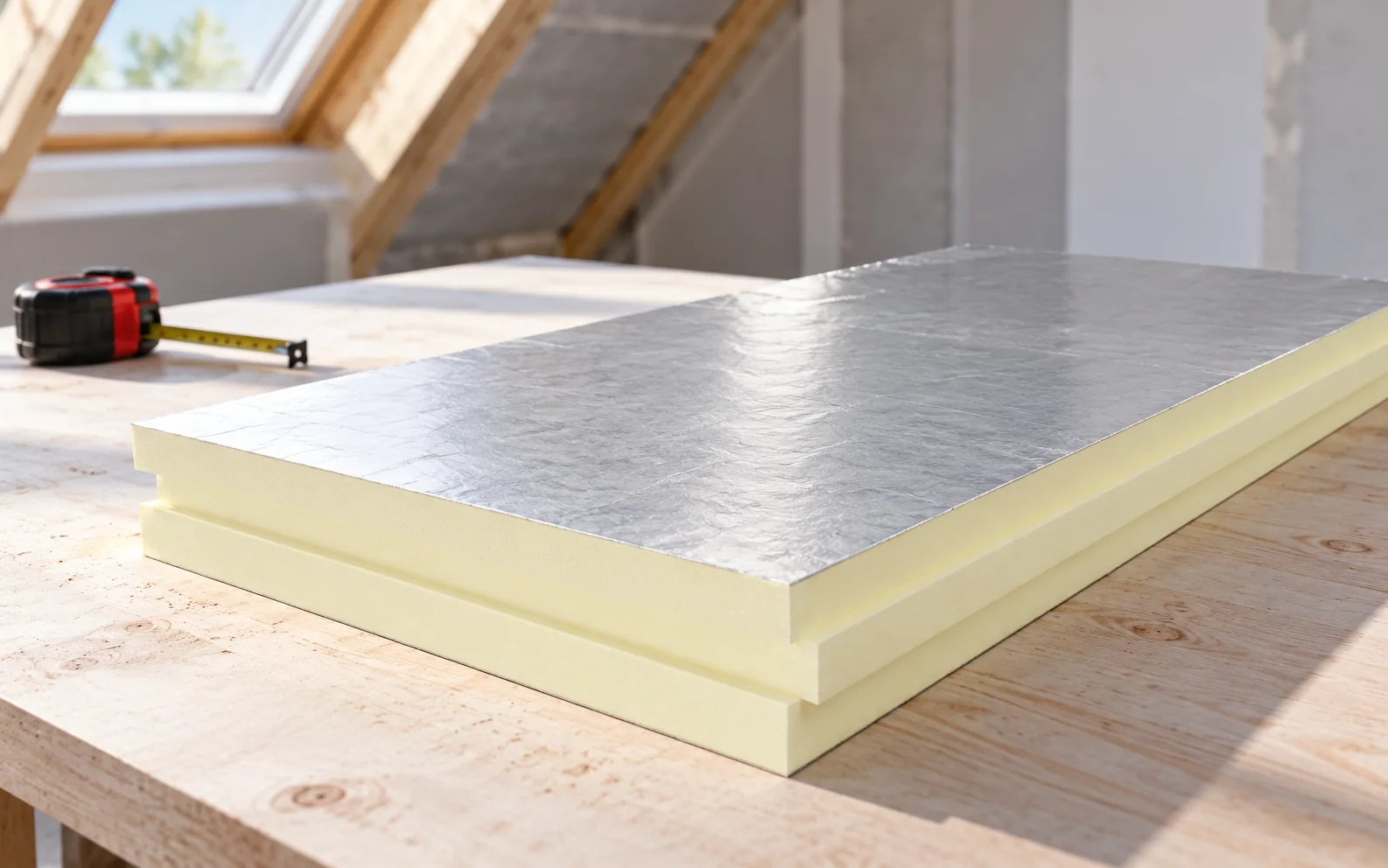
The answer to the question of a loft that is warm in winter and comfortable in summer begins with deciding where the…
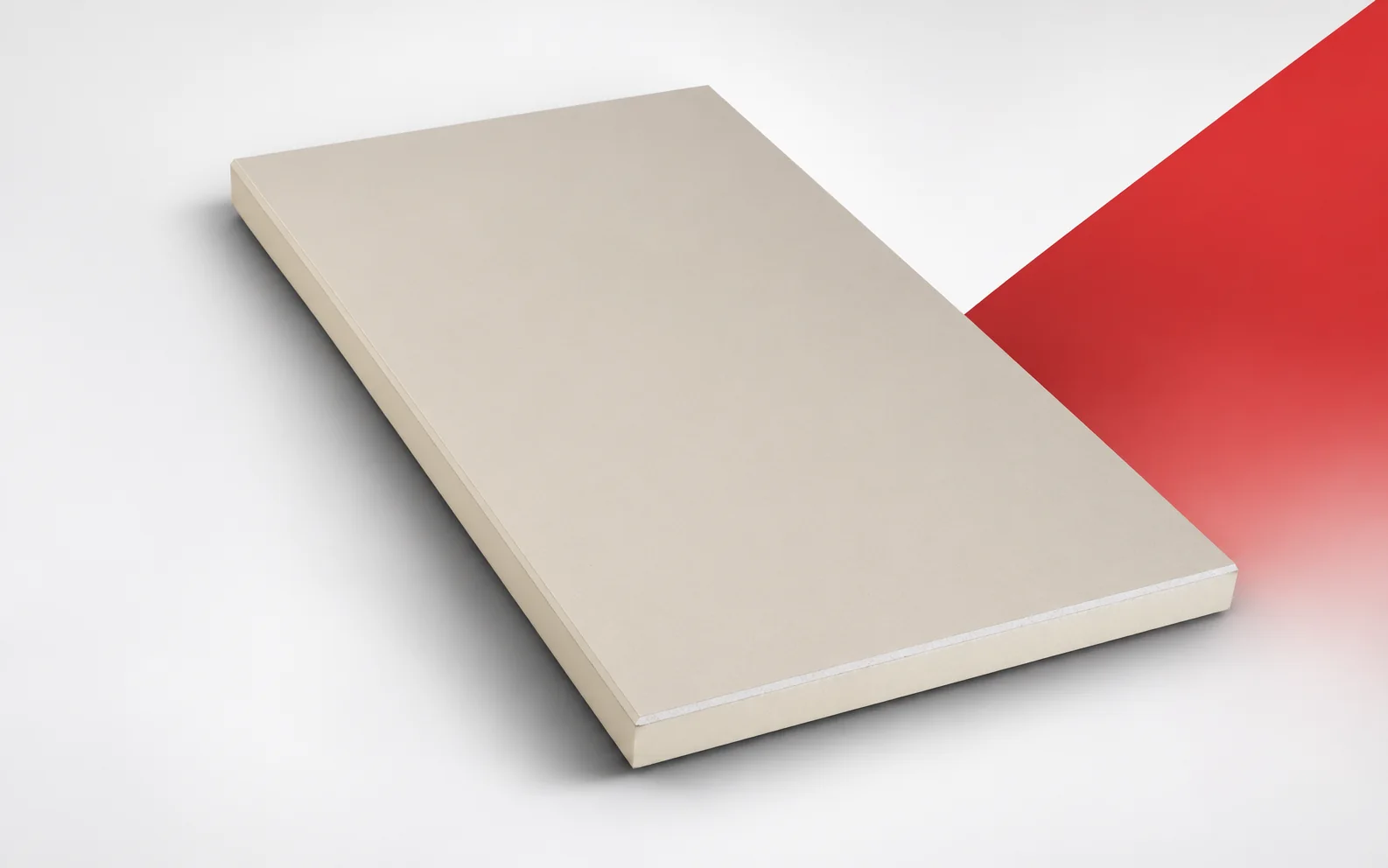
Internal insulation takes up part of the space, so it is worth comparing complete wall build-ups. Eurothane G combines PIR and a…
The roof is to receive new falls and better thermal insulation. A BauderPIR T design should combine both tasks in a single…
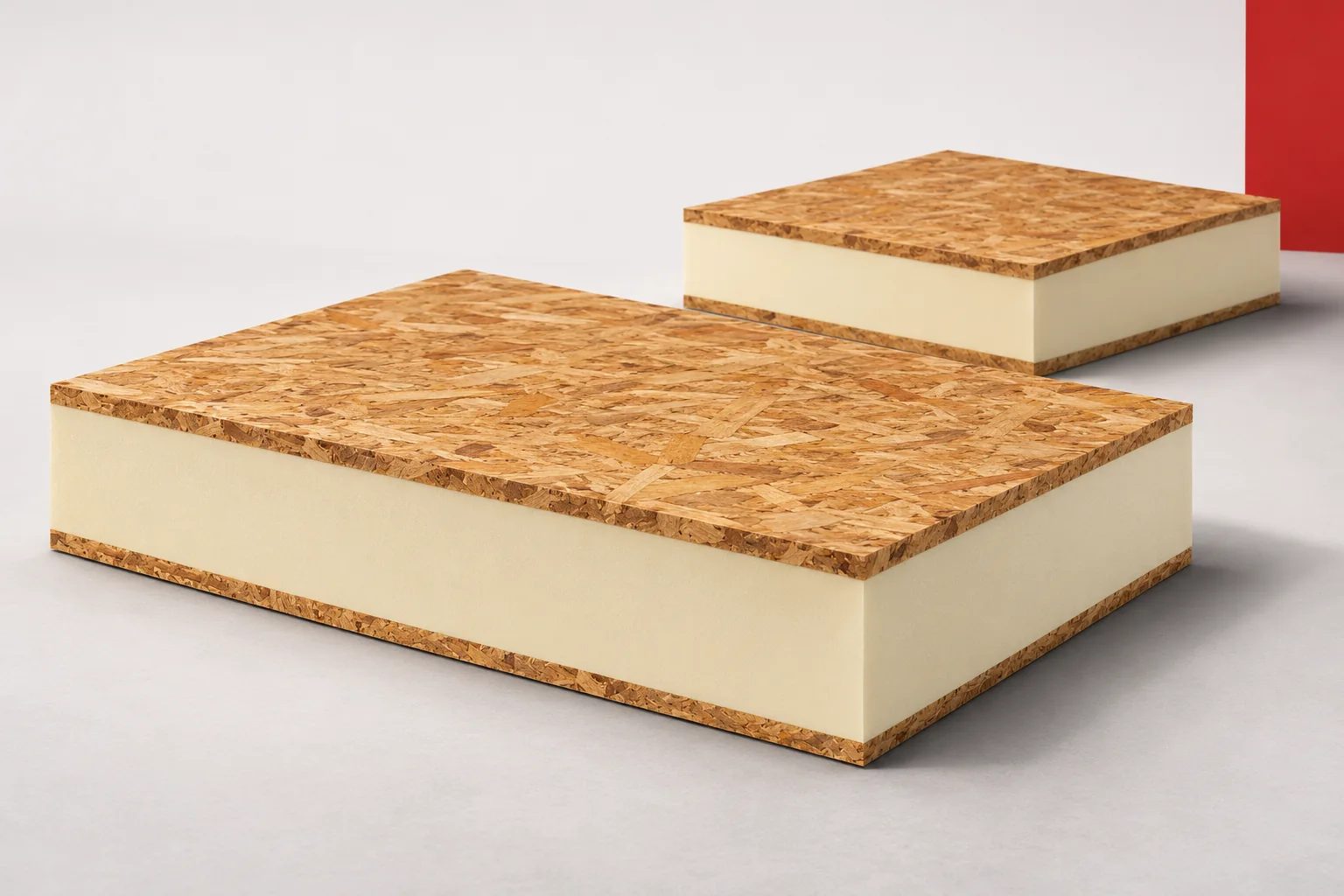
SIP panels allow several tasks to be combined in a single prefabricated component. A rigid insulating core sits between two facings. Such…