

PIR insulation
Choosing swissporPIR Alu thickness for a target thermal resistance
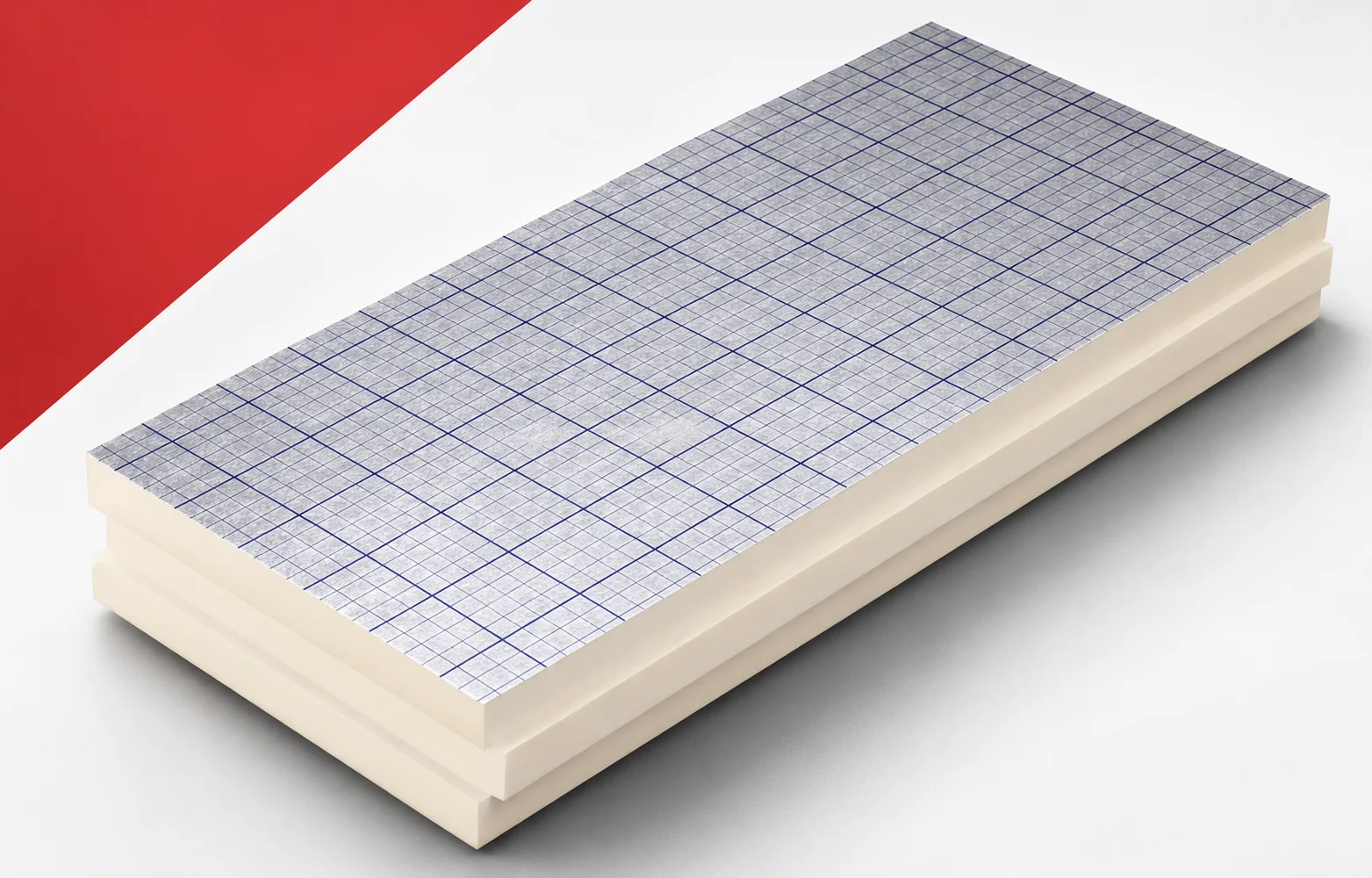
swissporPIR Alu can help achieve the required thermal resistance within a limited construction thickness. The benefit is particularly evident where every centimetre counts at the terminations. Selection must be based on the actual dimension and on a calculation of the entire layer build-up. swissporPIR Alu has a rigid polyisocyanurate foam core and a gas-tight laminate on both faces. The manufacturer lists aluminium, paper and polyethylene in the facing. The terms ‘polyurethane boards’ and ‘polyurethane foam’ are broader than the precise PIR product designation. When assessing the space required for PIR boards, swissporPIR Alu must be checked as a thermal insulation board with a laminate of aluminium, paper and polyethylene. To assess the spatial benefit, the swissporPIR Alu laminate must be distinguished from the steel facing of a structural panel.
In this article
swissporPIR Alu PIR boards and the role of the laminate
A full selection requires more than reading off the lambda value, because the silver appearance does not give the product the function of a load-bearing panel or a finished covering. The selection is intended to help assign the material its proper place within the designed construction. Before comparing variants, show on a single drawing the cross-section with a description of the support, protection and finish above and below the PIR.
Selection of thickness for the required resistance
The declared lambda of swissporPIR Alu is 0.022 W/(m·K). For 100 mm the documents state R_D 4.50 m²K/W, for 120 mm 5.45, and for 160 mm 7.25. An energy comparison should therefore cover the swissporPIR Alu variants 100, 120 and 160 mm with R_D 4.50, 5.45 and 7.25 m²K/W.
The thermal calculation will be clear once the lambda of 0.022 can be linked to a specific thickness of the swissporPIR Alu being ordered. The difference in thickness requires correct interpretation, since the R_D of the insulation is not the thermal transmittance of the whole roof or wall. The calculation should allow the increase in resistance to be compared with the change in height of the complete cross-section. As a basis for the decision, retain the catalogue data for each variant and a separate calculation of the entire construction, rather than comparing the price of a centimetre of material alone.
Polyurethane insulation in the right format
The manufacturer offers the formats 1200 × 600 mm and 2400 × 1200 mm, with thicknesses ranging from 20 to 300 mm. Whether a specific combination of dimensions is available must be confirmed in the offer. The polyurethane insulation should remain continuous also where the swissporPIR Alu format and the selected profile need to be resolved on a surface with numerous cut pieces.
When analysing continuity, it is worth coordinating the swissporPIR Alu format with the geometry of the surface and the cut pieces required. The fit must be assessed for the actual geometry, since a large single board area does not guarantee a small amount of waste. The installation plan should allow a cutting layout to be prepared that preserves the necessary terminations and continuity of joints. In the energy assessment, include the laying plan, the coverage area and confirmation of the availability of the dimension combination, because these are the places that will remain after purchasing the board with the best lambda.
Continuity at three-dimensional junctions
The material properties should work together with the details. Connections to another partition, edges and service penetrations can increase heat losses. To preserve the thermal improvement, the transition of swissporPIR Alu from the regular field to the edge and to the adjacent partition must be checked.
When assessing the durability of the effect, continuity of the swissporPIR Alu at the three-dimensional junction of partitions must be maintained. The actual construction of the junction is important, because increasing the thickness in the middle does not make up for a missing piece at the perimeter. The layer design should allow the board’s parameters to be used also at the places where the layer terminates. At acceptance before covering, it is worth comparing the drawings of the edges, service penetrations and places where the insulation changes direction with the adopted detail.
CS, creep and service loads
swissporPIR Alu has fire reaction class E. It is not a non-combustible material. When limiting the height of the layers, the data CS at least 150 kPa and CC(2/1.5/50)25 for swissporPIR Alu must be assessed in parallel.
Beyond selecting the lambda, the CS data for swissporPIR Alu must also be separated from the assessment of creep under long-term pressure. It is worth separating these requirements, because the two values relate to different conditions and are not interchangeable load limits. The collected data should allow the system to be selected for the duration of the pressure and the fire requirements to be checked separately. Alongside the thermal calculation, present the relevant mechanical data and the classification of the system taking into account the product’s reaction E, so that the result relates to a usable solution.
Polyurethane insulation: material cost and the cost of the whole system
When comparing offers, the same thickness, edge profile and usable area must be established. The reserve is calculated after drawing the cut pieces. In the comparison of cost and effect, include the swissporPIR Alu offer with the same thickness, edge and function.
Before calculating cost-effectiveness, it is worth setting the price of swissporPIR Alu against the work needed to obtain a complete construction. The cost-effectiveness calculation will be incomplete if it is omitted that a lower amount per metre may relate to a different resistance or a smaller scope of supply. The selected variant should allow genuinely equivalent solutions to be compared for the same service objective. When assessing the additional cost, set out the full designations, quantities after cutting and the cost of executing the details against the benefit obtained in the finished construction.
A case worth considering
If the insulation thickness is limited by a low threshold, swissporPIR Alu allows the required resistance to be considered within a compact layer. At 100 mm and a lambda of 0.022, the quotient d/λ is approximately 4.55 m²K/W. This is the result for the material alone. Junctions and the remaining cross-section must still be taken into account. The benefit must be assessed for the finished construction that will fit within the actual dimension.
7 branches. Materials closer to your project.

Free quote
Materials for your project
You may also find useful…
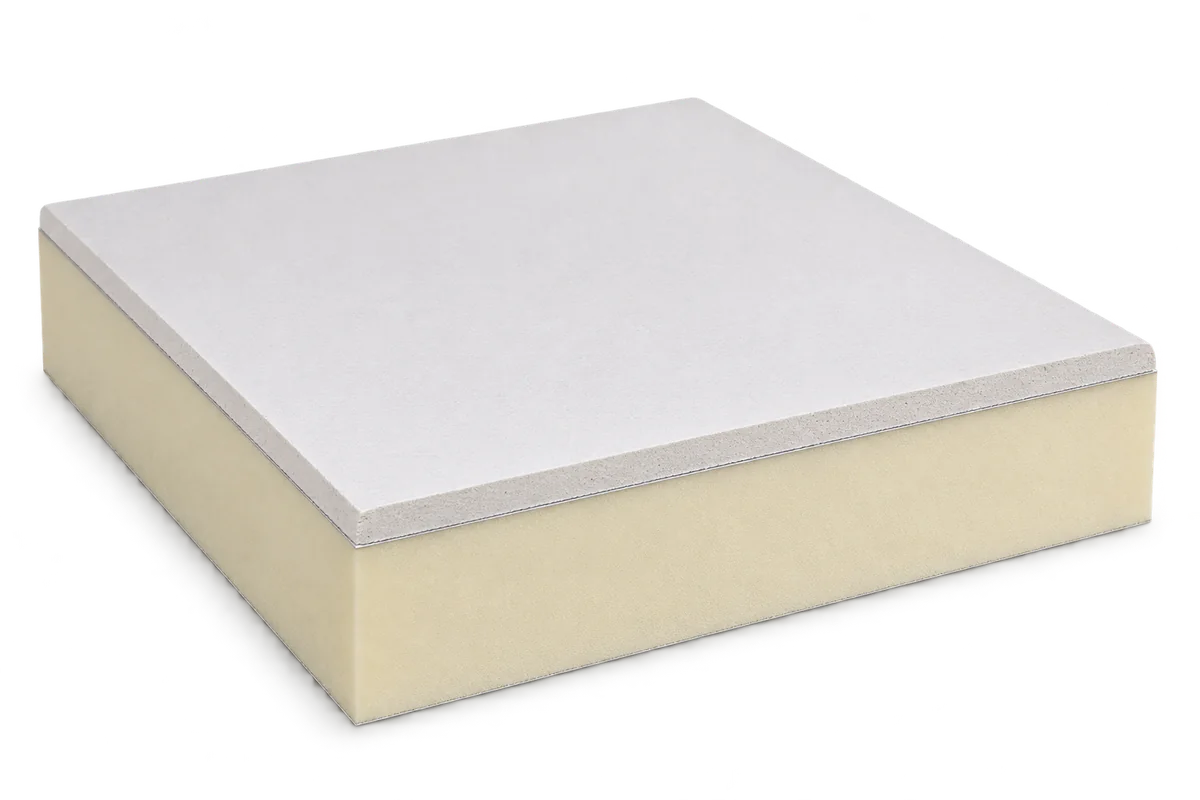
PIR bonded to plasterboard combines thermal insulation with a surface ready for interior finishing. Suitability depends on the whole wall, including the…
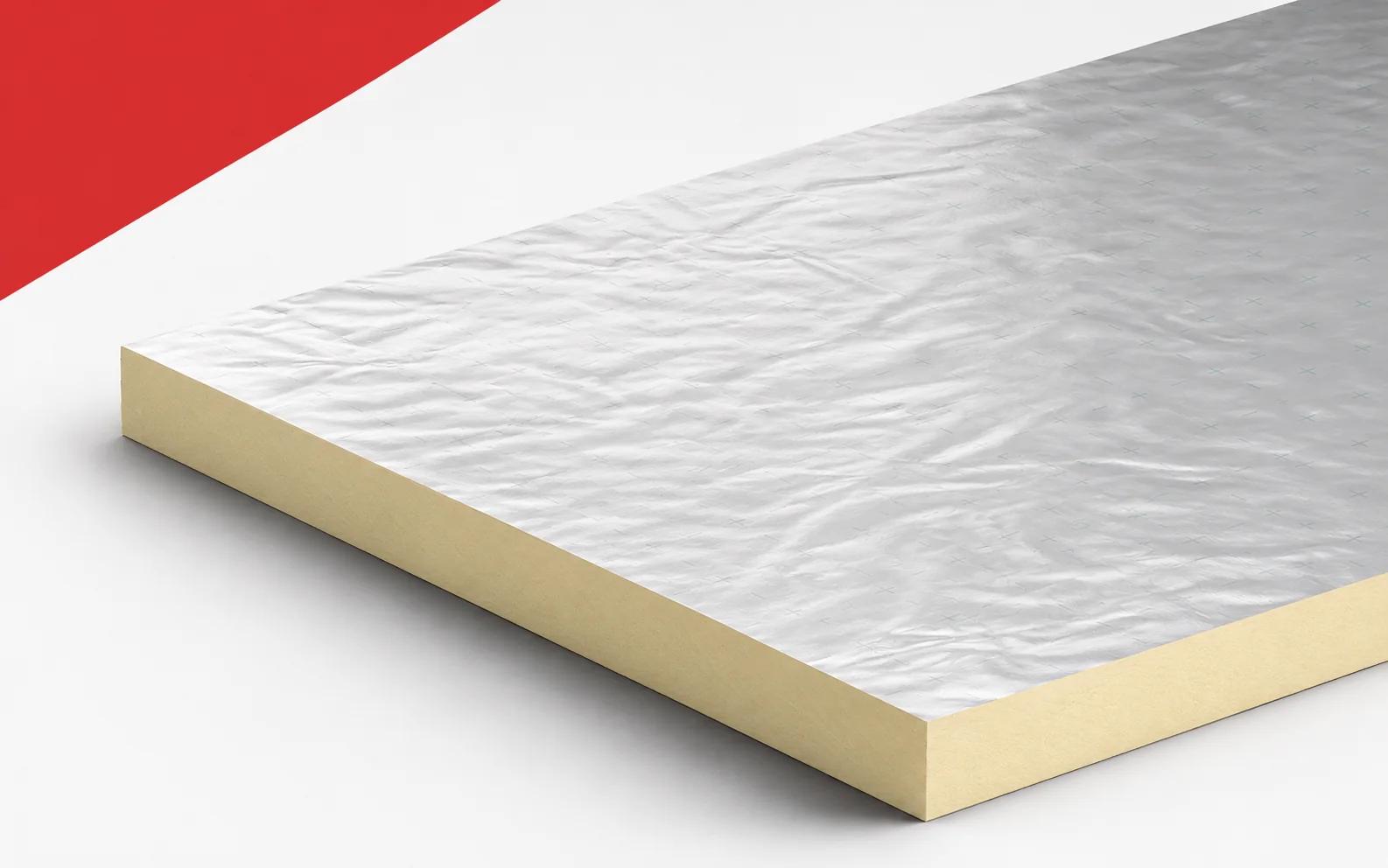
Kingspan Therma TR26 is worth considering where the required thermal resistance must fit within a limited roof height. A lambda of 0.022…
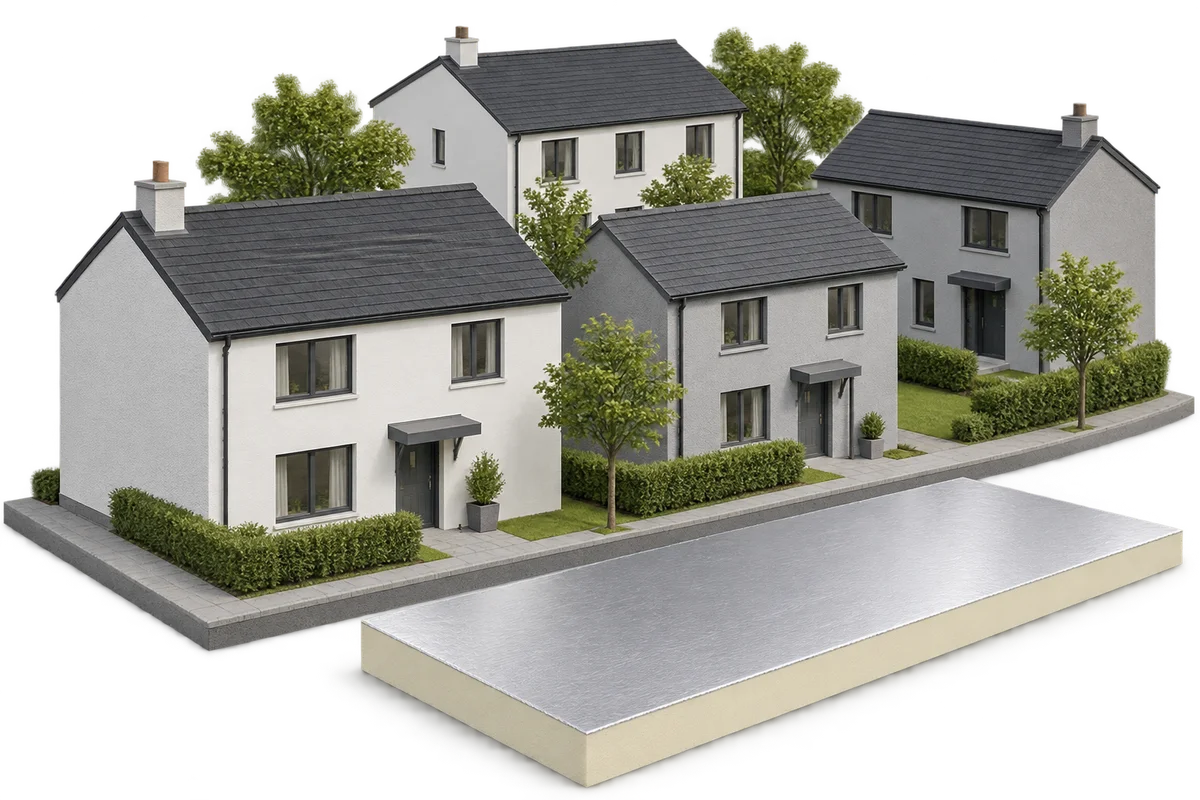
Modernising the energy performance of a housing estate is not just a matter of replacing individual appliances; it is a planned sequence…
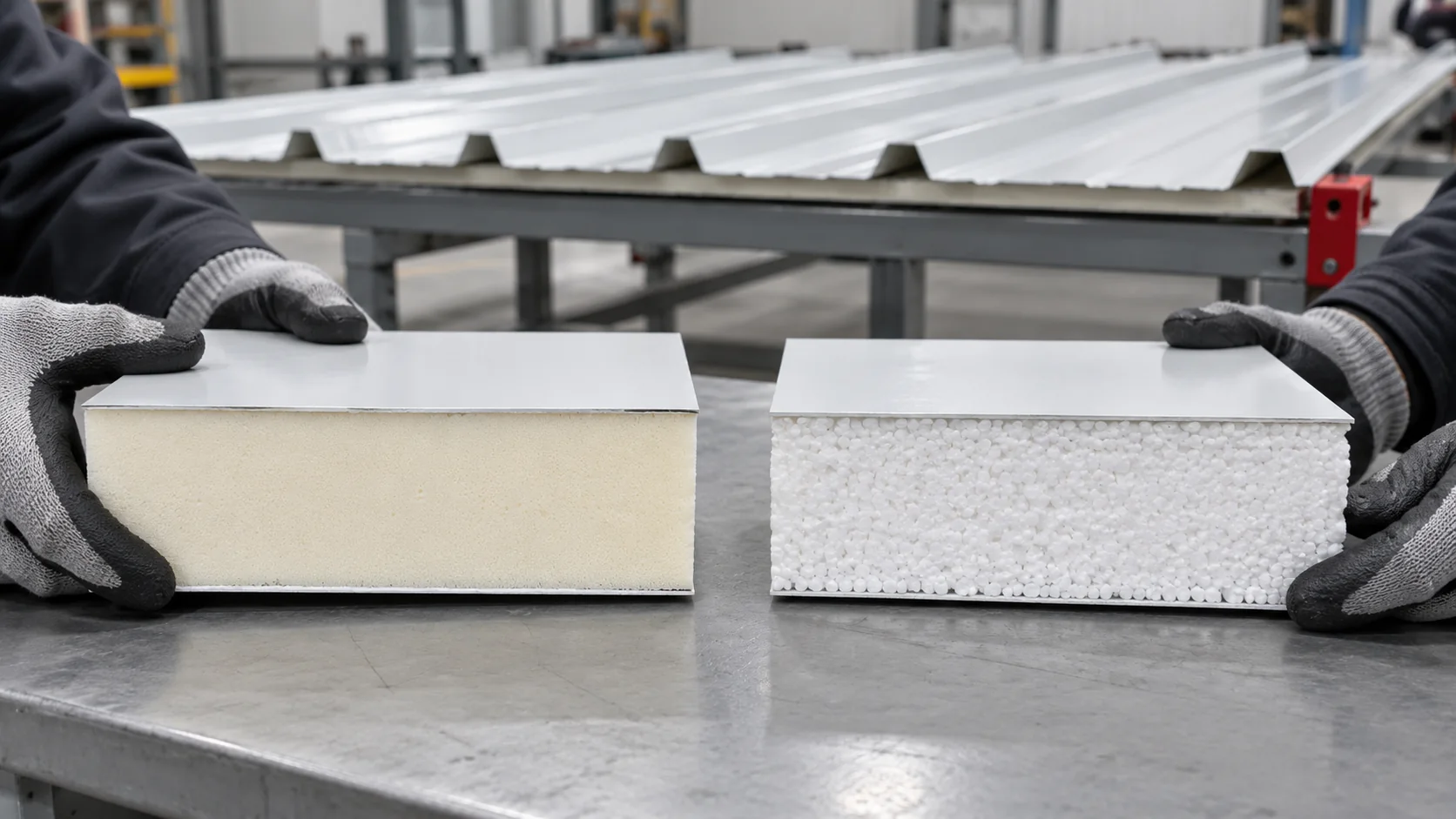
When replacing a roof, compare complete roof panels with two facings and a profile designed for roofing. The PIR or EPS core…
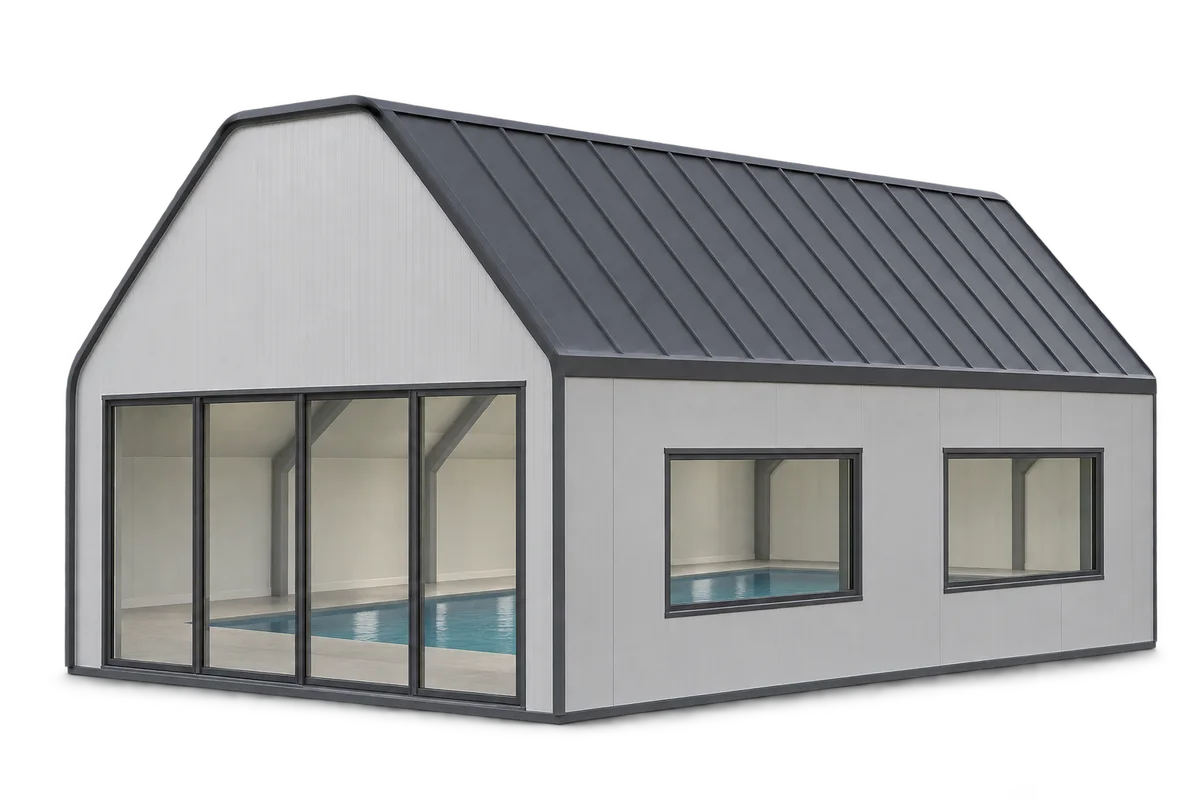
Design a roof over an indoor pool for its actual internal environment, not for ordinary warehouse conditions. Moisture, temperature, water treatment and…
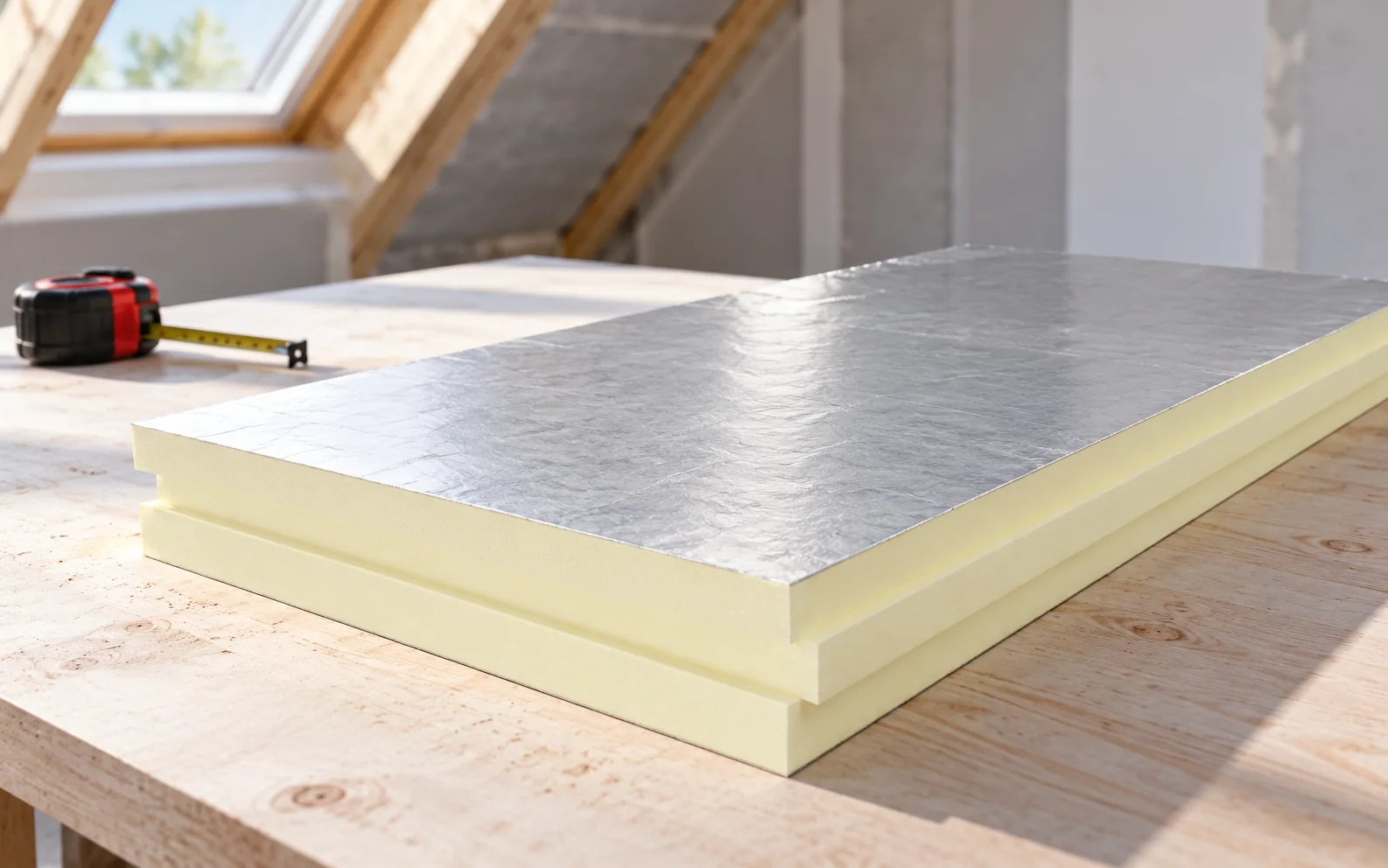
The answer to the question of a loft that is warm in winter and comfortable in summer begins with deciding where the…
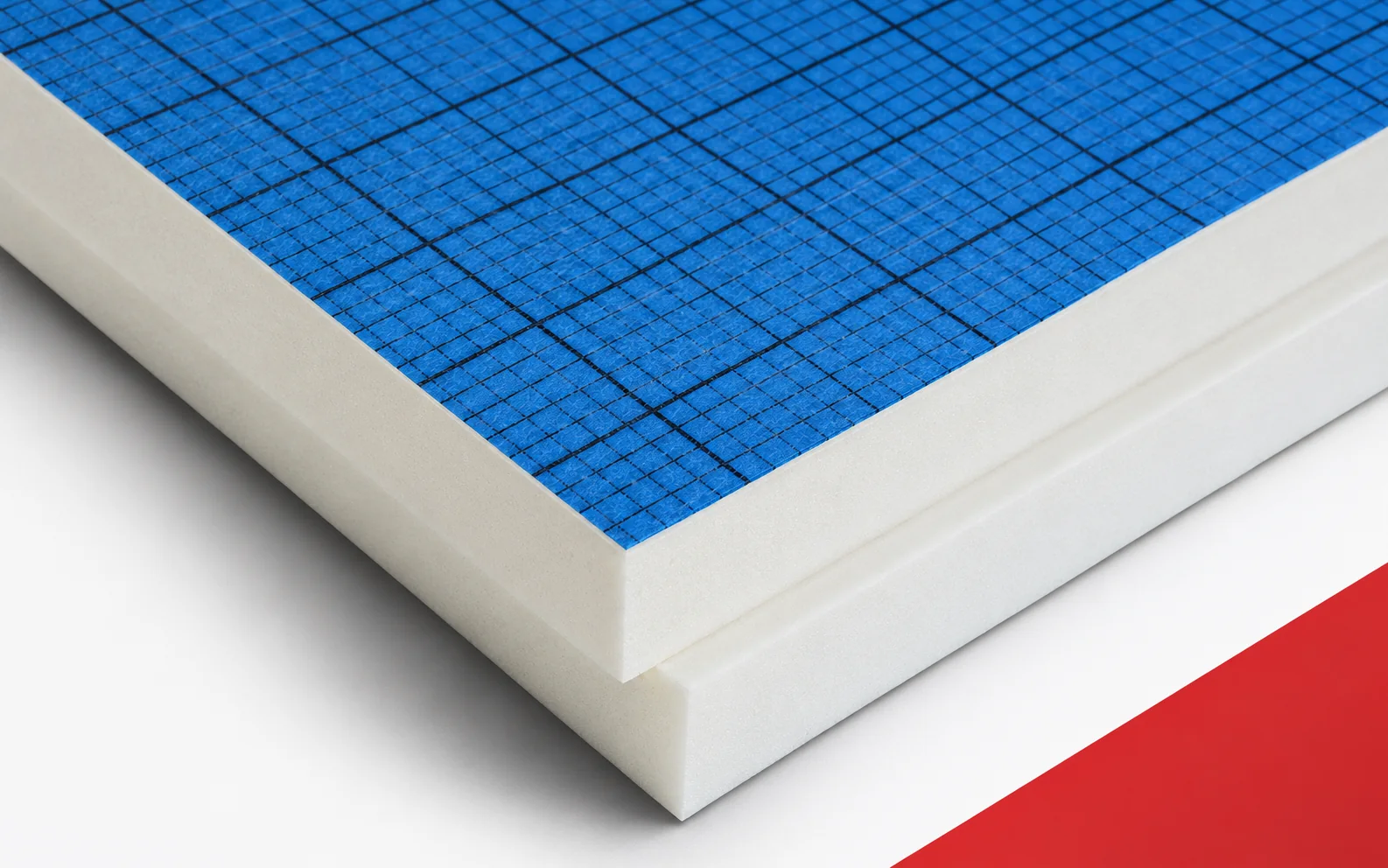
In the example roof, EFYOS BLUE A has already been installed at the correct thickness, but the vapour control layer has been…
A PIR insulation calculator can help you compare renovation options. Before entering a thickness, identify the board and decide what you want…