

Roof and energy
Does a solar roof need a battery?
An energy storage system is not a prerequisite for a grid-connected photovoltaic roof. It can, however, help to use part of the daytime generation later. Whether it makes sense depends on the times of consumption, the size of the surpluses and the cost of the equipment. Power supply during a grid failure is a separate matter. This requires a suitable configuration of the entire installation. The mere presence of a battery does not mean that the house will operate independently of the grid. Energy from the modules passes through a suitably selected electrical system to the building’s installation. Appliances can consume it during generation. Surpluses are fed into the grid in accordance with the rules of the given connection and settlement. When generation is too low, the house draws the missing energy from the external supply.
In this article
How does a roof work without storage?
Integrating the cells into the covering does not change this basic principle. It changes the form of the roof component and the way it is installed. A steel panel with photovoltaics still requires correctly designed equipment and protective devices. Storage is one of the possible parts of this system, not an element that is obligatory simply because of the roof construction.
In which situation can a battery help?
If the house generates a lot of energy at midday but mainly consumes it in the evening, a time difference arises. Storage can take over part of the surplus and release it later. In this way it increases the share of self-generated energy in consumption. The scale of the improvement depends on the size of the surpluses, the consumption after sunset and the available capacity.
It is not enough to state that the house is empty during the day. Data or a reasonable usage model is needed. If the surpluses are small, a large storage system may remain unused. The same applies if evening consumption is low. The selection should be based on the energy flow in the specific house, not on the principle of the largest available capacity.
How do capacity and power differ?
Capacity describes the amount of energy that can be stored. Power determines how quickly the storage can absorb or release it. A large capacity does not guarantee the supply of all appliances at once. The usable capacity, the permissible operating range and the limitations of the inverter working with the battery must also be checked.
Losses during charging and discharging are important. The energy released later will not equal all the energy previously taken into the storage system. The device’s own consumption and the warranty conditions are also added. These characteristics should be included in the cost analysis. Otherwise the calculation will show a benefit that the actual system will not achieve. Also check the permitted conditions at the installation location, including temperature and the required access for servicing.
Will storage provide electricity during a grid failure?
A typical grid-connected installation cannot freely supply the external grid after it has been disconnected. Backup power requires a suitable inverter, switching and dedicated circuits or another designed solution. It must be determined which appliances are to operate and for how long. This is a separate design task.
Some configurations support only selected appliances. Others can cover a wider range but have power and energy limits. Before purchasing, ask for a description of how the system behaves during a grid failure. The phrase “storage included” does not say whether the pump, refrigerator and lighting will work, nor whether these devices can operate simultaneously.
Can storage be added later?
Such an extension is sometimes possible, but it should be planned at the design stage. The compatibility of the inverter, the way the devices are connected and the installation location are important. A suitable cable route and service space are also needed. It is not worth accepting an assurance of readiness for expansion without specifying the concrete conditions.
During roof construction, part of the infrastructure can be prepared straight away. The storage itself can be considered after data from the first operating period has been collected. This allows the selection to be based on actual surpluses. However, the cost of later changes must be compared with the option of purchasing together, because postponing the decision will not always be cheaper.
How to decide without guessing?
Ask for an analysis of the same house in two configurations. The first should cover the roof and installation without a battery. The second should cover the same system with a selected storage unit. Compare the amount of energy consumed on site, the losses, the costs and the scope of backup power. Both calculations must use the same data on generation and consumption.
Separate the financial motive from the need for backup. The owner may consider maintaining selected appliances worth the additional expense. This is a justified decision, even if the saving alone does not give the fastest payback. It is important to know the actual function of the equipment being purchased and not to attribute to it capabilities that the design does not provide.
Examples of companies and brands in roof-integrated photovoltaics are ML System, Wienerberger Wevolt, SoliTek, Tesla, SunRoof, Electrotile, Terrán, GAF Energy, SolRoof and MDM NT (MyRoof).
7 branches. Materials closer to your project.

- SEROCK — Dzierżenin 34 E
- BŁONIE — ul. Sochaczewska 138A
- RADOM — ul. Grobickiego 8
- ŁÓDŹ — Natolin 8
- OLSZTYN — Barczewo, ul. Prosta 9
- WROCŁAW — ul. Jerzmanowska 10C
- GORZÓW WLKP. — ul. Zielona 33/34
Free quote
Materials for your project

You may also find useful…
Photovoltaic panels on an existing metal roof require fixings that have been verified for exactly the sheet or sandwich panel installed on…
The roof produces energy when light reaches it. The home also needs energy in the evening and in winter. That is why…
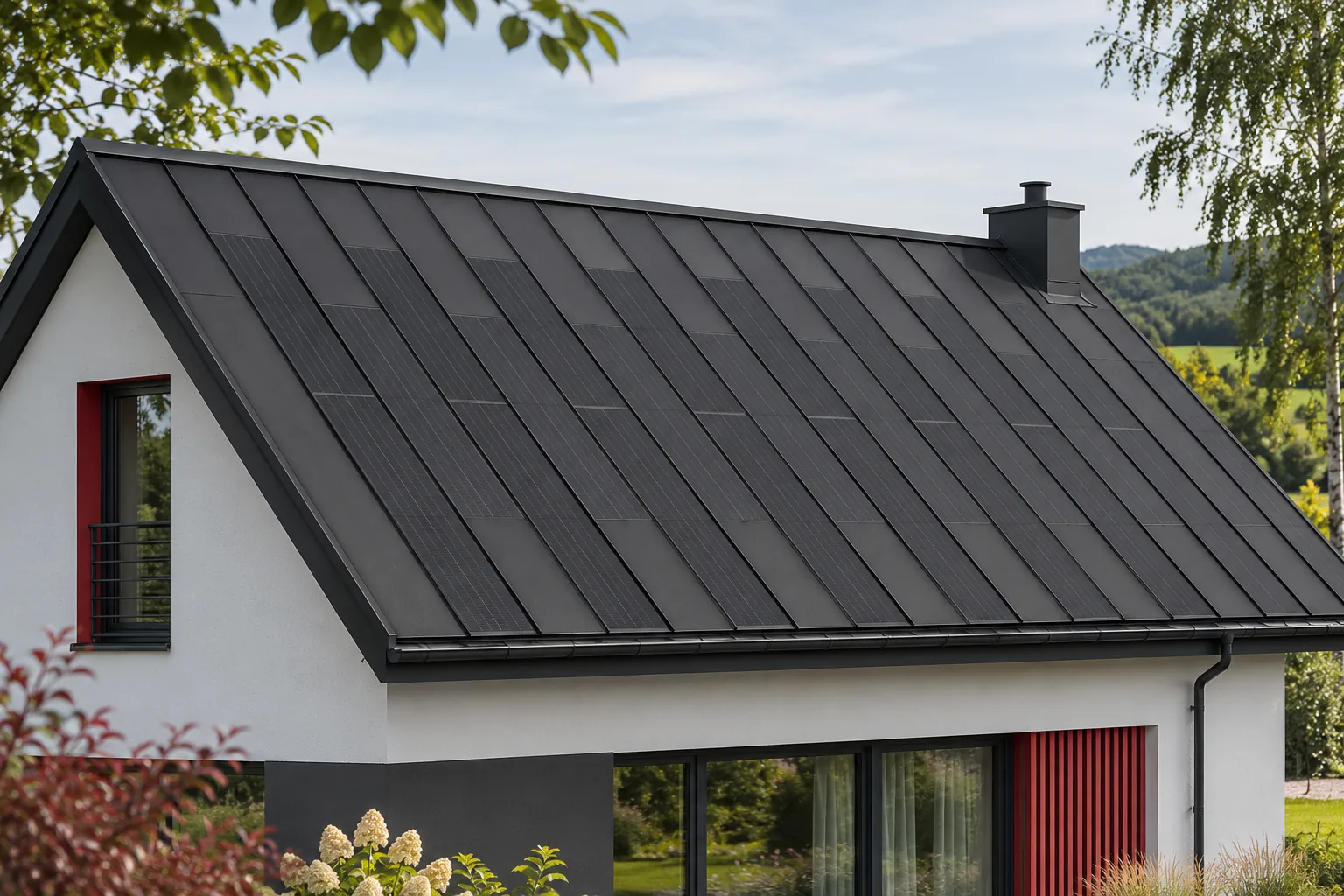
Shade on a roof is not a fixed patch. It moves with the sun and changes in length over the course of…
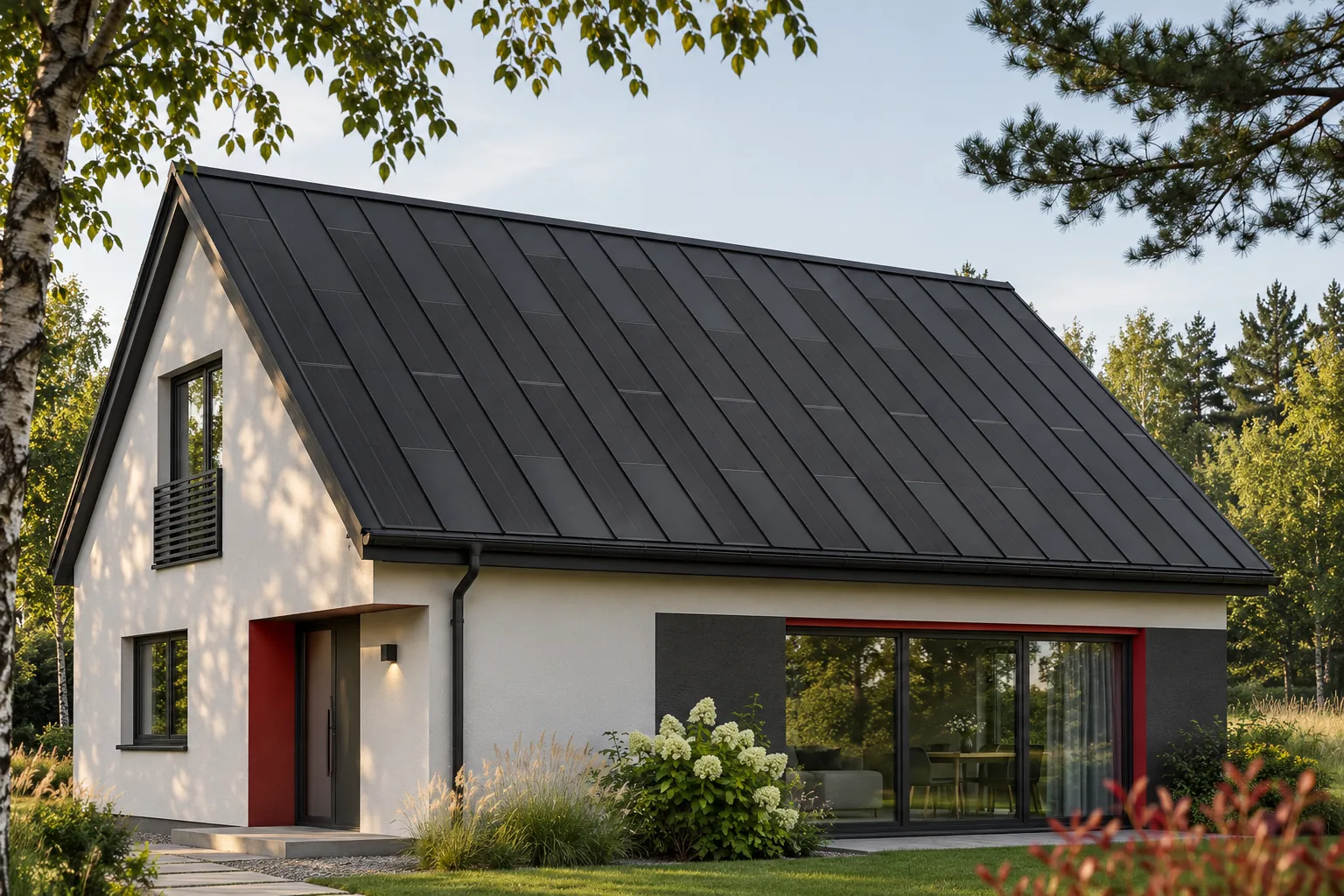
A roof is chosen for the long term, while a home's energy needs can change faster. A car may be added, a…
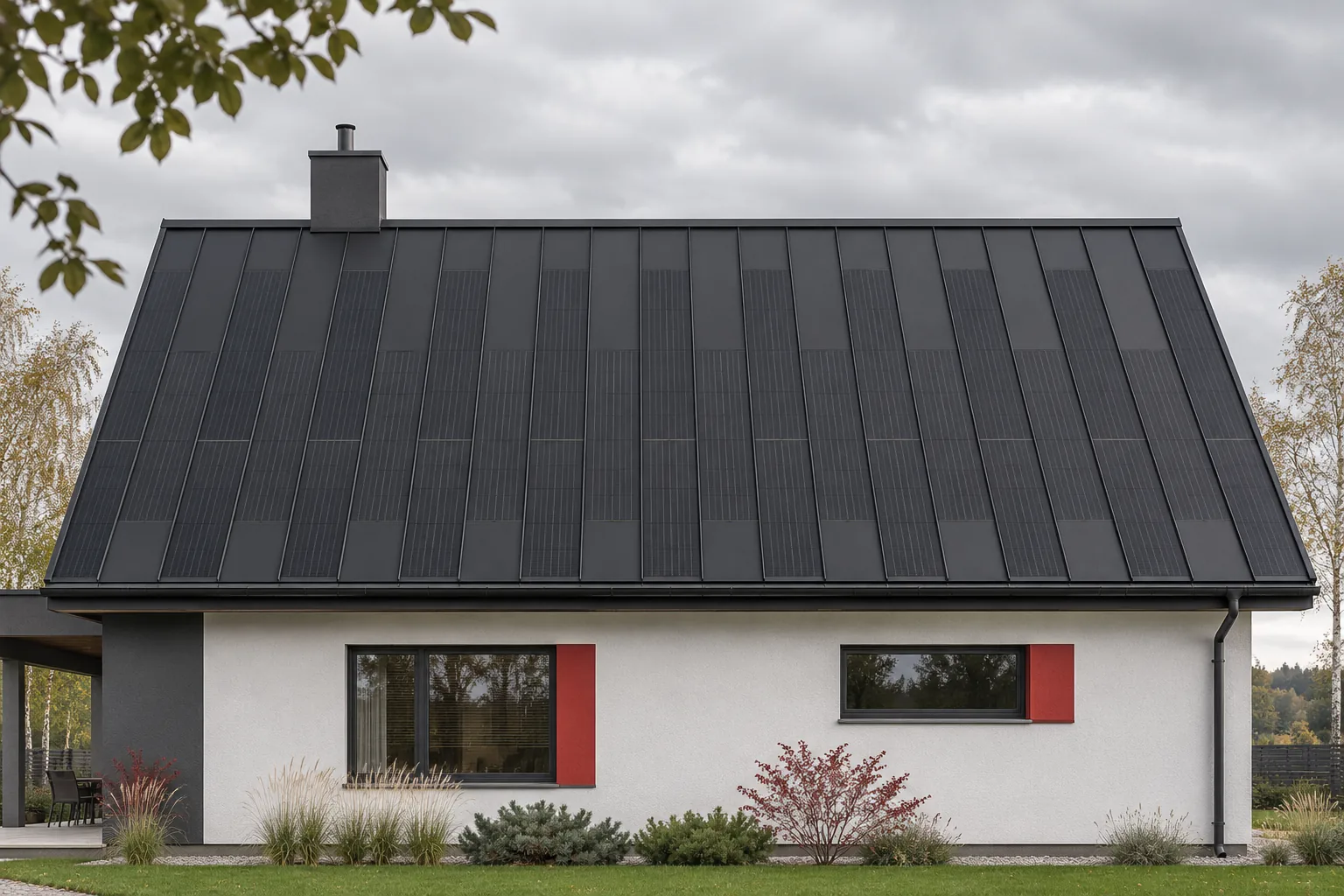
A steel roof with integrated photovoltaics can be an interesting alternative to heavier coverings combined with a separate installation. Its mass must…
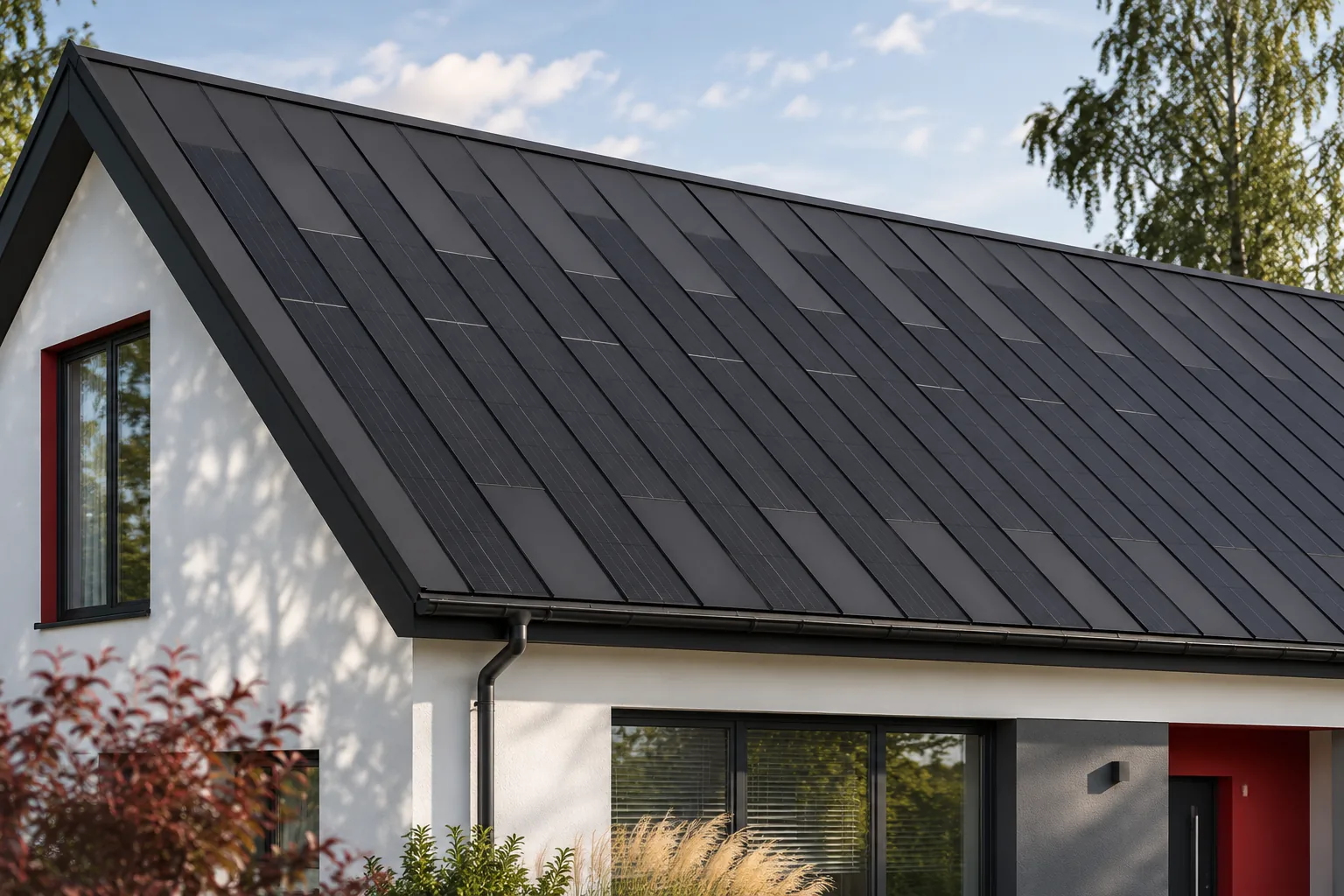
In an integrated photovoltaic roof, a single system performs both the covering and the energy-generation function. This can avoid some of the…
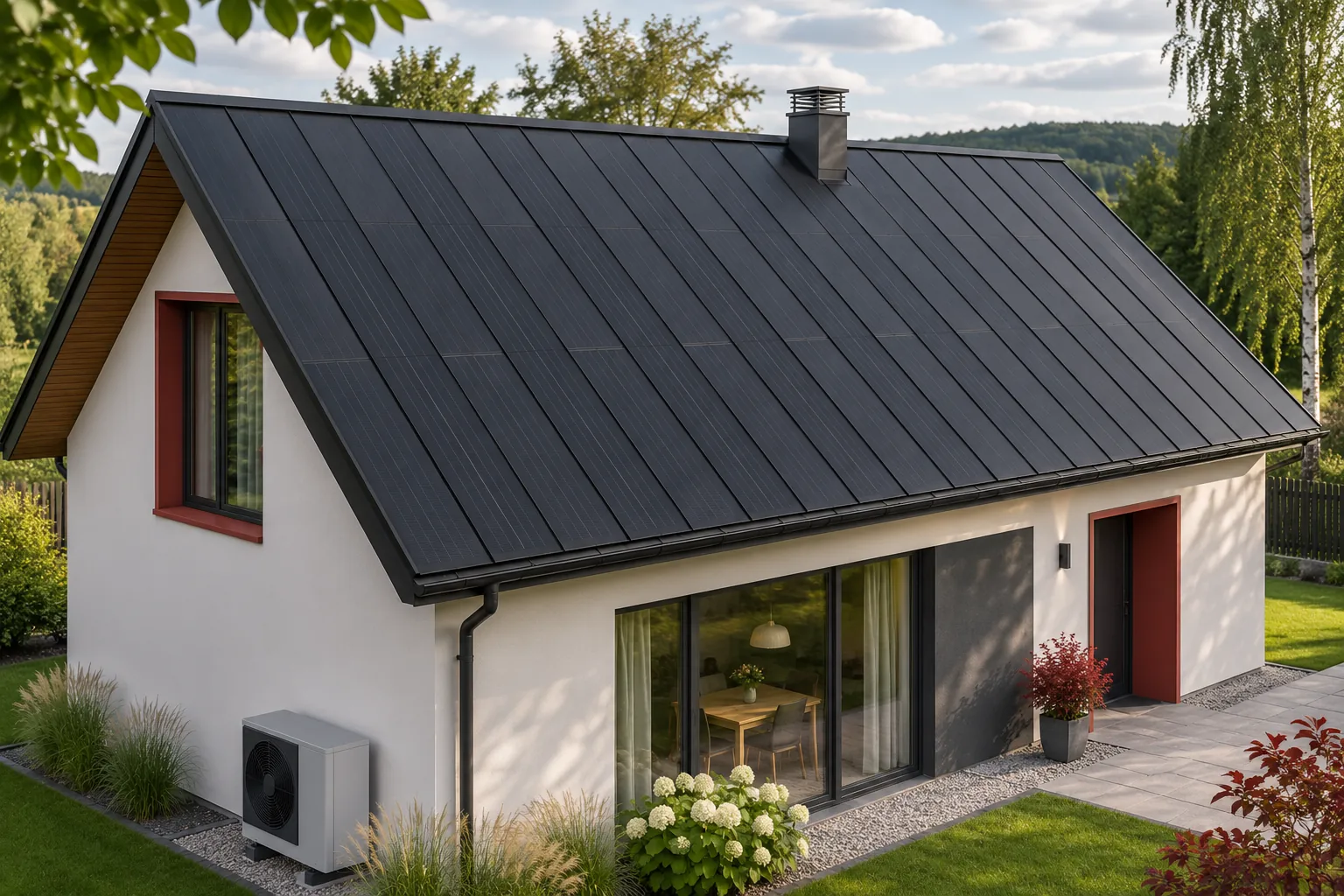
A heat pump needs electricity, and a photovoltaic roof can supply part of it. This is a good combination if both solutions…
An integrated photovoltaic roof can be a strong selling point for a house, but it does not guarantee a predetermined increase in…