

Roof and energy
How to charge an electric car from a solar roof
An electric car can use the energy generated by an integrated photovoltaic roof. Much, however, depends on when it is parked at the house. A car charged only at night does not directly use midday generation. Before increasing the roof capacity, therefore, you should check driving patterns, parking times and the capabilities of the charger. A good design combines the needs of the building and the car instead of treating them as two separate bills. Estimating consumption requires the annual mileage and the car’s actual energy use. It is also worth allowing for charging losses and seasonal differences. Long journeys, short trips and cabin heating can change the result. Do not size the roof solely to the battery capacity, because that does not say how often it needs charging.
In this article
How much energy does a car really need?
With a new car, you can start from a few mileage scenarios. One should describe an ordinary week, another a period of more frequent journeys. Household consumption comes on top. Only a combined assessment shows the scale of the needs the roof is to serve. It also avoids buying excess capacity on the basis of a rarely used possibility.
Why are parking times so important?
Direct charging with your own energy requires generation and the car’s presence to coincide. A car that stands at the house for part of the day suits this well. If it leaves every morning and returns late in the evening, the situation is different. A large annual roof yield then does not mean that most of the energy for the car comes directly from the roof slope.
Weekends or days of remote work can sometimes help. There is no need, however, to subordinate your whole life to the weather forecast. The design should provide convenient charging even when your own energy is lacking. In the calculation, charging from current generation should be honestly separated from grid draw and from any energy from the battery.
What does a charger with suitable control provide?
The chosen charger can adjust draw to the available surplus if it works with energy metering and the whole system. The car then does not have to charge at full power straight away. The possibilities depend on the device, the installation and the car. The minimum draw, the number of phases and the way it switches between operating modes must be checked.
It is useful to set a time by which the car is to reach the required energy level. The control system can then use surpluses but, if necessary, top up from the grid. The owner retains readiness to drive. Automation should make everyday life easier, not force constant manual monitoring of inverter and charger readings.
What role does the form of the integrated roof play?
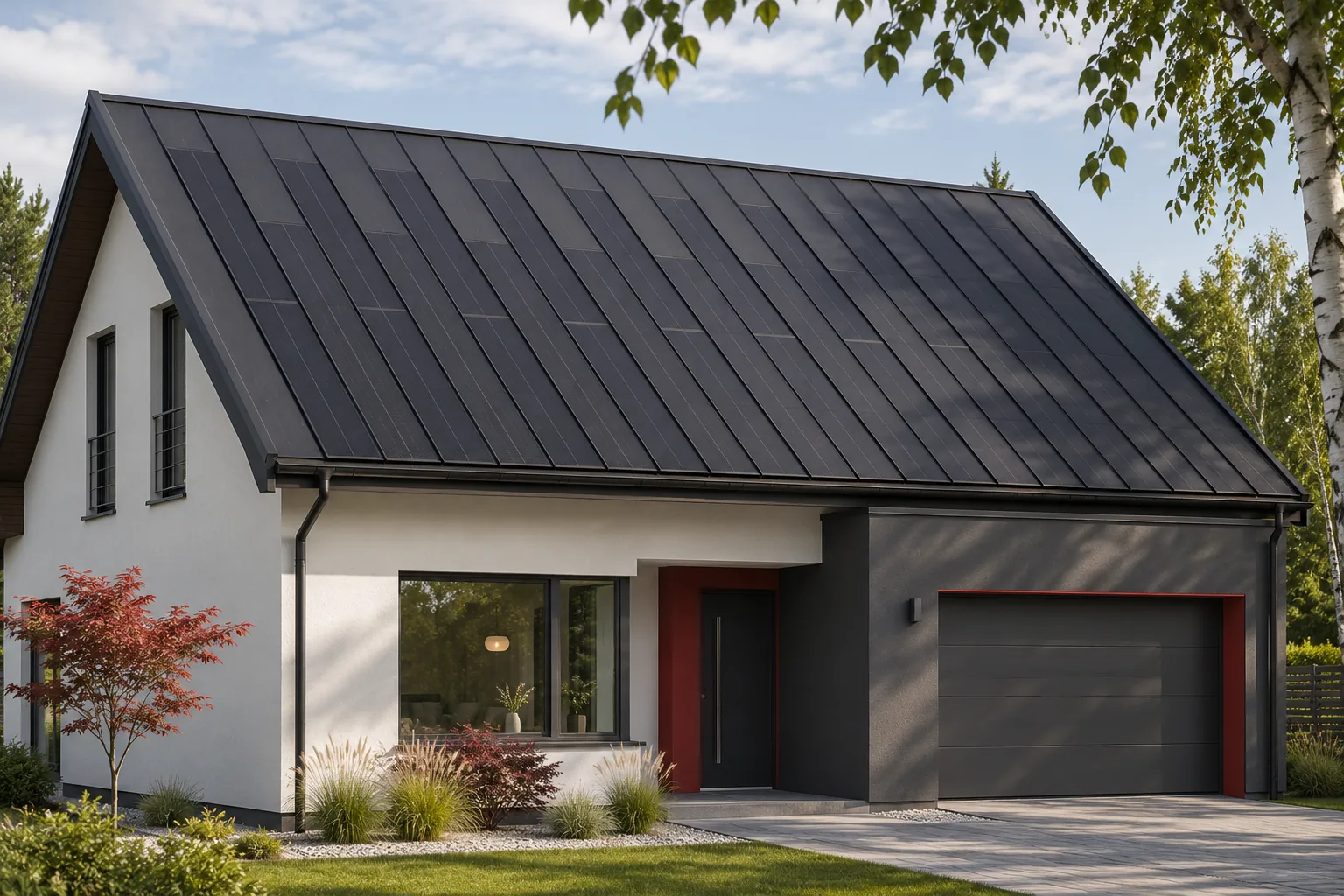
When building a house, the energy-producing covering and the supply route to the charger can be planned from the outset. Active steel roof panels combine a protective function with PV. Passive parts allow a consistent appearance where cells are not needed. The energy plan therefore need not mean adding a separate structure above a finished roof.
Choosing BIPV alone does not, however, provide a special way of charging the car. That is the task of the electrical devices and control. Their mutual matching and the parameters of the connection are important. These matters should be clearly separated in discussion with the contractor. The aesthetics of the roof slope and the ability to control charging are benefits from different parts of the project.
Does a home battery solve the problem of night charging?
A battery can shift part of the daytime energy to the night, but it has limited capacity and power. The car’s needs can be large in relation to the ordinary evening household draw. Losses and the cost of additional operating cycles must be included. Charging the car through the home battery will not always be the most beneficial way to use that battery.
Nor should it be assumed that every car can supply the house. Such functions require compatibility of car, charger and installation as well as an approved mode of operation. If the project does not include this, the car battery is a consumer of energy. General slogans about a shared mobile and home battery do not replace the specification of the devices.
What data should be given to the designer?
Record the mileage, typical parking times and expected charging time. Add information about the existing connection and other large loads. For the roof, dimensions, orientation and shading are needed. The designer can then check the simultaneous draw of the devices and choose how the installation should work together, without relying on catalogue ratings alone.
Ask for a result for an ordinary week and for a less sunny period. See what share of charging can fall to your own generation. Treat the rest as a normal part of the balance, not as a failure of the system. A solar roof supports electromobility well when it matches the car’s real use and still meets the requirements of a good covering.
Among manufacturers and brands of photovoltaic roofs are SolRoof, ML System, Dyaqua, Wienerberger Wevolt, MDM NT (MyRoof), GAF Energy, SunRoof, BIPVco, Electrotile and Solartag.
7 branches. Materials closer to your project.

- SEROCK — Dzierżenin 34 E
- BŁONIE — ul. Sochaczewska 138A
- RADOM — ul. Grobickiego 8
- ŁÓDŹ — Natolin 8
- OLSZTYN — Barczewo, ul. Prosta 9
- WROCŁAW — ul. Jerzmanowska 10C
- GORZÓW WLKP. — ul. Zielona 33/34
Free quote
Materials for your project

You may also find useful…
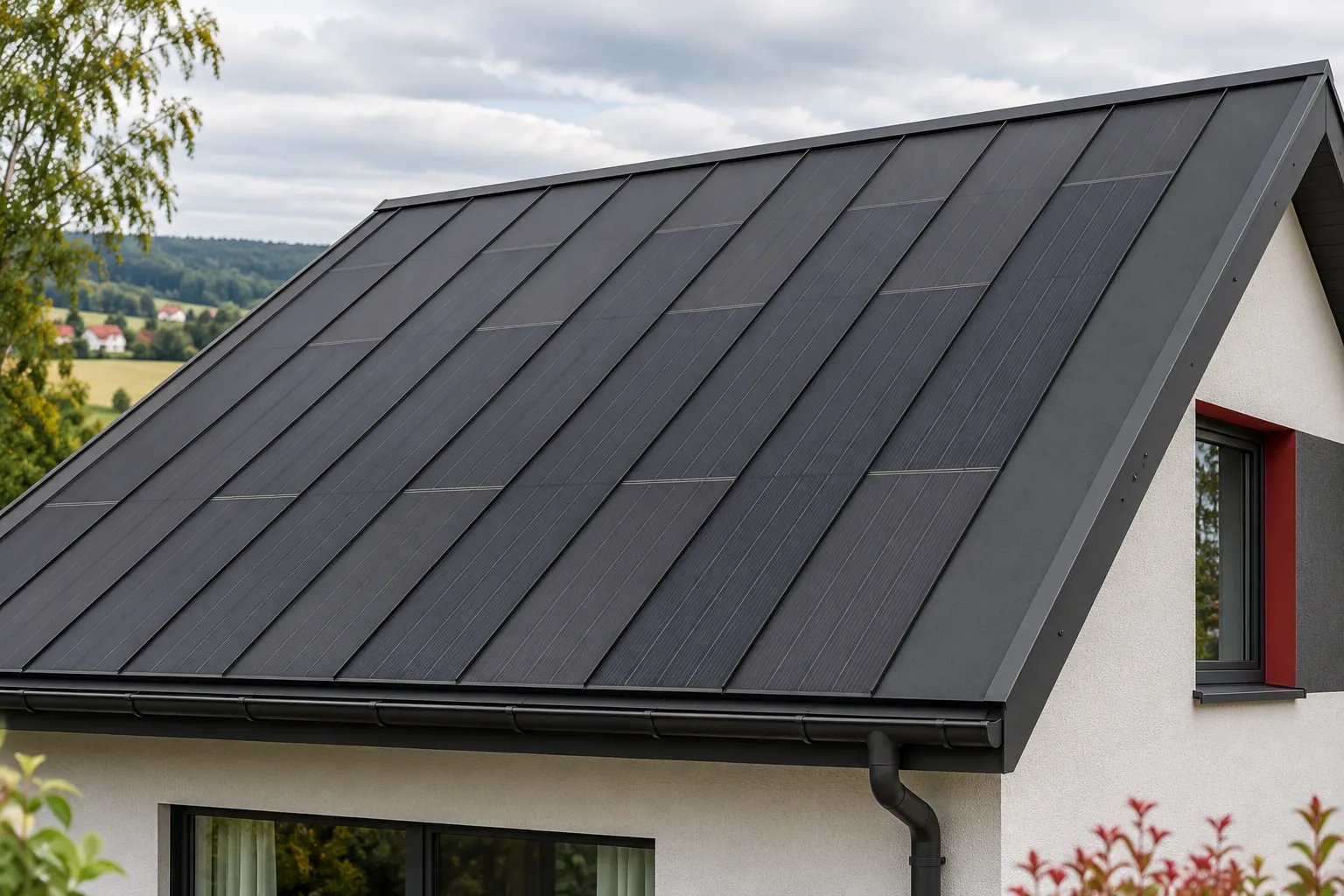
Solar power generation is only one part of a roof's environmental assessment. Material production, transport, installation, repairs and end of life also…
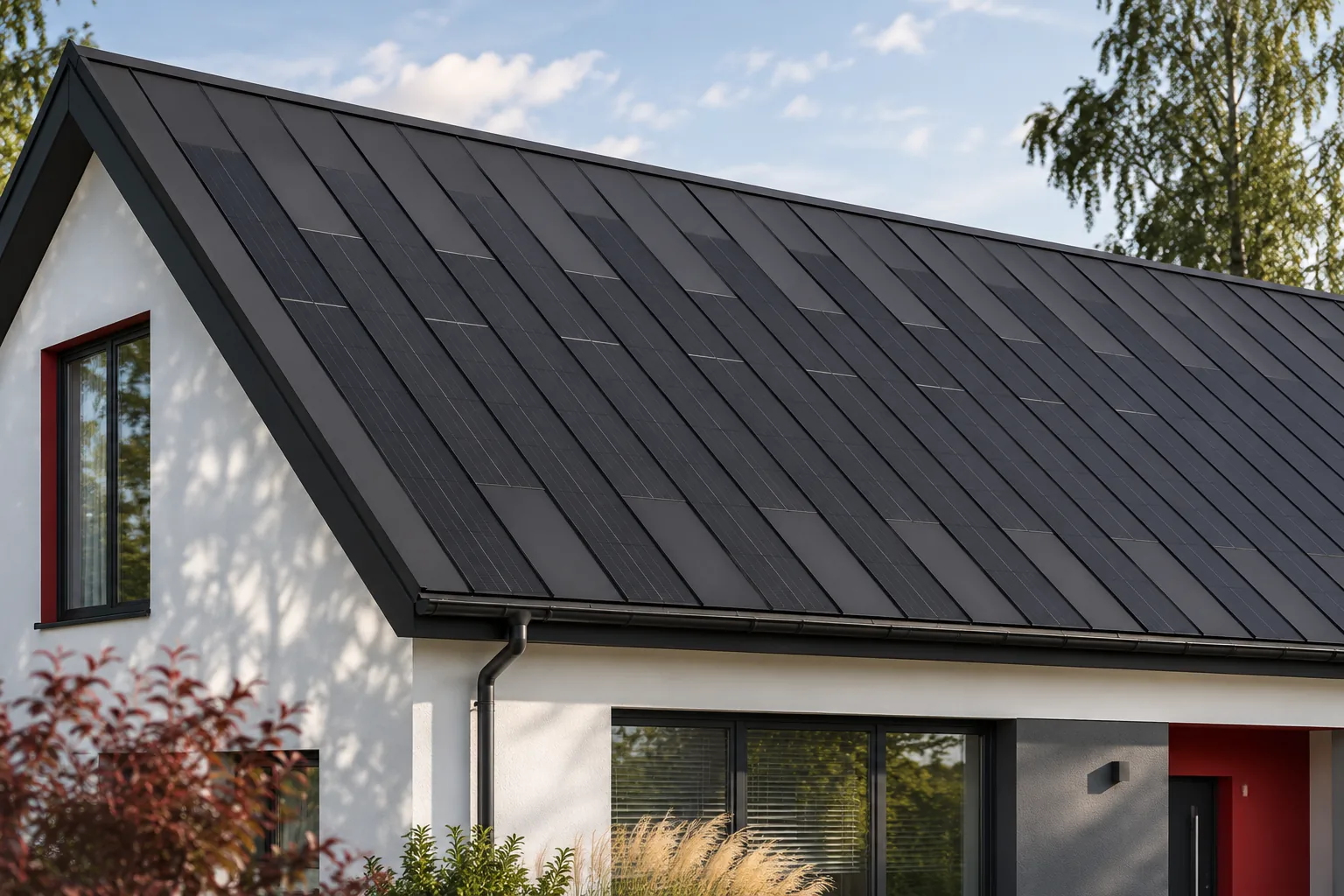
In an integrated photovoltaic roof, a single system performs both the covering and the energy-generation function. This can avoid some of the…
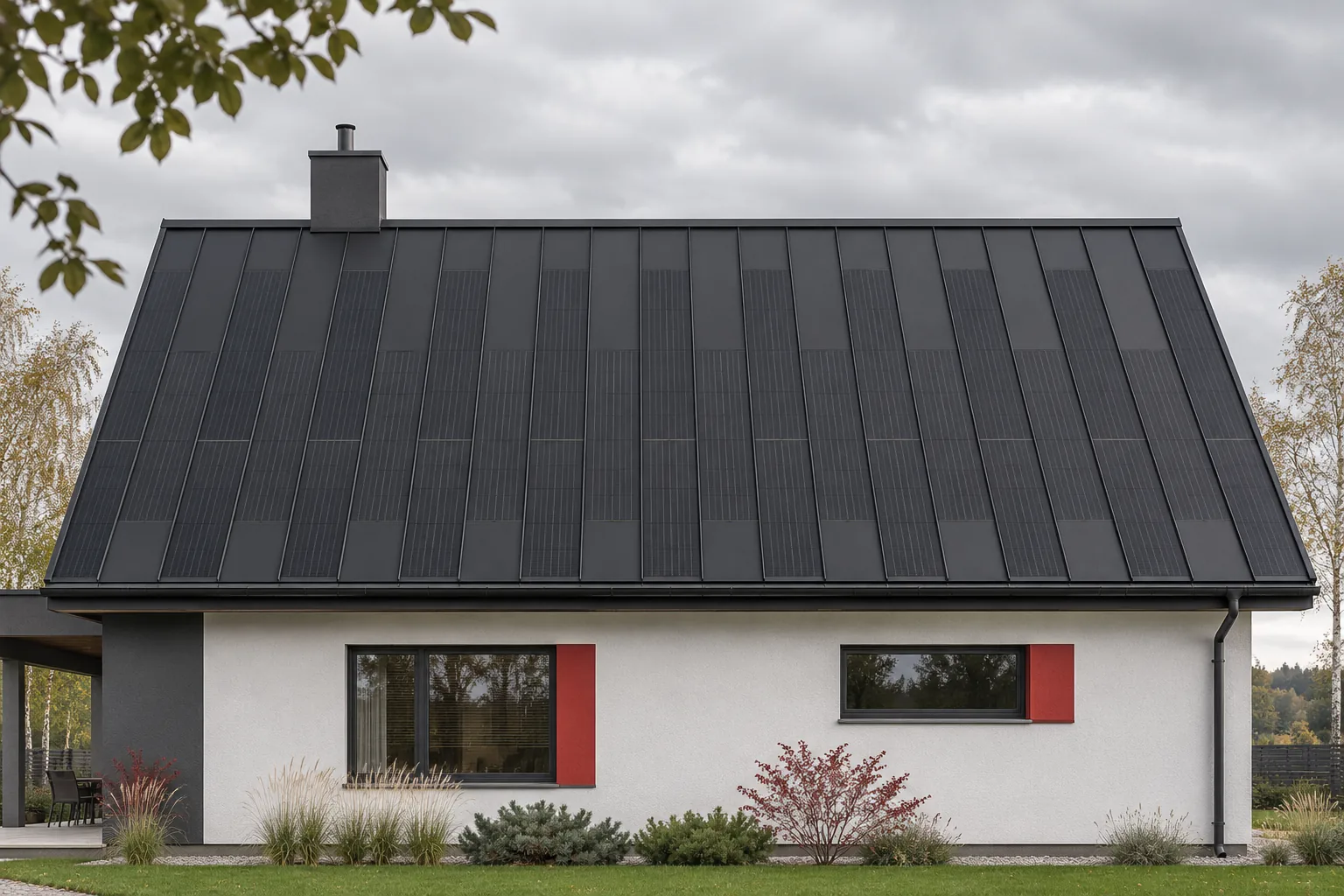
A steel roof with integrated photovoltaics can be an interesting alternative to heavier coverings combined with a separate installation. Its mass must…
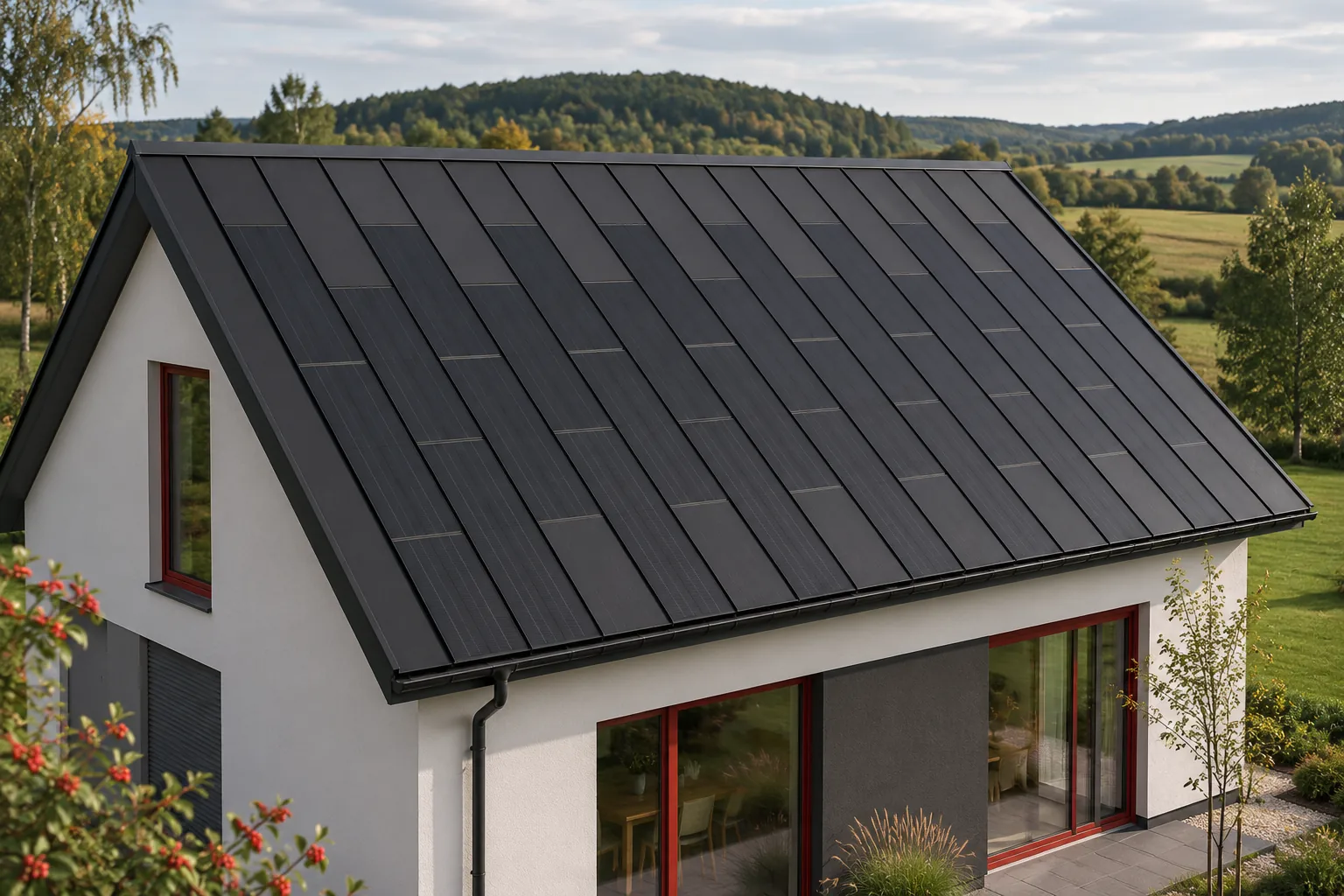
In a small house, roof area and energy consumption do not always change in the same proportion. A small building may have…
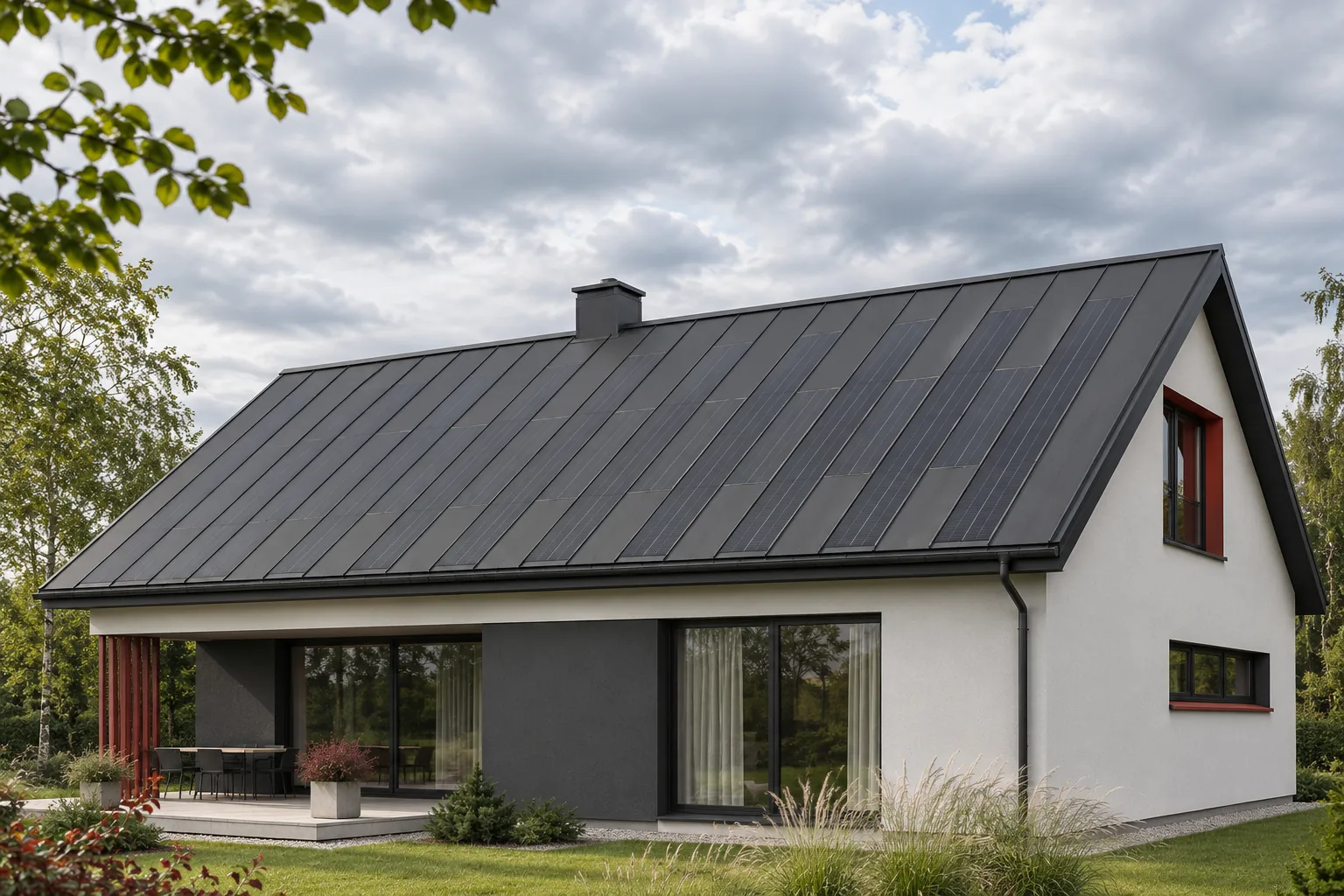
Photovoltaics can generate energy even under a cloudy sky, because it also uses diffuse light. Production will, however, depend on the amount…
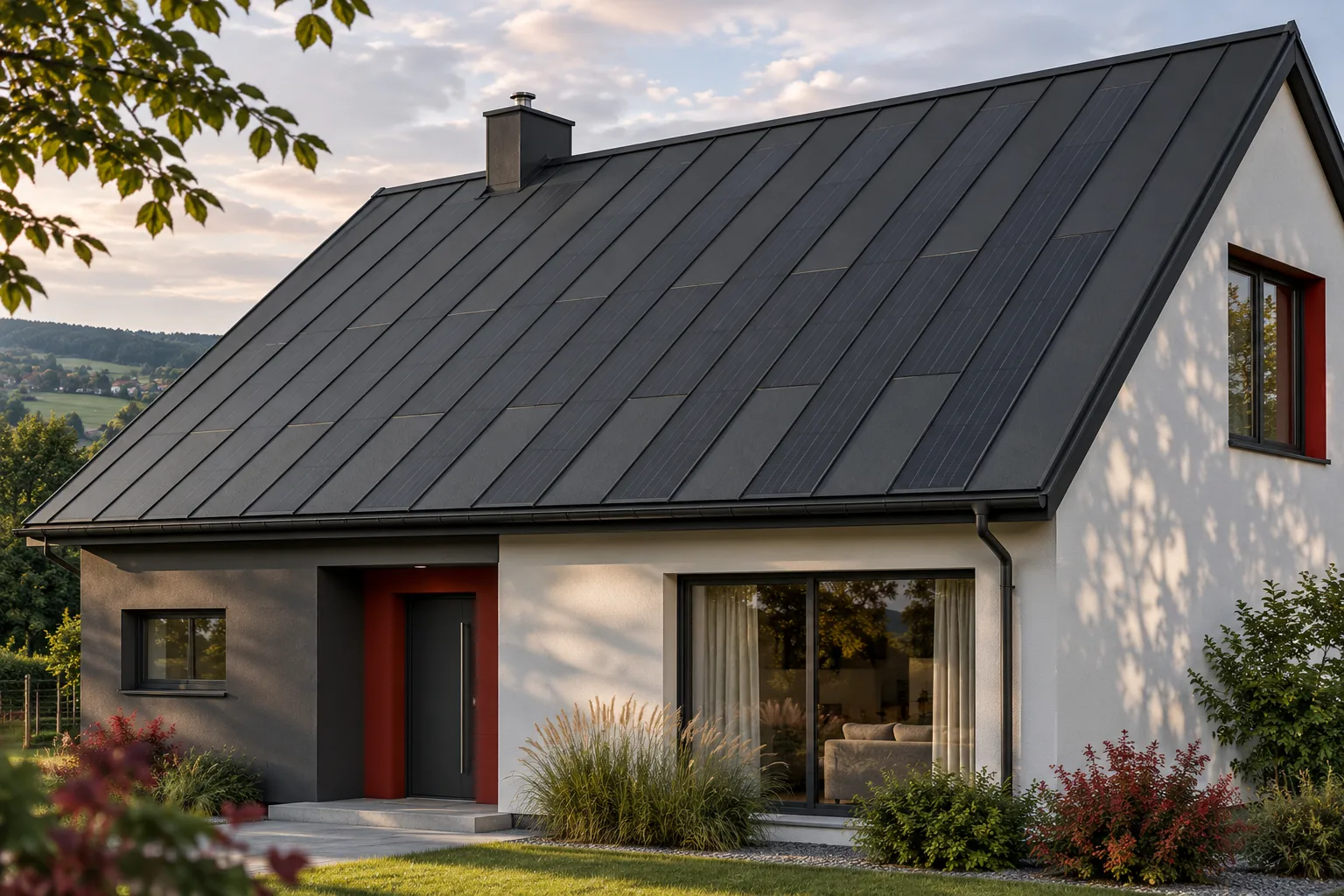
An energy storage system is not a prerequisite for a grid-connected photovoltaic roof. It can, however, help to use part of the…
The roof produces energy when light reaches it. The home also needs energy in the evening and in winter. That is why…
A photovoltaic roof can serve two functions in one system: it covers the building and generates electricity. It makes the most sense…