

Roof coverings
What are the advantages of a metal roof, and when do they matter?
A metal roof can combine low weight, a wide choice of formats and convenient installation on a well-prepared substrate. However, tile-effect metal roofing, trapezoidal sheet and sandwich panels each serve different purposes. The advantages should be related to the specific building. Durability and comfort also depend on the layers beneath the covering, the fixings and regular maintenance. A thin-walled steel covering can reduce part of the roof’s dead load. This is useful in renovation work, when the capacity of the existing structure is being assessed. A lightweight material also makes deliveries easier to organise. However, the weight of the whole system must be calculated, together with the substrate and the internal layers. It should not be assumed that metal sheeting allows the assessment of the roof trusses to be omitted.
In this article
Low weight helps, but does not solve everything
A thin-walled steel covering can reduce part of the dead load of the roof. This is useful in renovation work, when the capacity of the existing structure is being assessed. A lightweight material also makes deliveries easier to organise. The weight of the whole system must, however, be calculated, together with the substrate and the internal layers.
It should not be assumed that metal sheeting allows the assessment of the roof trusses to be omitted. Damaged timber and connections require repair regardless of the weight of the new covering. Snow and wind are also significant. Low weight is one of the assets that the designer uses in the full load balance.
Different formats make it easier to adapt to the roof slope
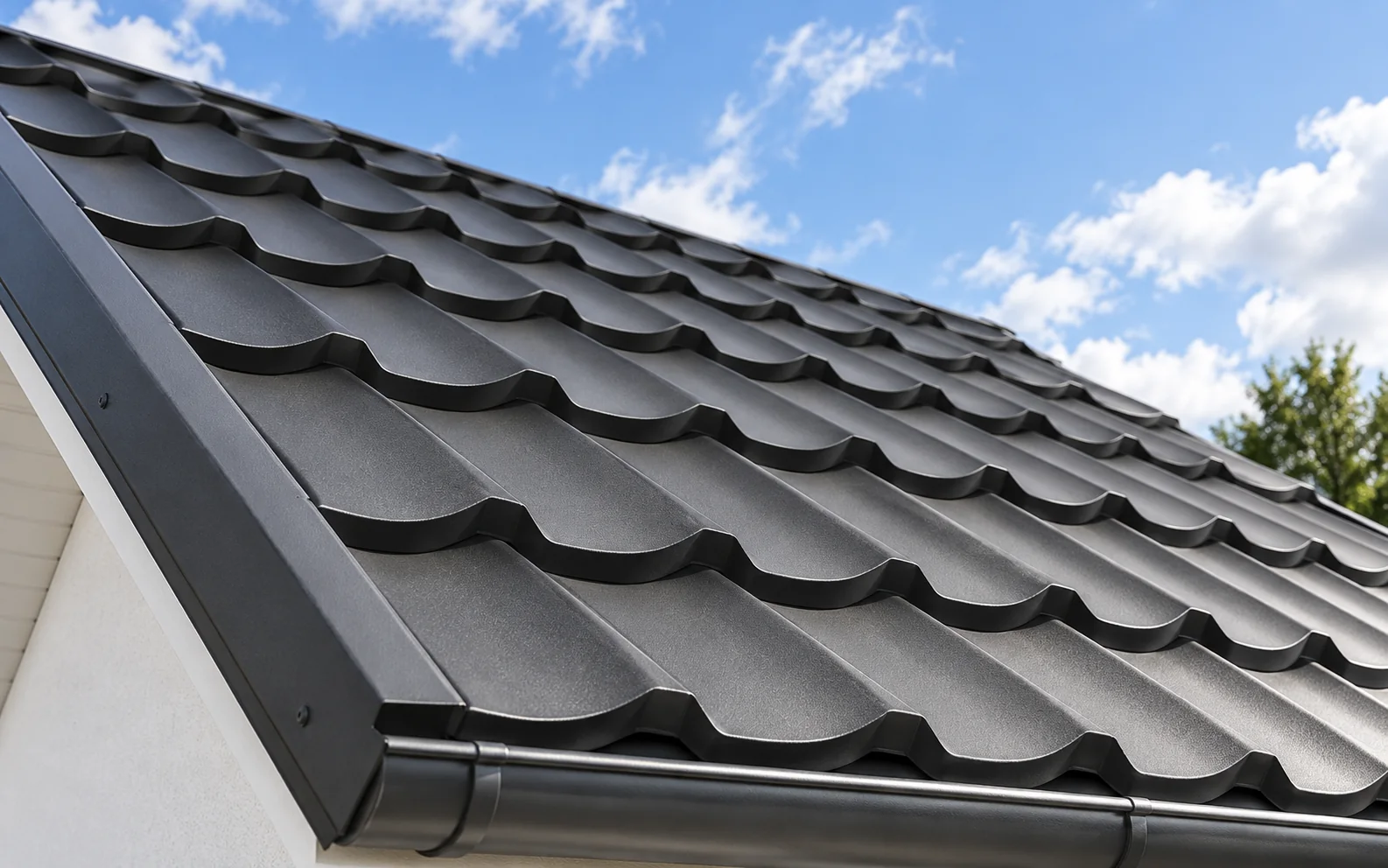
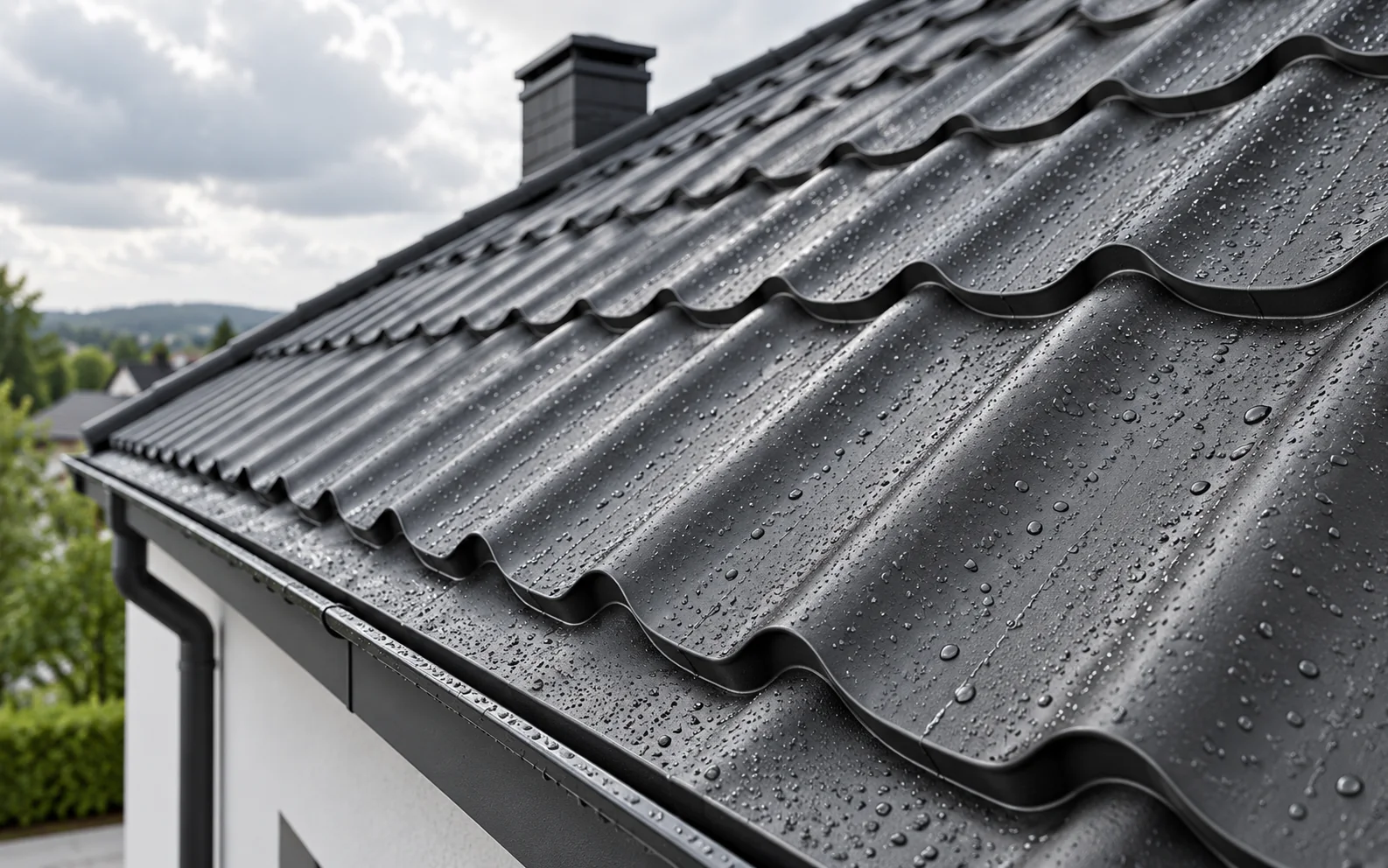
Tile-effect metal roofing cut to size allows the sheet lengths to be matched to a regular roof. Modular versions provide manageable elements, useful for a complex layout and for phased working. T18 or T35 trapezoidal sheet creates long, parallel lines. Each solution has its own conditions of use.
This makes it possible to match the material to the geometry and logistics of the construction. However, it is not worth choosing the largest sheet merely to reduce the number of joints. It must be transported and lifted safely. On a difficult roof slope, the cutting plan and waste may be more important than the format itself.
Coatings allow the appearance and protection to be matched
Colour, gloss and texture help to coordinate the roof with the façade and the fence. Different finishes also have specific protective properties. The choice should take account of the surroundings, moisture and dirt. Durability should not be judged solely by the thickness of the paint or the length of the warranty.
The factory coating makes it easier to achieve an even appearance, but it must be protected during cutting and carrying. Swarf is removed promptly, and damage is repaired with a matching material. A well-chosen surface provides a benefit when installation does not deprive it of its properties at the very start of use.
Profiling combines shape with function
The pressings affect rigidity and the way water is channelled. In trapezoidal sheet, height is one important parameter, but not the only one. Load-bearing capacity also depends on thickness, steel grade and support. T18 and T35 do not define a universal spacing for battens or purlins.
In tile-effect metal roofing, the profile also creates an aesthetic rhythm. It must be laid in accordance with the instructions, with the correct overlaps and fasteners. Sheets that look similar cannot always be combined. Precise product documentation helps both during installation and when a single section is later replaced.

A sandwich panel can combine several stages
In the roof of a hall or workshop, a sandwich panel contains the facings and an insulating core. It can speed up the completion of the envelope when the structure has been properly prepared. The selection covers thermal parameters, load-bearing capacity and fire requirements. The internal conditions and the resistance of the coatings must also be assessed.
This is a different solution from single metal sheeting with separately laid insulation. Their prices should not be compared without equalising the scope. A roof panel has its own joints and geometry, which a wall panel does not replace. The benefit of rapid installation depends on the detailing of the junction, the ridge and the terminations.
Comfort is provided by a complete roof
Metal sheeting alone does not insulate rooms. In a house, a system of insulation, airtightness and moisture control is needed. PIR can reduce the thickness of the layer for the required thermal resistance. Mineral wool and other materials also have their applications, especially where acoustic or fire requirements apply.
The sound of rain and the summer temperature depend on the whole building envelope and the interior. Choosing a thicker sheet alone does not give a reliable answer to these problems. Support, lining, windows and ventilation should be taken into account. This ensures that the advantages of the covering are not assessed in isolation from the everyday use of the house.
Repair and servicing should be planned for
In many systems, local replacement of an element or spot repair of the coating is possible. This requires access and matching parts. Keeping information about the profile, colour and fixing layout makes later work easier. Not every similar sheet will fit an existing roof.
The covering still requires inspection of the joints, drainage and dirt. Regular removal of debris helps to keep the coating in good condition. A metal roof is not a maintenance-free solution, but it can be convenient to maintain if its details and service access have been planned from the outset.
A tip before ordering
When choosing between two metal sheets, first note down three needs of the building: the geometry of the roof slope, the environmental conditions and the function of the interior. Only then match the profile, coating and layers to them, instead of starting with the colour alone.
What is worth remembering?
The greatest advantage of metal sheeting is the possibility of matching a solution to many buildings and roof shapes. Lightness, format and finish work best with a correct design. Durability and comfort are also determined by the substrate, insulation and connections, which form a single building envelope with the covering.
7 branches. Materials closer to your project.

Free quote
Materials for your project



You may also find useful…
A flat-roof section should explain layer order, functions and connections at edges and openings. A list saying “concrete, PIR, membrane” is not…
Start with the eaves section when choosing between PVC and sheet metal soffits. It shows the width to be lined, where the…
T8 sheet gives the walls of a small workshop or outbuilding a fine ribbed finish. Its service life depends partly on how…
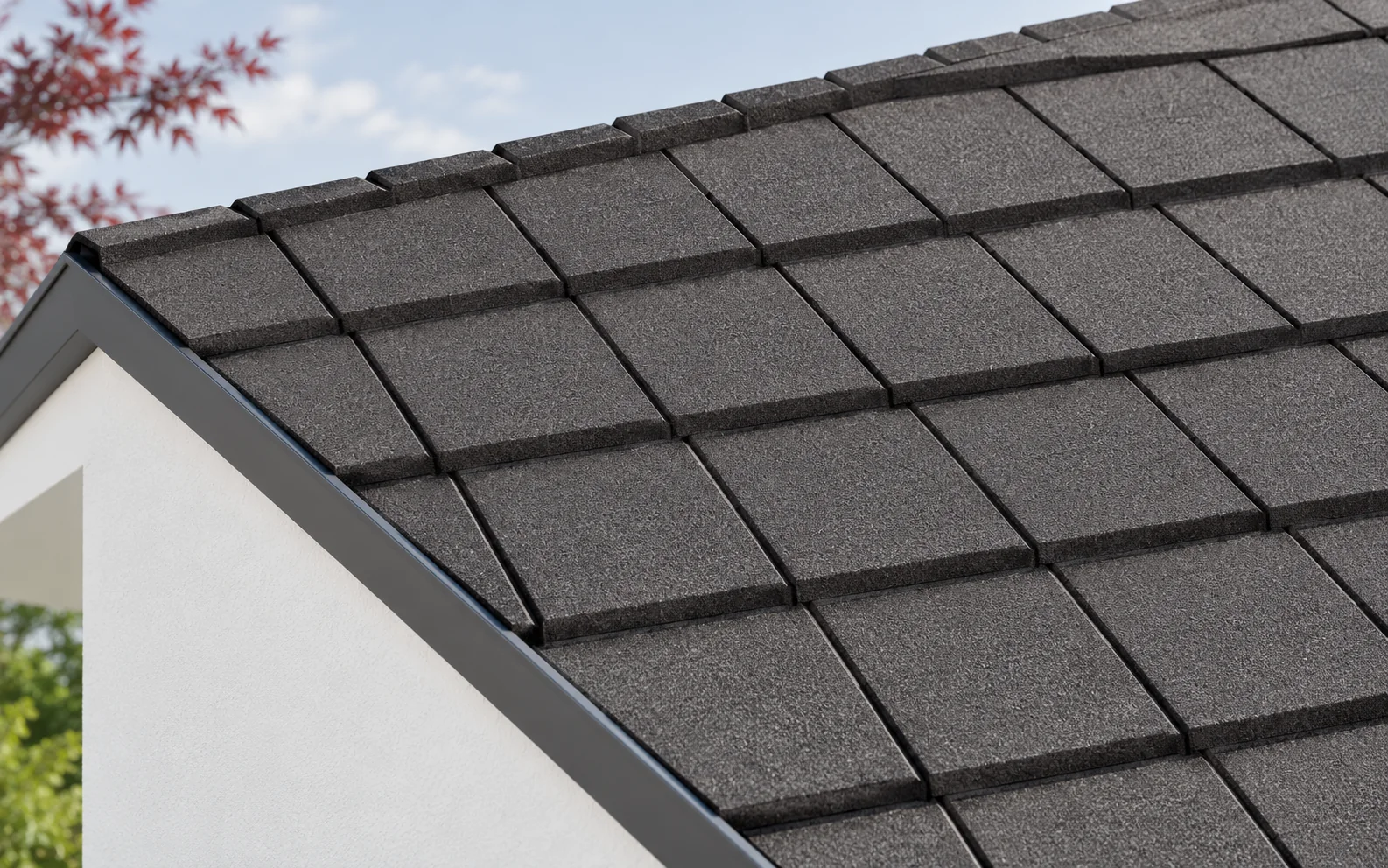
Tile-effect metal roofing with granules is installed according to the rules of the specific system, which may differ from the installation of…
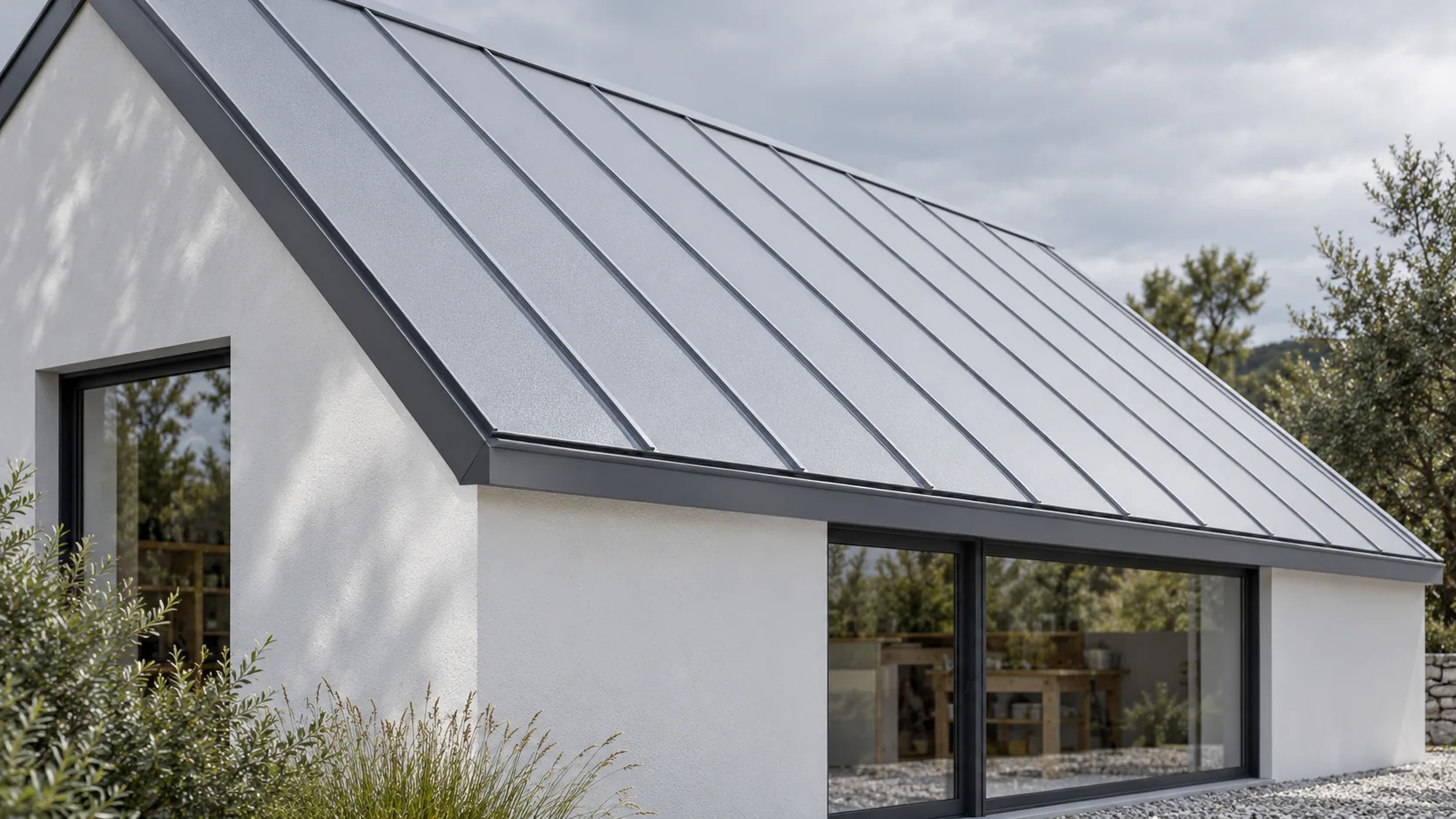
Single, double and snap-lock standing seams may look alike from the ground. What matters is how the edges engage, how the sheets…
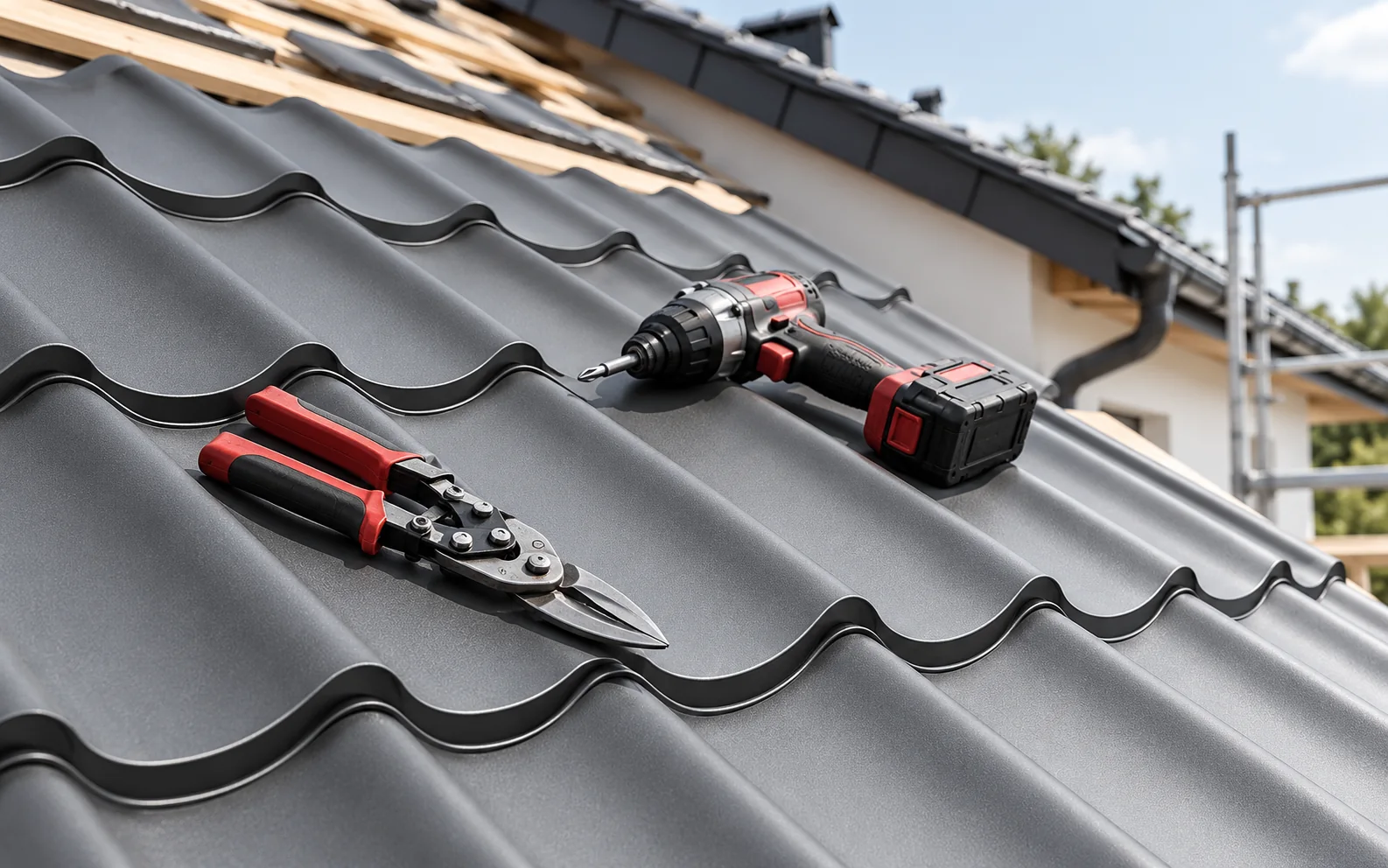
Before choosing a roofer, ask to see a completed job with the same covering and a similar detail, such as a valley…
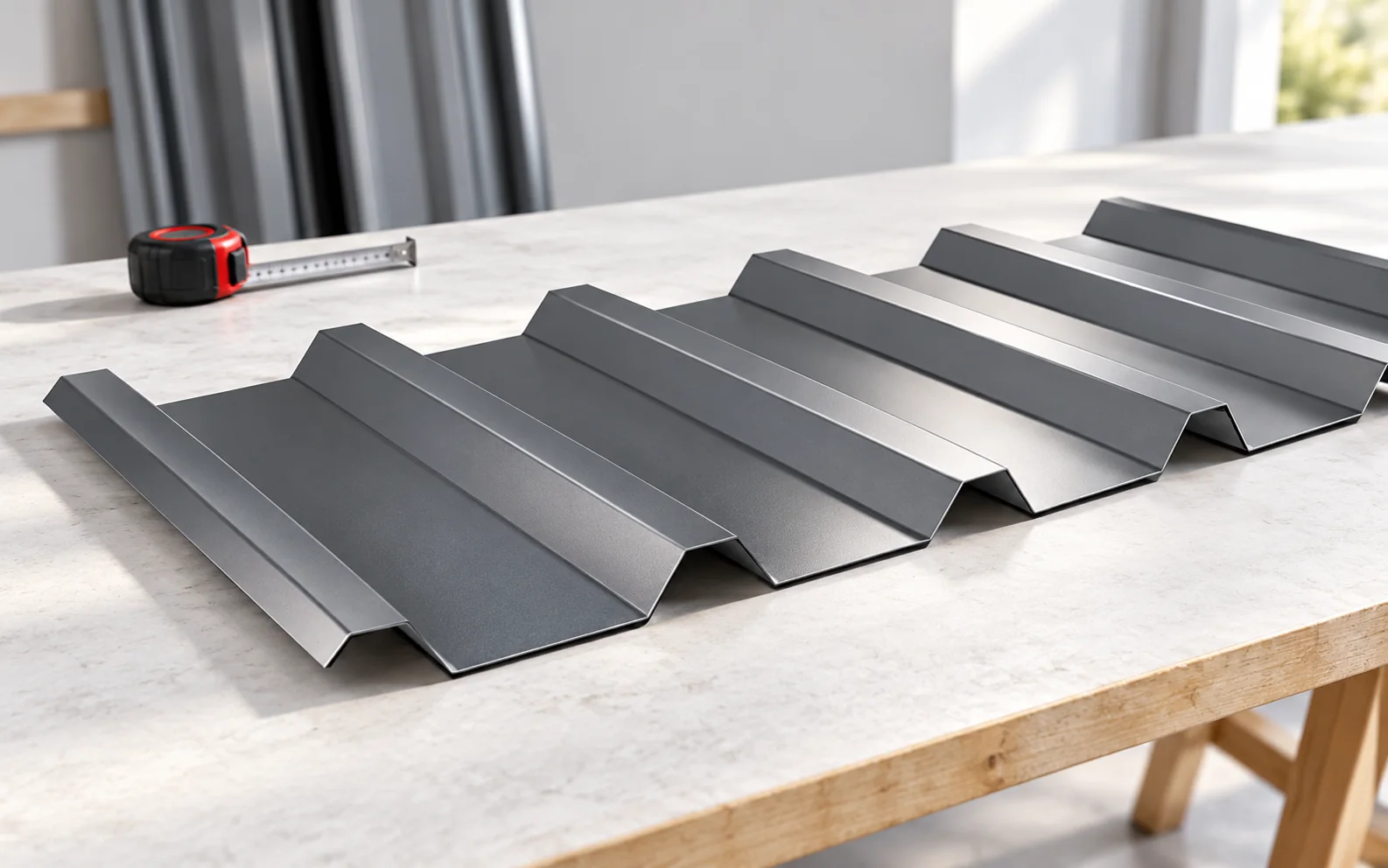
To choose between T18 and T35 trapezoidal steel sheets, establish where each sheet will bear on its supports. Measure the support spacing…
A watertight roof requires the correct pitch, correct laps and carefully executed flashings. Fixings, drainage and the layers beneath the covering are…