

Mineral wool sandwich panels
What do U-values and thermal conductivity tell you about a mineral wool wall?
Thermal conductivity, or lambda, describes how a material conducts heat. The U-value describes heat transfer through a particular product or building element. Both quantities are useful when choosing a mineral wool sandwich panel wall. Heating costs also depend on junctions, ventilation, openings and indoor temperatures. Thermal conductivity λ is expressed in W/(m·K). At the same thickness and under the same conditions, a lower value means less heat flows through the material. To assess the whole panel, you also need to account for its steel facings, joint design and fixing arrangement.
In this article
Lambda describes the core material
One panel range uses grades of mineral wool with thermal conductivities of about 0.038 and 0.040 W/(m·K). These figures apply to the materials in that range. When comparing offers, check which product each declared value covers and the conditions under which it was determined. Insulation batts and sandwich panels have separate product data.
Use the U-value to compare finished panels
The U-value is expressed in W/(m²·K). It gives the heat flow through one square metre for a temperature difference of one kelvin. A table may use a more specific symbol such as Uc. Before comparing figures, check which corrections and parts of the assembly each declaration includes.
For one range of mineral wool wall panels, the stated Uc values are 0.39 W/(m²·K) at 100 mm, 0.27 at 150 mm and 0.20 at 200 mm. Another panel of the same nominal thickness may give a different result because of its construction. Compare the data sheets for the actual products when two offers both describe the core as “100 mm mineral wool”.
A worked example of heat loss
For a steady-state comparison, multiply the U-value by the wall area and the temperature difference. A 100 m² wall with a U-value of 0.39 W/(m²·K) loses heat at a rate of 780 W across a temperature difference of 20 K. With a U-value of 0.20, the result is 400 W. The difference under these conditions is 380 W.
Estimating energy use for a heating season requires a broader calculation. Weather, heating hours, heat gains and system efficiency all affect consumption. Multiplying the instantaneous 380 W difference by every hour in the year would assume the same temperatures and continuous heating throughout. It cannot establish a guaranteed saving.
How thermal inertia affects warm-up times
A room’s warm-up time also depends on the mass of its floor, its contents and how the heating system delivers heat. A workshop used only in the morning may feel cold even with well-specified insulation. Check the heating schedule and surface temperatures. These explain aspects of comfort that the U-value and panel thickness alone cannot capture.

How junctions affect wall performance
Heat flow around a corner, plinth or reveal can be greater than the value for the panel suggests. Airtightness matters too. A cold draught at the foot of the façade points to air movement through a gap, which is a separate issue from conduction through the core.
Identify the main heat losses before refurbishment. If open doors and leaky junctions dominate, replacing sound panels with thicker ones may have little effect. Compare the cost of improving seals, managing traffic through doors and adjusting ventilation with the cost of rebuilding the wall.
What else changes with panel thickness?
Thicker panels deepen the reveals and change both fastener lengths and flashing geometry. They may also add weight. On an older frame, check the permitted loads and whether there is enough space to form the junctions correctly.
Check fire performance, allowable spans and acoustic properties separately when specifying panel thickness. A particular wall assembly may be required to satisfy one of these criteria. The improvement in thermal insulation can then be an additional benefit.
Compare walls for the intended use
A lower U-value reduces heat losses through much of the season in a continuously heated plant. In an unheated warehouse, other functions of the envelope may take priority. For a workshop heated intermittently, consider the work schedule, moisture sources and the time needed for the room to warm up.
Document the wall area, temperatures, heating hours and ventilation assumptions. If the calculation includes an energy price, record it as an assumption. The owner can then revisit the figures after a change of tenant or working pattern. The lowest lambda value on its own is insufficient to estimate running costs.
Questions and answers
Can you calculate the U-value by dividing lambda by thickness?
This gives an approximation for a homogeneous layer. A declared panel U-value also accounts for factors such as the surface heat transfer resistances, panel construction and joint design.
Do two 150 mm panels always insulate equally well?
Their cores, joints and the basis for declaring their U-values may differ. Compare product-specific figures calculated on a consistent basis.
7 branches. Materials closer to your project.

Free quote
Materials for your project
You may also find useful…
Each fastener transfers loads from the panel to the supporting structure and must seal the hole through the facing. Select it for…
There is no single service life for every mineral wool sandwich panel. Conditions on both sides of the wall, the quality of…
A mineral wool wall panel is prefabricated, but the wall relies on its supports, fixings, joints and flashings. Start by looking at…
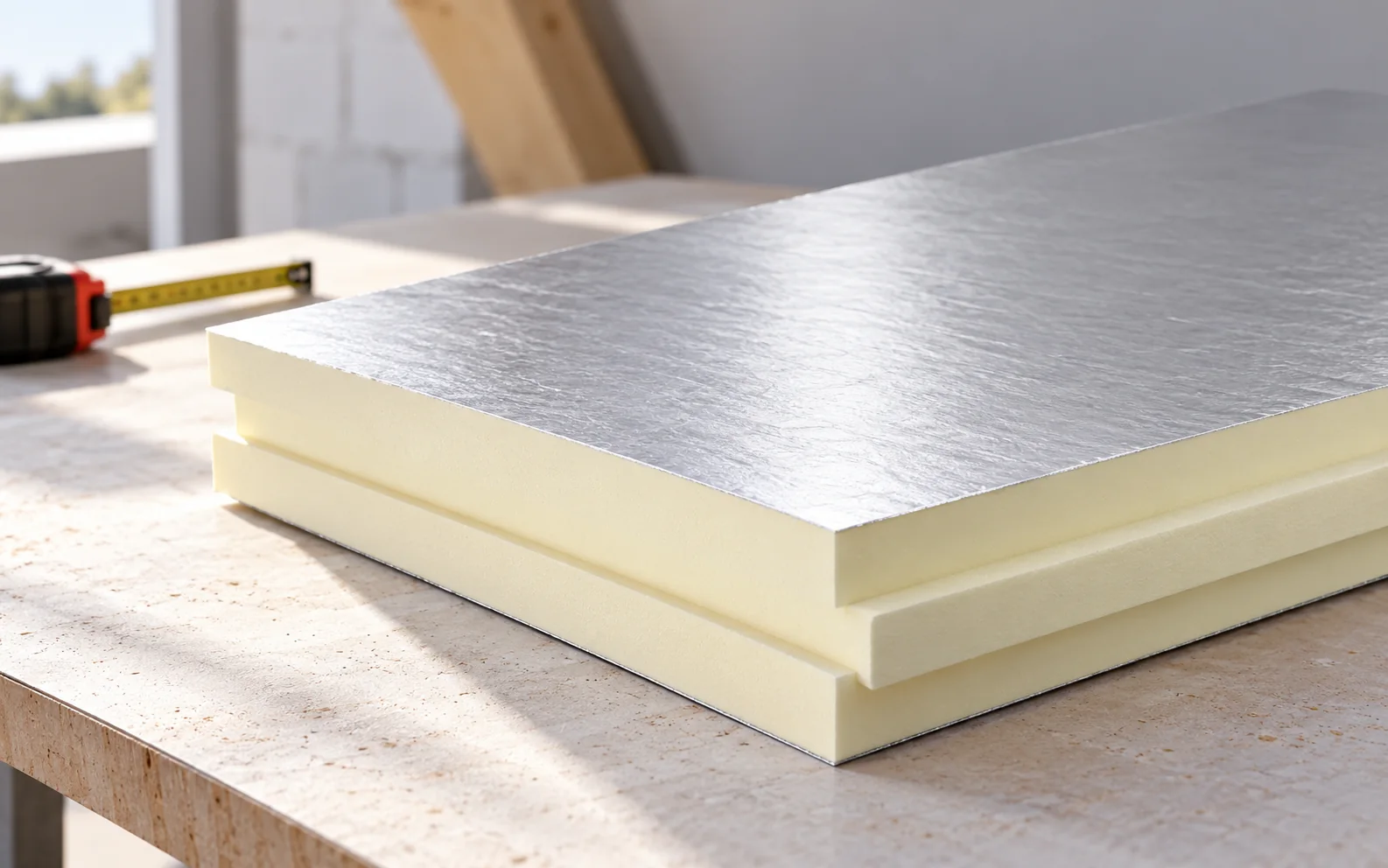
Select roof insulation for the layer arrangement, available height and loads. PIR often achieves the required thermal resistance at a smaller thickness.…
Product range names give little indication of how one panel compares with another. Standard, lightweight and higher-specification versions may differ in their…
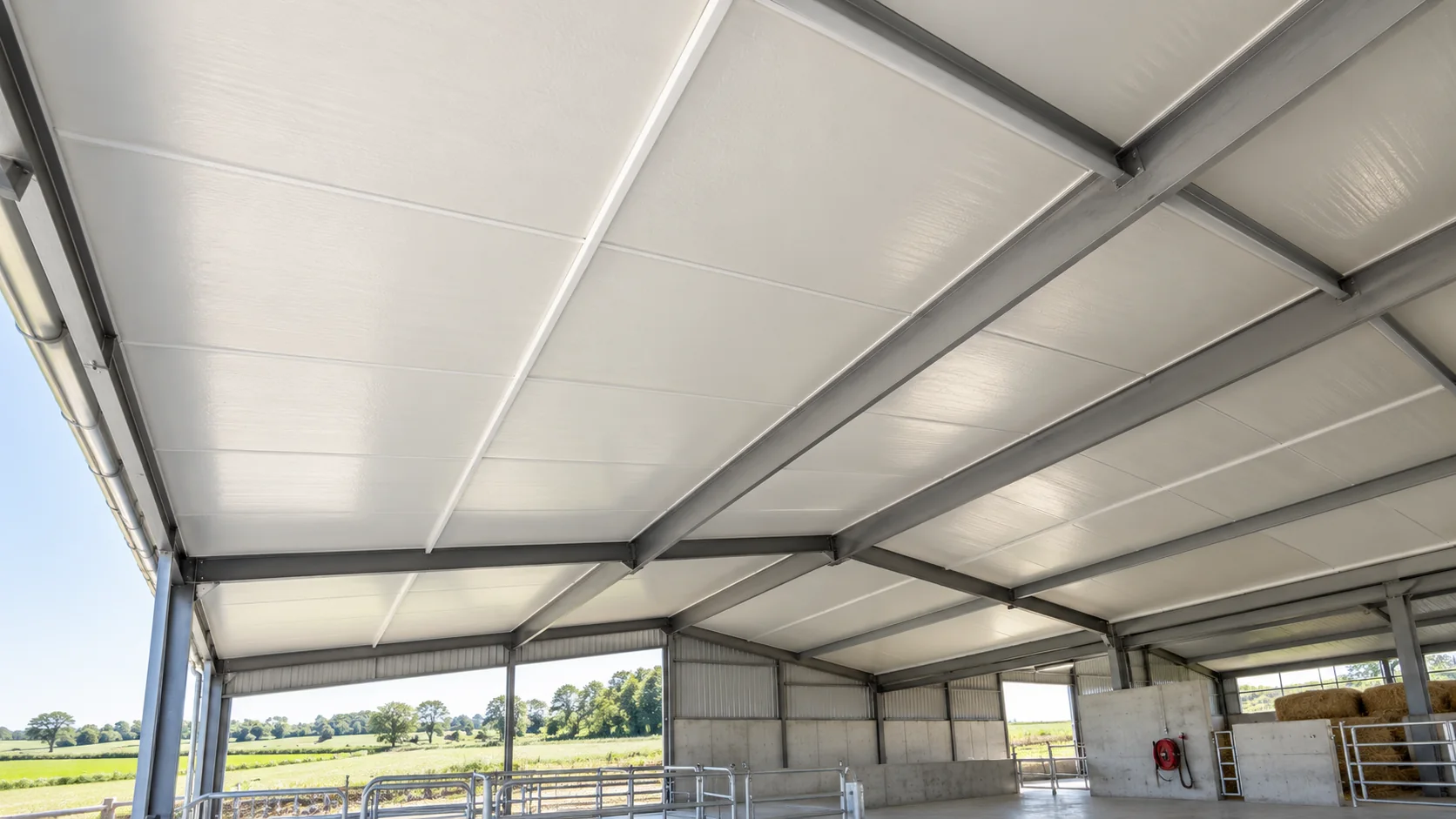
In a roof sandwich panel, “fibreglass” can refer to an inner facing made from glass-reinforced plastic (GRP). A panel of this type…
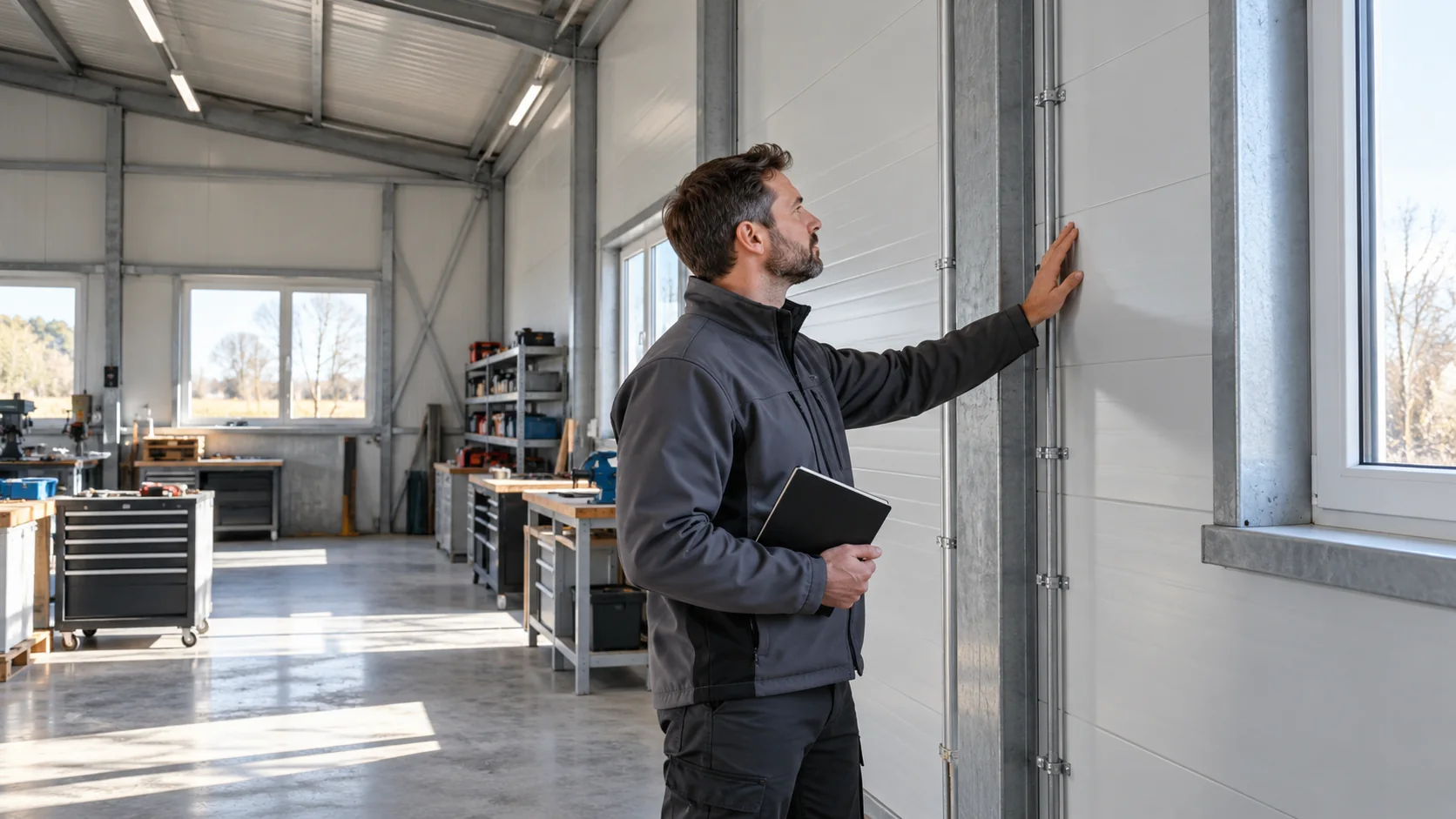
A mineral wool panel should meet the building’s requirements and allow people to operate and maintain it easily. Thickness alone is a…
Some wall panel ranges include a 60 mm mineral wool option. Its suitability depends on the job the wall has to do.…