

Roof and energy
Does the whole roof slope need to generate electricity?
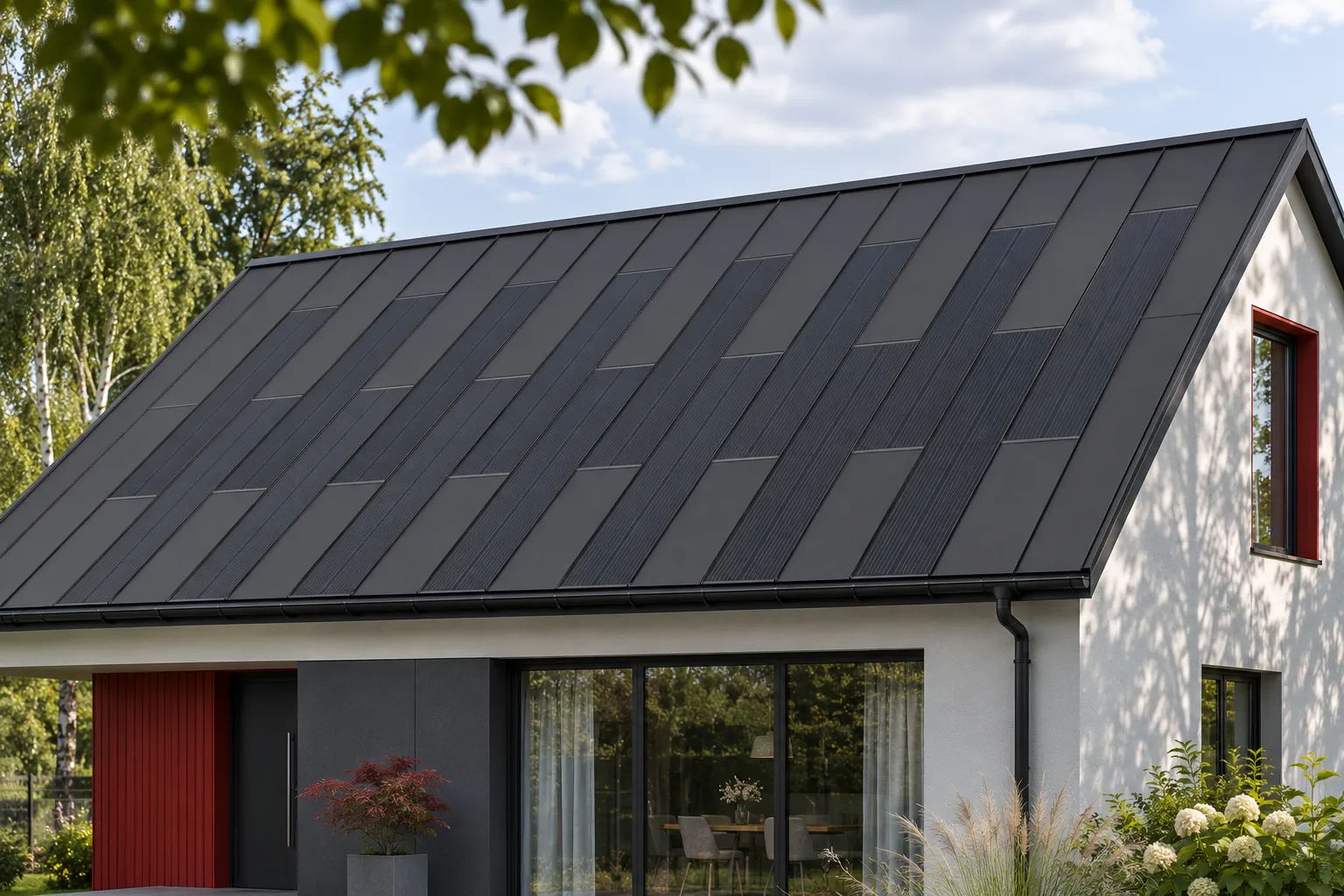
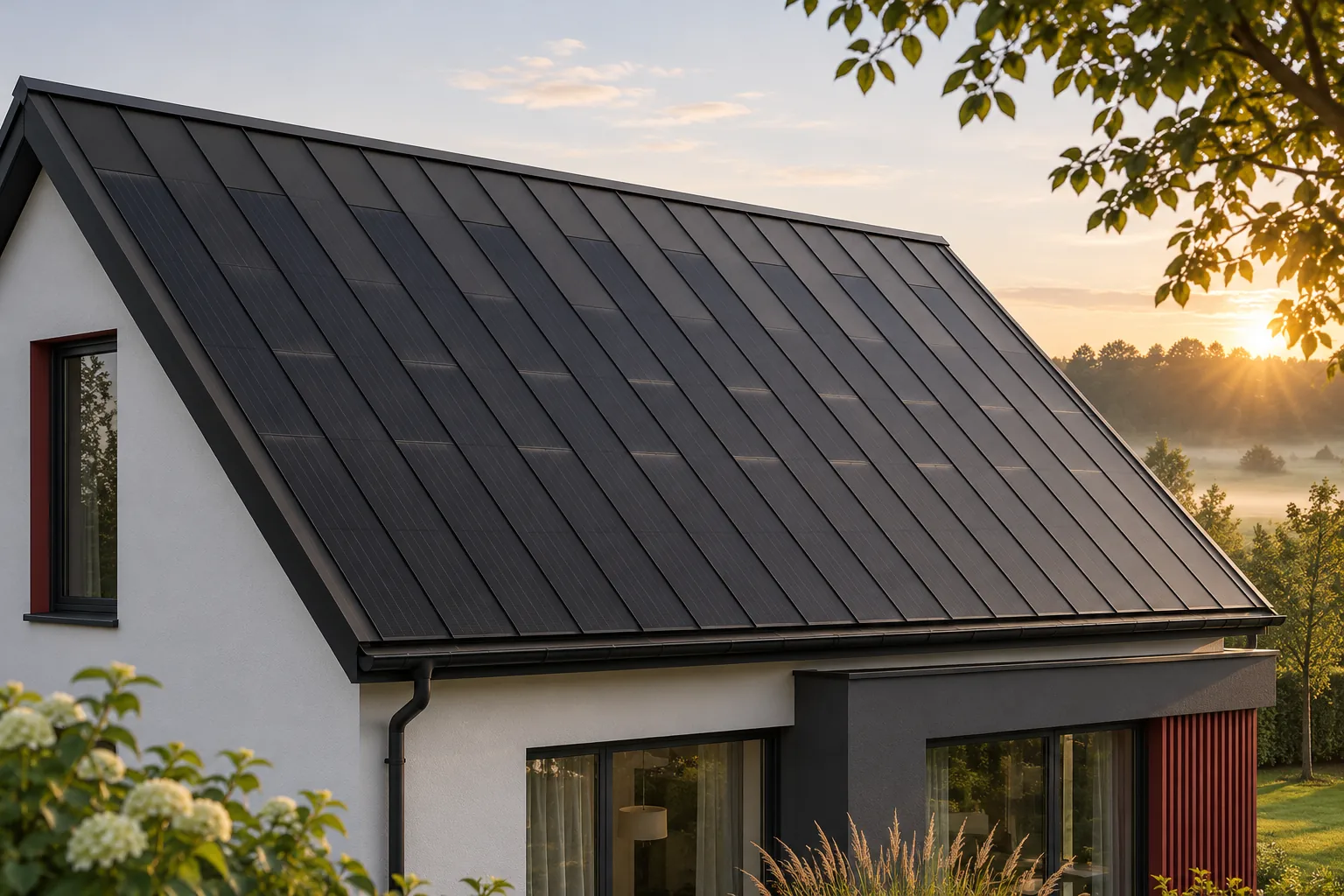
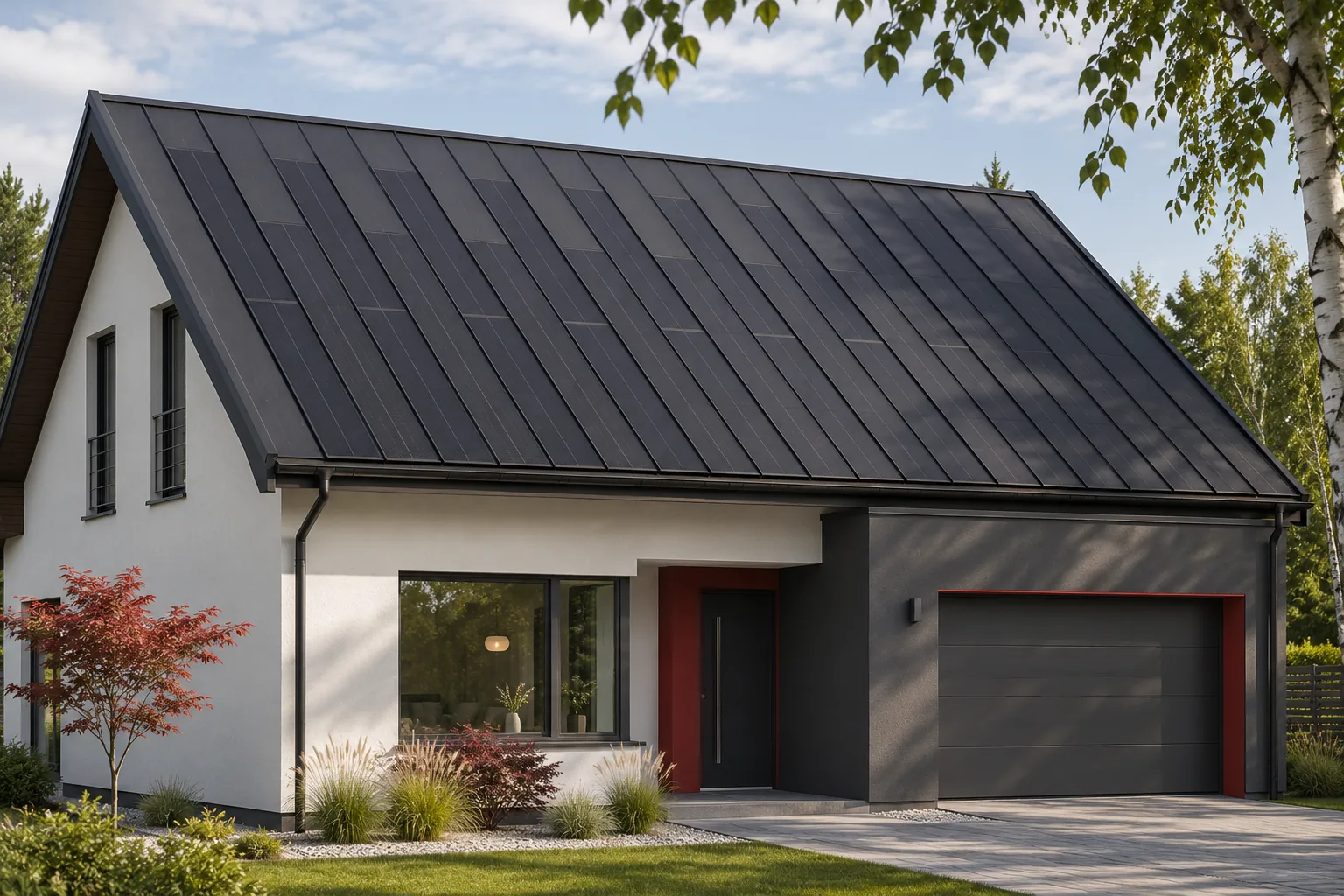
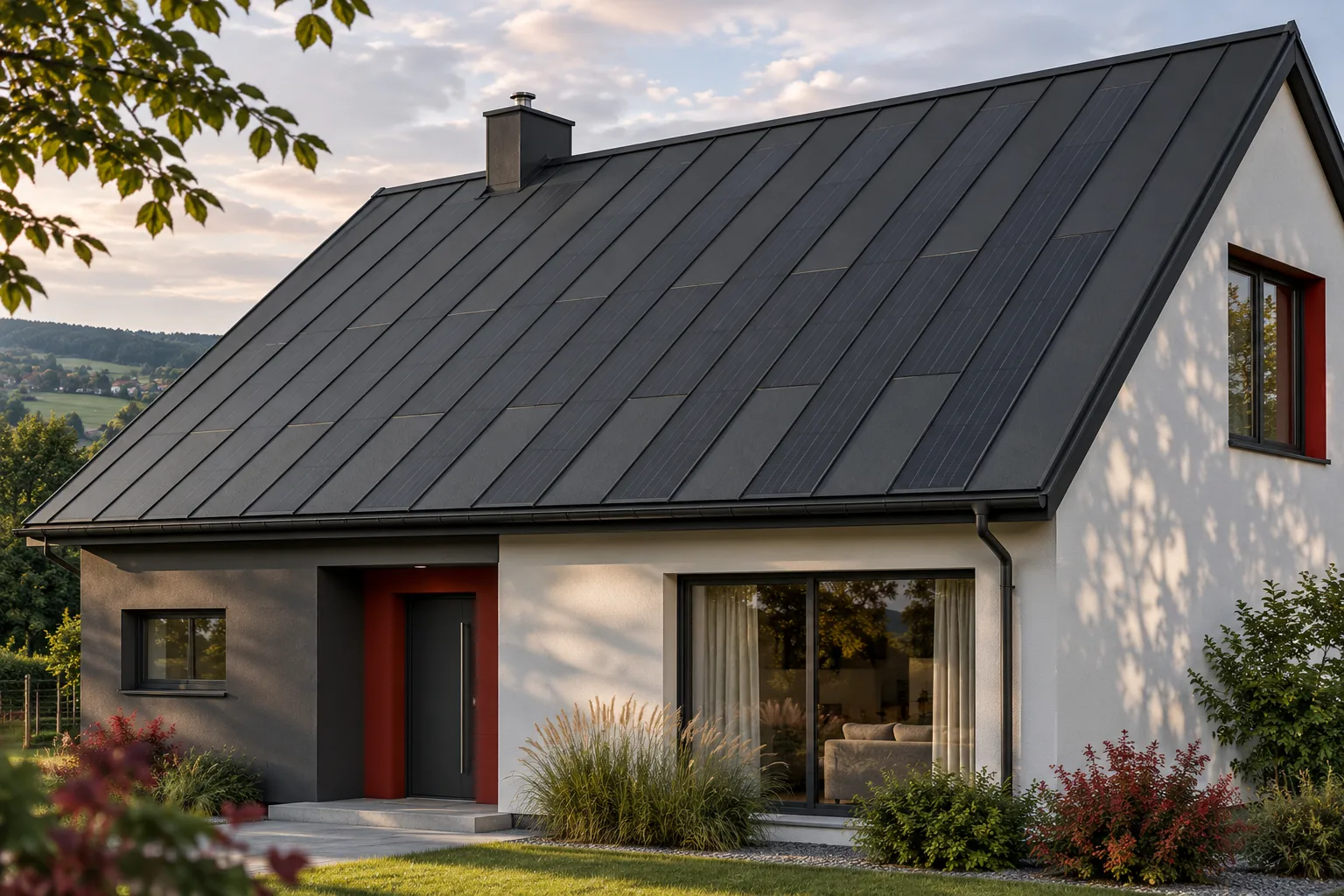
Not every section of an integrated roof has to contain cells. The active part produces energy, while passive elements complete the covering. This combination makes it possible to match output to the home’s needs and to bypass locations that are unfavourable for photovoltaics. In systems based on steel panels, both parts may have a similar surface split. The result, however, depends on the specific product, the design and the care taken in finishing the entire roof slope. A roof is not a simple rectangle intended solely for energy production. It has edges, chimneys, windows and service penetrations. Part of the surface may be shaded or difficult to divide into full modules. Passive elements allow these areas to be closed off without pretending that every part of the covering must perform an identical energy function.
In this article
Why does a solar roof need elements without cells?
In a well-designed system, the parts without cells are not a random patch. They are meant to work with the active elements in terms of geometry and water drainage. They can also bring order to the roof’s appearance. This is one of the practical advantages of integration, particularly when the client wants to preserve the rhythm of the panels across the entire visible surface.
Where is it best to plan the active array?
Priority goes to sections with good access to light and suitable orientation. Shade at different times of day and year must be assessed. A chimney may shade a small area in a photograph, but in reality its shadow changes position. Trees and neighbouring buildings should also be included in the analysis.
The array should not be chosen solely on how it looks from the street. Aesthetics can be reconciled with production conditions. Sometimes it is better to use a few calm sections than to stretch cells into locations with poor yield. The electrical design must take account of orientation, circuit division and the parameters of the equipment used.
Does the passive part look identical?
A similar colour does not mean perfectly identical light reflection. Glass, metal coating and cells have different surface properties. On a roof viewed up close or in side sunlight, the differences may be visible. It is therefore worth looking at a sample of the system and a real installation rather than basing the assessment solely on a visualisation.
Consistency can be built through a shared rhythm of divisions and careful placement of the arrays. There is no need to promise complete invisibility of the photovoltaics. In many homes, an orderly layout is more important than perfectly blending away the difference in materials. Matching flashings and a consistent run of lines from eaves to ridge are helpful.
Can fewer cells be a sensible choice?
Yes, if it follows from the energy needs and the roof conditions. An additional module makes sense when its production justifies the cost and its place in the system. A section that is permanently shaded may give a poor result. Likewise, an installation much larger than the home’s needs may create surpluses of lower value than the energy used directly.
However, this is not about arbitrarily limiting output. Several layouts should be compared and production and energy use checked. The passive part makes it possible to choose a layout that corresponds to these calculations. As a result, the shape of the covering does not automatically dictate the maximum possible installation, and the decision remains linked to the building’s use.
Can active elements be cut to size freely?
A module with cells is not an ordinary sheet that can be cut freely. It must not be assumed that it can be shortened at a chimney like the inactive part. The manufacturer specifies the permitted scope of work. For unusual locations, the intended solutions are used rather than improvised changes to the electrical element.
That is precisely why measuring the roof slope and planning the divisions are so important before ordering. The dimensions of the actual roof may differ from the design drawing. The diagonals, edges and position of openings must be checked. Well-chosen passive elements make fitting easier, but they do not relieve you of preparing an accurate bill of materials.
How do you plan a layout that will last for years?
Start with a map of the roof slope showing light, obstacles and the required service zones. Then determine the output based on the home’s consumption. Only then refine the composition of active and passive panels. This order makes it possible to combine architecture with energy, without adding cells in places chosen solely for symmetry.
Also ask about the possibility of later converting the passive part into an active one. Not every system allows this without interfering with the other elements. Different connections and electrical equipment may be needed. If expansion is important, it should be described in the design. A similar panel shape alone is not yet a guarantee of easy replacement.
Examples of companies and brands in roof-integrated photovoltaics are LUMA Solar, SolRoof, SunRoof, Solartag, EDILIANS, Wienerberger Wevolt, ML System, Electrotile, MDM NT (MyRoof) and Solarstone.
7 branches. Materials closer to your project.

- SEROCK — Dzierżenin 34 E
- BŁONIE — ul. Sochaczewska 138A
- RADOM — ul. Grobickiego 8
- ŁÓDŹ — Natolin 8
- OLSZTYN — Barczewo, ul. Prosta 9
- WROCŁAW — ul. Jerzmanowska 10C
- GORZÓW WLKP. — ul. Zielona 33/34
Free quote
Materials for your project
You may also find useful…
A roof is chosen for the long term, while a home's energy needs can change faster. A car may be added, a…
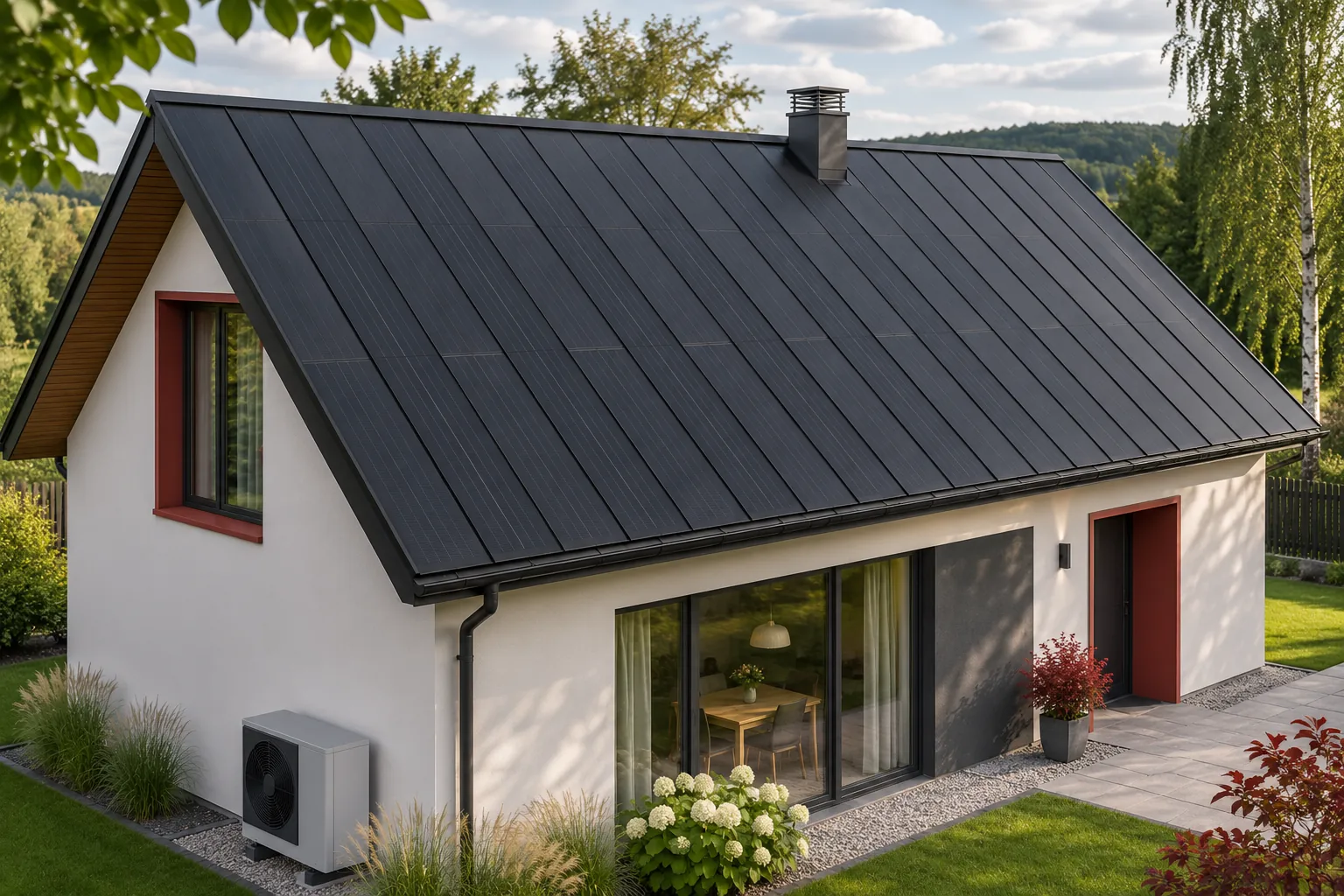
A heat pump needs electricity, and a photovoltaic roof can supply part of it. This is a good combination if both solutions…
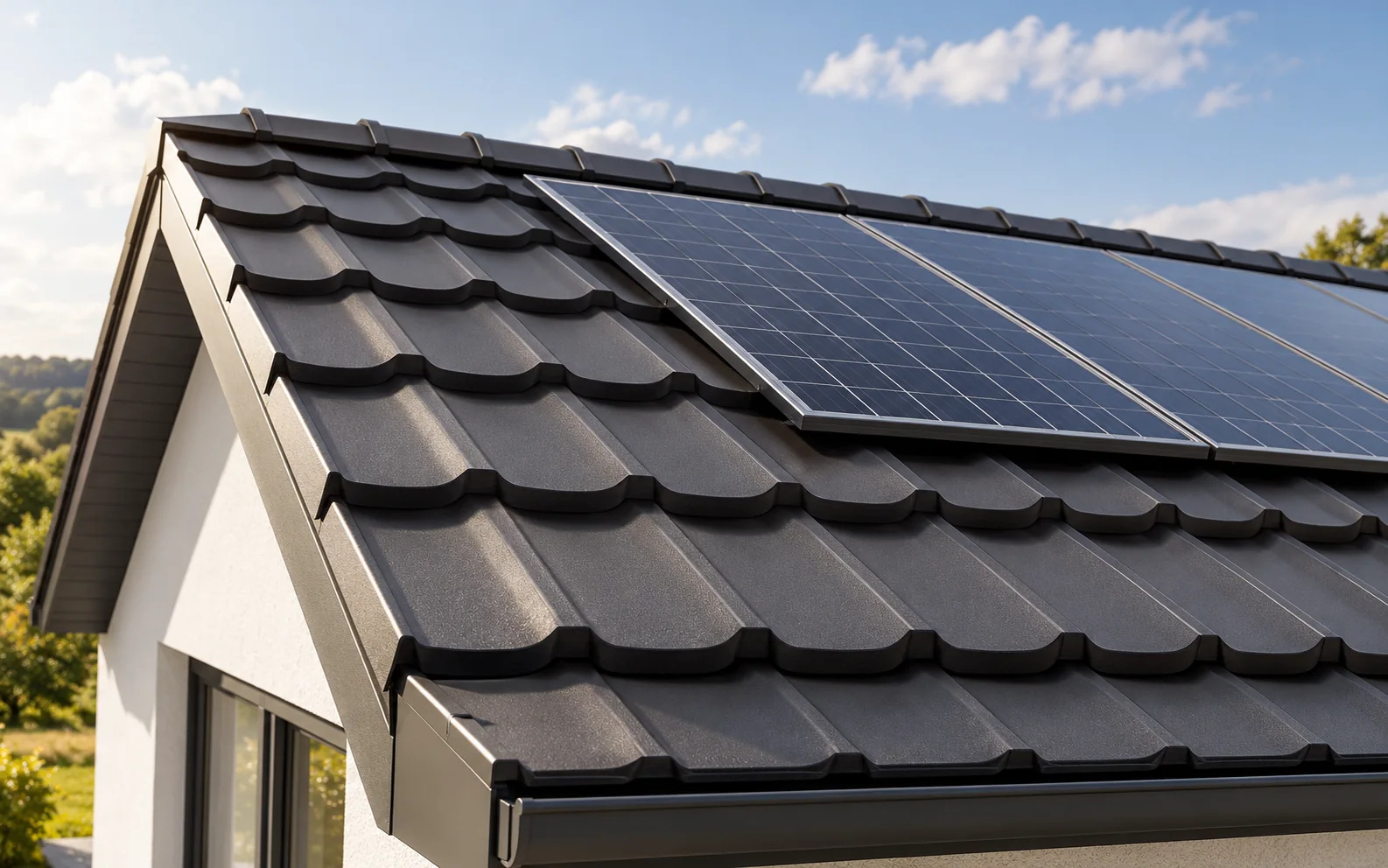
Photovoltaic panels on an existing metal roof require fixings that have been verified for exactly the sheet or sandwich panel installed on…
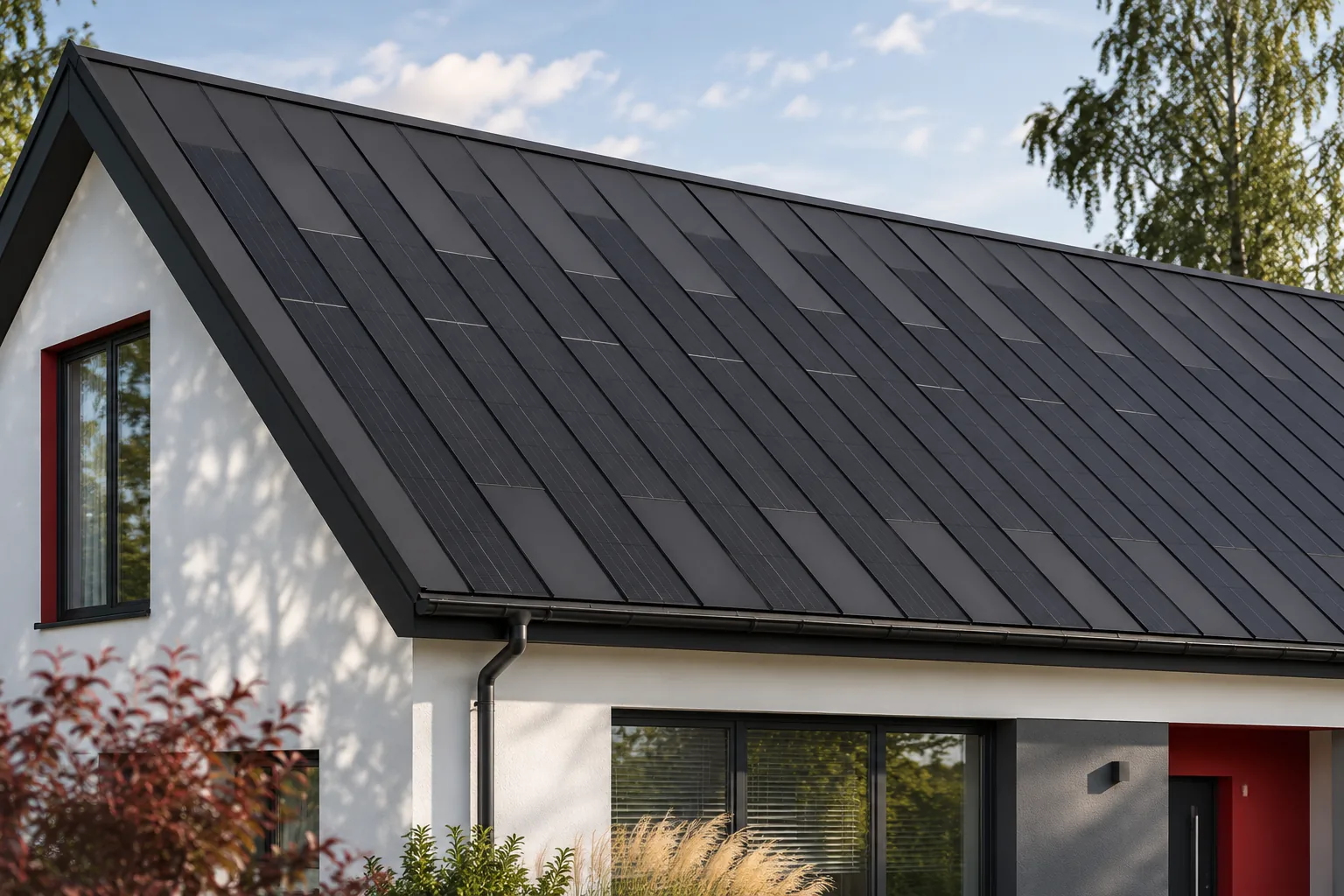
In an integrated photovoltaic roof, a single system performs both the covering and the energy-generation function. This can avoid some of the…
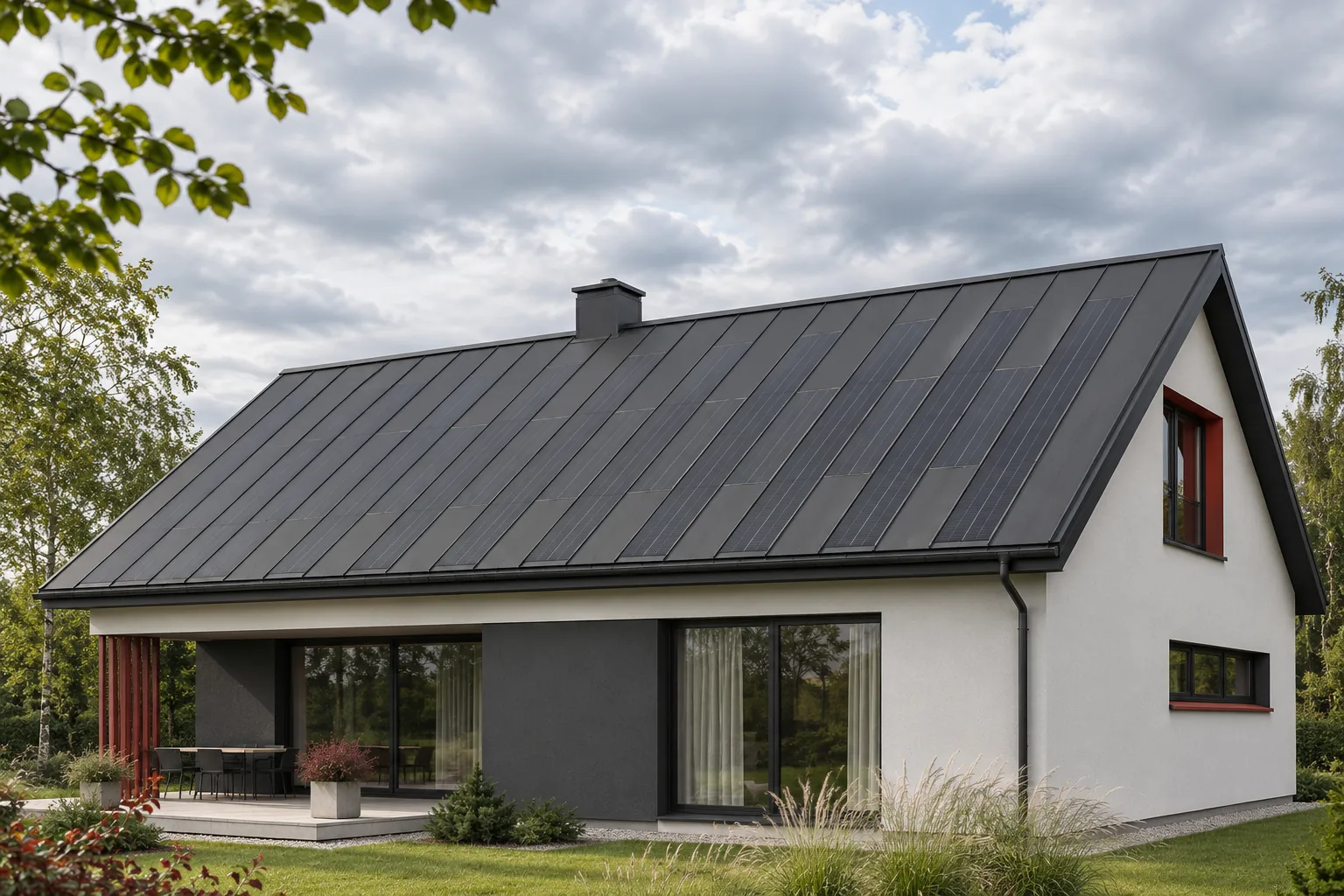
Photovoltaics can generate energy even under a cloudy sky, because it also uses diffuse light. Production will, however, depend on the amount…
The roof produces energy when light reaches it. The home also needs energy in the evening and in winter. That is why…
An electric car can use the energy generated by an integrated photovoltaic roof. Much, however, depends on when it is parked at…
An energy storage system is not a prerequisite for a grid-connected photovoltaic roof. It can, however, help to use part of the…